



 Advertise



Top Altcoins to Watch: 7 Altcoins at a Make-or-Break Moment



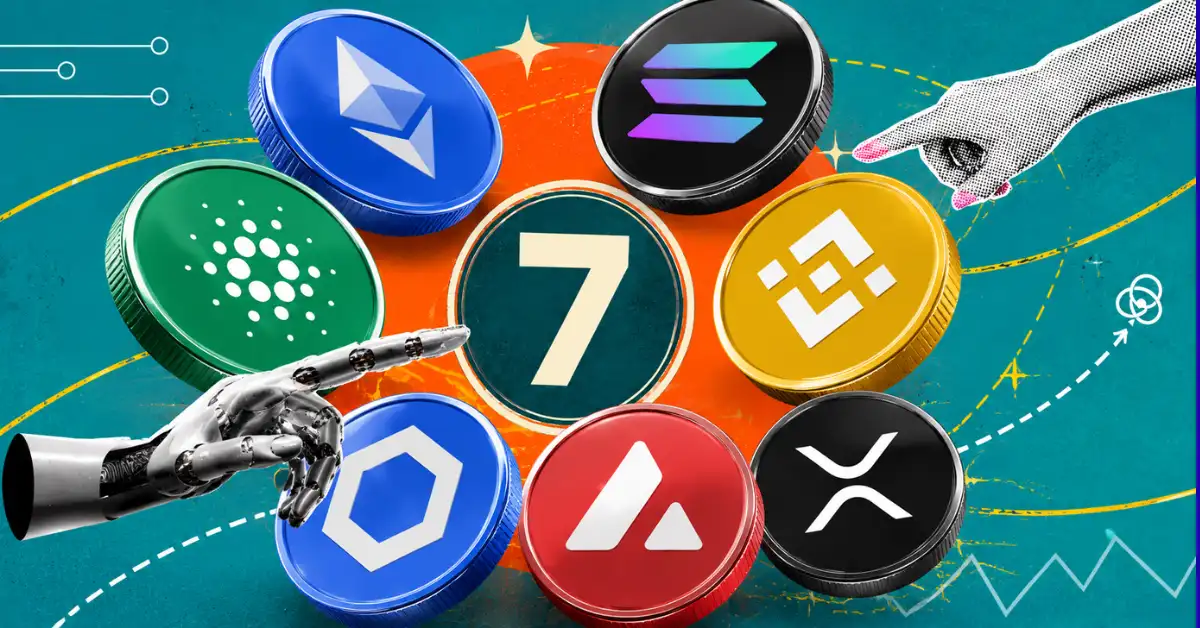
The Altcoin Market Index is at 53, meaning it is not yet the altcoin season. However, many projects are continuing to expand their use cases in DeFi, cross-chain transfers, tokenization, privacy, cybersecurity, and AI. Injective, Cardano, Chainlink, Solana, Bittensor, Avalanche, and NEAR Protocol are developing new technologies that could strengthen their ecosystems in the coming months.
Here are the top altcoins hard to ignore based on their latest network upgrades, adoption and real-world use cases.
Injective and Cardano Build a Cross-Chain Bridge
Injective (INJ) and Cardano (ADA) have connected through IBC, or Inter-Blockchain Communication, allowing assets and information to move between their ecosystems. Users can move test ADA and INJ between the two networks.
This week, Cardano officially connected to Injective. For the first time, a live onchain IBC rail connects Cardano to another blockchain. $ADA and $INJ can now move across both ecosystems.
Below are some of the top developments that happened on Injective from the past week 👇️… pic.twitter.com/oOYAiPr27R— Injective 🥷 (@injective) August 9, 2026

- LI.FI integration is live, allowing users to bridge and swap INJ and USDC across 60+ chains.
- Zealy Season 2 started with 1,000+ INJ in monthly rewards.
- 27,400 INJ were burned, reducing the total supply.
Injective is built using the Cosmos framework and has a DeFi-focused ecosystem designed around trading and tokenization.
Connecting with Cardano could give both networks access to additional liquidity, applications and cross-chain activity. Meanwhile, ADA climbs back to rank 13 by market cap. Whereas, Ouroboros Leios should be mainnet ready in 4 months
Chainlink Moves Deeper Into Bitcoin and Banking
Chainlink has several developments running at the same time. BitGo, the company behind Wrapped Bitcoin (WBTC), is moving WBTC infrastructure toward Chainlink CCIP. This could allow WBTC to operate across networks connected to Chainlink while using its cross-chain infrastructure.
The development matters because WBTC represents billions of dollars in value and allows Bitcoin to be used within ecosystems such as Ethereum DeFi.
Chainlink is also working with the Bank of England’s synchronization lab, testing blockchain-based settlement involving central banks and securities. Three Chainlink products are reportedly being tested around tokenized equity and securities.
- Chainlink Operator UI: Start transactions, create on-chain instructions, and track their status.
- CRE UI: View activity from deployed CRE workflows.
- Central Bank UI: Review and confirm transactions.
Standard Chartered has projected that LINK could reach $200 by 2030, which would translate to roughly $150 billion in market capitalization at the current circulating supply. However, institutional forecasts can change, so the figure remains a projection rather than a guaranteed target.
Solana Expands Into Private Transactions
Solana (SOL) is increasingly moving toward institutional use. Helas, a Solana-based project, is testing private transactions, allowing users to interact with payments and DeFi while maintaining greater confidentiality.
Privacy could matter for institutions that want blockchain-based financial systems without making every commercial transaction publicly visible. Selective transparency could still be maintained for areas such as carbon credits and other regulated activities.
Santiment reports that Solana saw $8.8M in daily net ETF inflows, its strongest inflow since May 12. Despite SOL’s price remaining mostly flat, Solana’s RWA (Real-World Assets), stablecoin supply, tokenized equity, and perpetuals activity have reached major milestones.
New developments like Alpenglow, Agave 4.2, and xStocks are also boosting the network’s infrastructure and adoption.
Bittensor Finds Enterprise Demand
Bittensor (TAO) is getting another potential use case through its Red Team subnet, developed by Innerworks.
The project has reportedly onboarded five enterprise platforms representing around 900 million accounts and 1 billion weekly transactions for anti-bot testing. Its system reportedly achieved a 99.5% detection rate, compared with much lower performance from several competing systems during the cited tests.
If those enterprise applications expand, activity could increase across the Bittensor ecosystem.
Avalanche Gets More Government Adoption
Avalanche is being used repeatedly for government digitization and tokenization. The latest development involves Kenyan citizen certificates, creating a faster digital pipeline from completing education to receiving certificates.
Earlier projects include more than 700,000 Indian land records, 42 million California vehicle titles, and 370,000 New Jersey property deeds representing $240 billion in real estate.
The broader development is Avalanche’s growing involvement in government infrastructure and sensitive public records.
NEAR Connects Staking With AI
NEAR Protocol closes the list with a combination of staking and AI computing. Through Ironclaw, NEAR staking rewards can be used to pay for computing costs connected to AI agents.
Ironclaw can be hosted through a NEAR application and interact with DeFi and cross-chain transfers. It can also work with AI models and agent infrastructure, creating a direct link between NEAR staking rewards, AI computing, DeFi and autonomous blockchain activity.
Was this writing helpful?

Trust with CoinPedia:
CoinPedia has been delivering accurate and timely cryptocurrency and blockchain updates since 2017. All content is created by our expert panel of analysts and journalists, following strict Editorial Guidelines based on E-E-A-T (Experience, Expertise, Authoritativeness, Trustworthiness). Every article is fact-checked against reputable sources to ensure accuracy, transparency, and reliability. Our review policy guarantees unbiased evaluations when recommending exchanges, platforms, or tools. We strive to provide timely updates about everything crypto & blockchain, right from startups to industry majors.
Investment Disclaimer:
All opinions and insights shared represent the author's own views on current market conditions. Please do your own research before making investment decisions. Neither the writer nor the publication assumes responsibility for your financial choices.
Sponsored and Advertisements:
Sponsored content and affiliate links may appear on our site. Advertisements are marked clearly, and our editorial content remains entirely independent from our ad partners.