


 Advertise



Is XRP Really ‘Nothing’? Exclusive: What Hayes and Hoskinson Are Missing About Ripple



Writer by choice, CryptoCurrency Writer, and Researcher by chance. Currently, focusing on financial news and analysis, as well as cryptocurrency news and data. One may not call me a crypto “Enthusiast” but trust me I'm getting there.


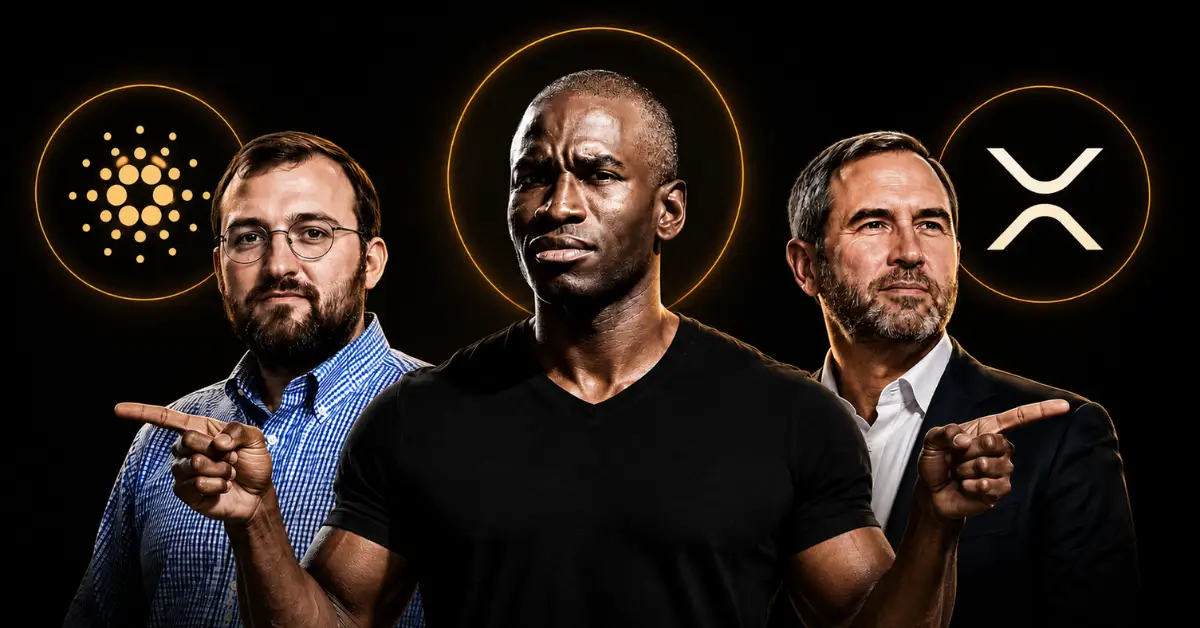
Arthur Hayes called XRP “absolutely nothing” last week. Charles Hoskinson took a swipe at Ripple CEO Brad Garlinghouse’s approach to regulation. Edo Farina, an analyst and XRP supporter, addressed both in an exclusive interview with Coinpedia.
Hayes: Price Loyalty, Not Substance
Hayes framed his argument around early price gains rather than technology. “You could be like Cardano or Ripple and do absolutely nothing,” he said. “Lie to your people that you’re going to do something about it. However, people got this thing really, really cheap. You allowed them to get rich with you.” The suggestion is that communities built on early wealth creation remain loyal regardless of what a project actually delivers.
Farina acknowledged Hayes’s credentials but questioned the premise. “Arthur Hayes is one of the smartest macro traders in crypto, but trading and building financial infrastructure are two completely different things,” he said. “His portfolio decisions are based on market cycles and liquidity, not necessarily on which technology will underpin the next financial system.”

“If XRP were nothing, we wouldn’t see regulated stablecoins like RLUSD, tokenization initiatives, institutional custody, and major financial players building around the XRPL ecosystem,” Farina said. “Dismissing years of enterprise adoption ignores a lot of evidence.”
Hoskinson vs Garlinghouse
Hoskinson criticised Garlinghouse for accepting imperfect legislation in the name of progress, specifically around the CLARITY Act, paraphrasing his position as wanting to simply get something done. His broader concern is that XRP creates no organic buy demand for holders, making the token dependent on Ripple’s institutional relationships rather than network activity.
Farina attributed the friction to competition. “Cardano, Ripple, Ethereum, Solana, everyone is competing for institutional adoption,” he said. “Brad has taken a very regulatory-first approach, which is not popular with everyone in crypto. Some people believe crypto should remain completely outside the traditional financial system.”
“I don’t see regulation as the enemy,” Farina said. “Institutions won’t move trillions of dollars through anonymous protocols with no legal clarity.”
The Underlying Divide
The criticism from both men reflects a wider disagreement about what crypto is for. Ripple’s approach is to work within existing financial infrastructure rather than replace it, which appeals to banks and asset managers but frustrates those who entered crypto for different reasons.
“That is less exciting for crypto purists but much more attractive for banks, governments and asset managers. Institutional capital generally follows legal certainty,” Farina said.
Was this writing helpful?

Trust with CoinPedia:
CoinPedia has been delivering accurate and timely cryptocurrency and blockchain updates since 2017. All content is created by our expert panel of analysts and journalists, following strict Editorial Guidelines based on E-E-A-T (Experience, Expertise, Authoritativeness, Trustworthiness). Every article is fact-checked against reputable sources to ensure accuracy, transparency, and reliability. Our review policy guarantees unbiased evaluations when recommending exchanges, platforms, or tools. We strive to provide timely updates about everything crypto & blockchain, right from startups to industry majors.
Investment Disclaimer:
All opinions and insights shared represent the author's own views on current market conditions. Please do your own research before making investment decisions. Neither the writer nor the publication assumes responsibility for your financial choices.
Sponsored and Advertisements:
Sponsored content and affiliate links may appear on our site. Advertisements are marked clearly, and our editorial content remains entirely independent from our ad partners.