 Advertise



Bitcoin Hashrate Hijacked Amid AI Cryptography Break Rumors



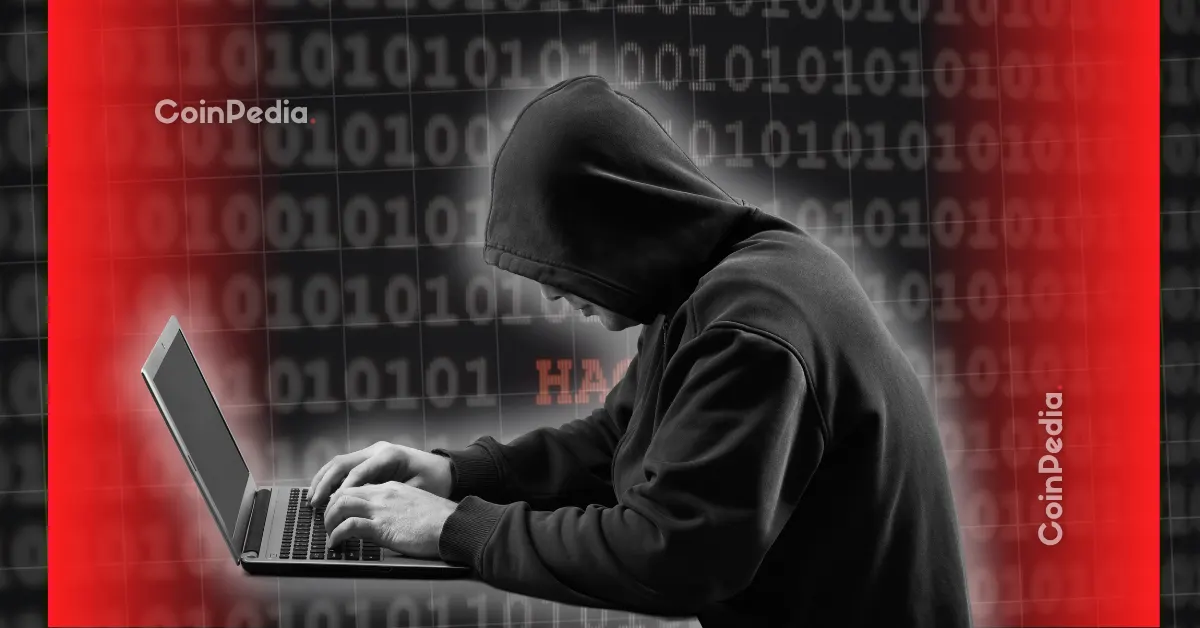
Attackers have intercepted the Bitcoin mining process, allowing them to divert up to 1.9EH/s of compute to mine rewards for their wallets.
Bitcoin mining company Braiins urged prompt migration to Stratum V2 and TLS or upgrading mining software to versions that perform identity verification before handing off mining pools.
Rumours of OpenAI and Anthropic breaking cryptographic security models continue to swirl, with employees reportedly calling for a pause in AI training citing takeover fears.
More than 1,600 Bitcoin (BTC) mining sites have been hit by a Border Gateway Protocol (BGP) attack, also known as a man-in-the-middle hijack, where attackers impersonate a miner to steal their BTC mining proceeds.
According to Bitcoin mining company Braiins, the attack began in early November, with attackers diverting around 175 petahashes per second (PH/s) of compute from miners in Brazil and Argentina. On November 20, the event spread to Europe, hitting more than 1,000 mining sites in a single second. This time the stolen hashrate grew tenfold to 0.6-1.9 exahashes/second (EH/s).
Bitcoin Mining Hashrate Theft: Anatomy of the Attack
Notably, Stratum V1 is a protocol that coordinates communication between Bitcoin mining rigs (ASICs) and mining pools. There has, however, been a campaign to push miner migration to Stratum V2 due to the vulnerabilities inherent to the former.
Stratum V1 is unencrypted, has zero server authentication, and is centralized. These features make it prone to internet traffic interception, with attackers impersonating BTC mining pools to feed miners real work while reaping the proceeds to their wallets.

In 2014, Dell’s cybersecurity branch, SecureWorks, uncovered a similar incident. However, by this time, attackers had managed to make away with $83,000 of BTC and other proof-of-work mining rewards.
Urgent Mitigation Steps
Braiins urges operators to immediately abandon unencrypted connections, moving instead to Stratum V2, which is decentralized and performs server authentication. The company also released an updated software to block plain-text fallbacks. Even more, Braiins launched a free local SV2 Proxy tool so that older mining rigs can benefit from encrypted processes even though they are incompatible with Stratum V2 and TLS (Transport Layer Security).
Furthermore, the company has asked other mining software providers to update their product to versions that support identity verification. Meanwhile, hosted miners should ask their operators to confirm the security of their main and backup connections.
AI Breaking Cryptographic Security
Recently trending is the rumour that OpenAI and Anthropic AI models may have successfully broken modern cryptographic models. These include Bitcoin’s elliptic curve cryptography (ECC), integer factorization in P, and Ring-LWE.
A Break in ECC would allow private key derivation from public keys, while that in Ring-LWE would make post-quantum migration pointless. Meanwhile, integer factoring in P would affect the majority of the world’s digital infrastructure, including banking systems, government communications, digital authentication, and software signing.
While the allegations remain unconfirmed by said companies, Computer Scientist Scott Aaronson and Ledger CTO Charles Guillemet have mentioned them.
Employees at both companies are also calling for a pause in AI model training, fearing they are capable of causing global chaos through cyberattacks and outages, per Axios.
“If we continue trying to make models much smarter, such that they’re actually smarter than us … they will in fact be able to trick us successfully.”
Was this writing helpful?

Trust with CoinPedia:
CoinPedia has been delivering accurate and timely cryptocurrency and blockchain updates since 2017. All content is created by our expert panel of analysts and journalists, following strict Editorial Guidelines based on E-E-A-T (Experience, Expertise, Authoritativeness, Trustworthiness). Every article is fact-checked against reputable sources to ensure accuracy, transparency, and reliability. Our review policy guarantees unbiased evaluations when recommending exchanges, platforms, or tools. We strive to provide timely updates about everything crypto & blockchain, right from startups to industry majors.
Investment Disclaimer:
All opinions and insights shared represent the author's own views on current market conditions. Please do your own research before making investment decisions. Neither the writer nor the publication assumes responsibility for your financial choices.
Sponsored and Advertisements:
Sponsored content and affiliate links may appear on our site. Advertisements are marked clearly, and our editorial content remains entirely independent from our ad partners.