


 Advertise



- Rizwan Ansari
 Rizwan Ansari
- Reviewed by:
 Sohrab Khawas
Sohrab is a passionate cryptocurrency news writer with over five years of experience covering the industry. He keeps a keen interest in blockchain technology and its potential to revolutionize finance. Whether he's trading or writing, Sohrab always keeps his finger on the pulse of the crypto world, using his expertise to deliver informative and engaging articles that educate and inspire. When he's not analyzing the markets, Sohrab indulges in his hobbies of graphic design, minimal design or listening to his favorite hip-hop tunes.
- Dec 08, 2025 11:14 UTC
-


Argentina To Lift 3-Year Crypto Ban as Central Bank Allows Banks to Offer Bitcoin Services
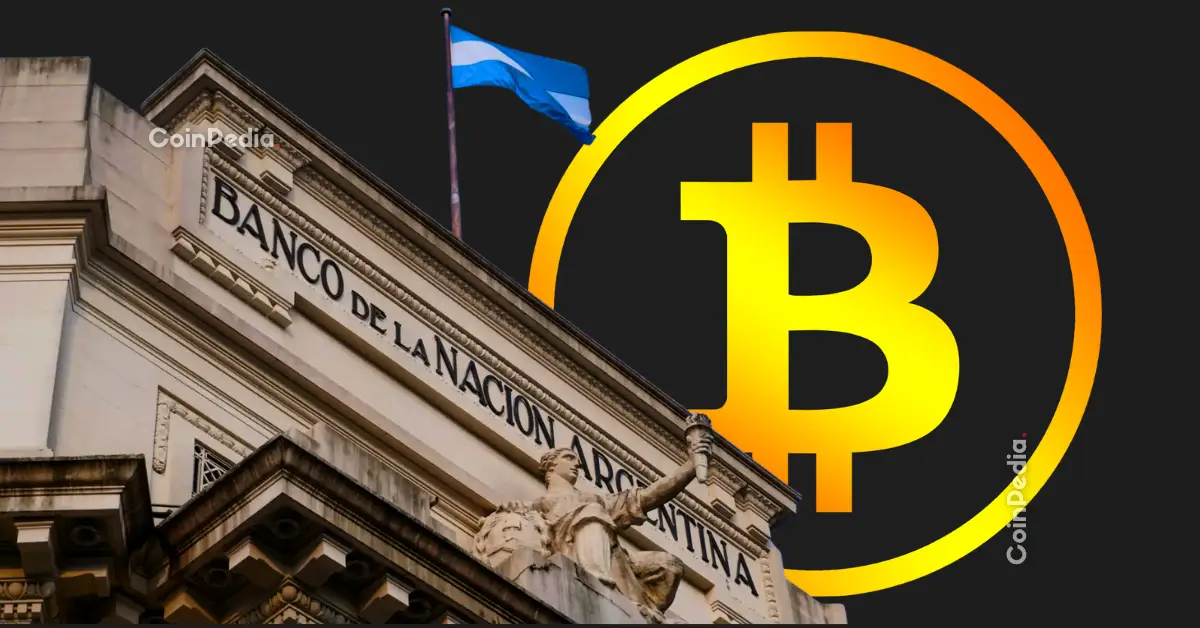
Argentina plans to end its three-year crypto ban, allowing banks to offer regulated services.
New framework lets banks provide Bitcoin trading and custody under strict KYC and AML rules.
Approval expected by April 2026, marking Argentina’s biggest step toward banking-crypto integration.
Argentina, a nation where people use crypto as a daily tool to survive inflation, is considering lifting its 3-year ban on banks’ crypto activities, allowing trading and custody under a new regulatory framework.
If approved, Argentina’s central banks would finally be allowed to let customers buy, sell, and even store cryptocurrencies directly from their banking apps.
Argentina’s Central Bank Eyes Crypto Services for Banks
Since May 2022, Argentina’s central bank, the Banco Central de la República Argentina (BCRA), has maintained strict regulations prohibiting traditional banks from dealing with crypto. The goal was to reduce money-laundering risks and avoid financial instability.
But under President Javier Milei, a known Bitcoin supporter, the country is rethinking that approach.
Since taking office in December 2023, President Milei has pushed for more financial freedom and believes people should be free to use different currencies, including Bitcoin, without heavy government controls.
What the New Framework Could Bring?
Multiple reports confirm that the BCRA is drafting a new framework that would allow banks to offer,
- Offer crypto trading
- Provide crypto custody
- List only major “blue-chip” coins like BTC, ETH, USDC, USDT, and XRP
- Follow strict KYC/AML rules under new CNV regulations
- Operate crypto services inside separate legal units with higher capital, security, and liquidity requirements
Argentina is moving from banning crypto to fully regulating it, becoming one of the first inflation-hit countries to bring crypto into its banking system.
Why Argentina Is Making This Move Now
Crypto use in Argentina has grown very fast in the last three years. Many people turned to Bitcoin and stablecoins because the peso kept losing value.
Inflation once hit 1,427% in 2023, and even now it stays above 2% each month, so families use crypto to protect their money.
By letting banks offer crypto services, the BCRA wants to make crypto safer, reduce the use of informal platforms, improve tax tracking, and keep money flowing more smoothly in the economy.
Approval Timeline: April 2026
Experts familiar with the news believe the final green light may arrive around April 2026, but internal planning has already begun.
If completed, Argentina could become a global case study in how traditional banking and crypto can work together during an inflation crisis.
Never Miss a Beat in the Crypto World!
Stay ahead with breaking news, expert analysis, and real-time updates on the latest trends in Bitcoin, altcoins, DeFi, NFTs, and more.
FAQs
Argentina is expected to approve its new crypto banking framework by April 2026, allowing banks to provide trading and custody services.
The move aims to make crypto safer, reduce use of informal platforms, support tax oversight, and give people better tools to protect savings.
Banks must follow strict KYC and AML rules, operate through separate legal units, and meet higher capital, security, and liquidity standards.
Users get safer access to trusted cryptocurrencies directly in bank apps, reducing risks from inflation and unregulated exchanges.
Trust with CoinPedia:
CoinPedia has been delivering accurate and timely cryptocurrency and blockchain updates since 2017. All content is created by our expert panel of analysts and journalists, following strict Editorial Guidelines based on E-E-A-T (Experience, Expertise, Authoritativeness, Trustworthiness). Every article is fact-checked against reputable sources to ensure accuracy, transparency, and reliability. Our review policy guarantees unbiased evaluations when recommending exchanges, platforms, or tools. We strive to provide timely updates about everything crypto & blockchain, right from startups to industry majors.
Investment Disclaimer:
All opinions and insights shared represent the author's own views on current market conditions. Please do your own research before making investment decisions. Neither the writer nor the publication assumes responsibility for your financial choices.
Sponsored and Advertisements:
Sponsored content and affiliate links may appear on our site. Advertisements are marked clearly, and our editorial content remains entirely independent from our ad partners.

 Yes
Yes  No
No