


 Advertise



XRP Price Prediction: Can 10,000 XRP Reach $100,000 by 2027?



Sohrab is a passionate cryptocurrency news writer with over five years of experience covering the industry. He keeps a keen interest in blockchain technology and its potential to revolutionize finance. Whether he's trading or writing, Sohrab always keeps his finger on the pulse of the crypto world, using his expertise to deliver informative and engaging articles that educate and inspire. When he's not analyzing the markets, Sohrab indulges in his hobbies of graphic design, minimal design or listening to his favorite hip-hop tunes.


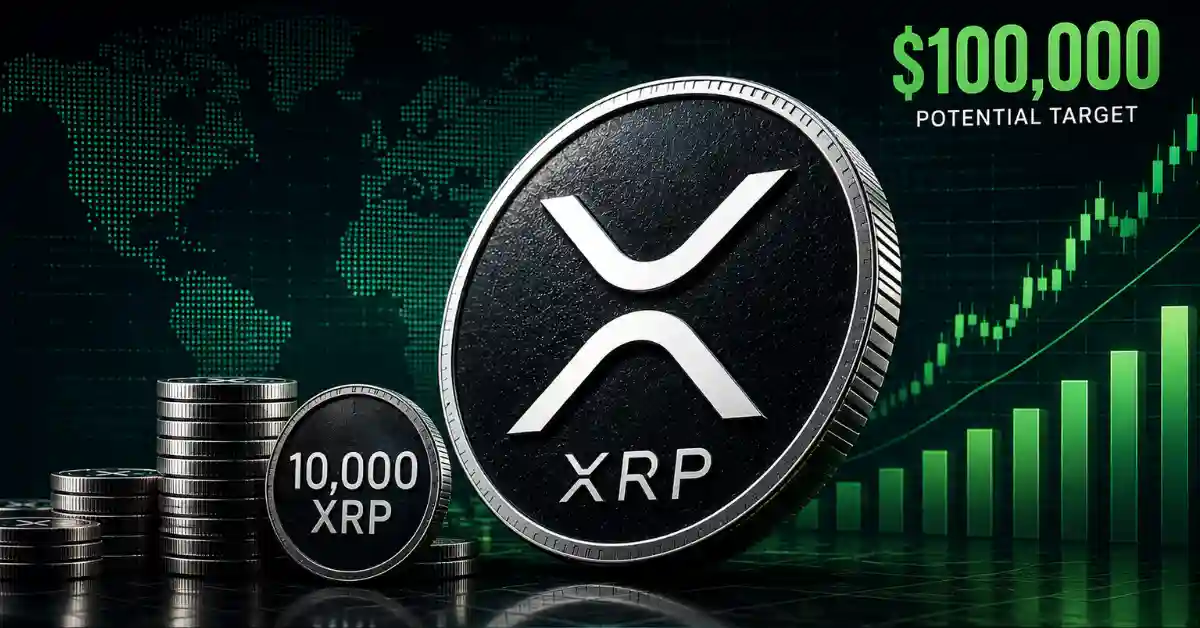
An XRP analyst has outlined a framework that could determine whether a 10,000 XRP portfolio could be worth $100,000 by 2027, arguing that regulation, financial infrastructure and network adoption will be the key drivers rather than price speculation.
At the time of the analysis, XRP was trading at about $1.10, valuing a 10,000 XRP holding at roughly $11,000. A 1,000 XRP portfolio was worth around $1,100.
Three Factors That Could Influence XRP’s Price
The analyst identified three developments that could support XRP’s long-term value:
- Regulatory clarity: Wider legal certainty for digital assets, including the recently signed GENIUS Act and the proposed CLARITY Act, which is still moving through the U.S. legislative process.
- Financial infrastructure: Adoption of blockchain technology by financial institutions and settlement providers.
- Network usage: Increased use of the XRP Ledger for real-world payments and cross-border transactions.
According to the analysis, all three factors would need to progress before XRP could see a significant long-term revaluation.

Also Read : Ripple (XRP) Price Prediction 2026, 2027-2030: Will XRP Reach $5?
XRP Price Scenarios
The analyst outlined several hypothetical price levels and their impact on XRP holdings:
| XRP Price | Value of 10,000 XRP | Value of 1,000 XRP |
|---|---|---|
| $2.50 | $25,000 | $2,500 |
| $5.00 | $50,000 | $5,000 |
| $10.00 | $100,000 | $10,000 |
The analysis suggests that reaching $2.50 would mainly require greater regulatory certainty, while $5 would likely depend on broader financial infrastructure adoption. A move to $10 by 2027 would require all three factors, including meaningful transaction activity on the XRP Ledger.
Also Read : XRP Price : Analyst Says XRP’s Chart Is Sending Two Conflicting Signals
Regulatory Progress Remains a Key Focus
Analyst highlights the GENIUS Act as an important regulatory milestone for the U.S. digital asset industry and points to the proposed CLARITY Act as another development being closely watched by the market.The clearer regulations could encourage more financial institutions to adopt blockchain-based payment technologies.
Infrastructure Adoption Continues
The analysis also points to recent progress in tokenised financial infrastructure, including developments involving the Depository Trust & Clearing Corporation (DTCC) and other financial firms exploring blockchain-based settlement systems. According to the analyst, infrastructure upgrades could create the foundation for broader adoption of digital asset networks, although they do not guarantee increased use of XRP.
Real-World Usage Remains the Biggest Unknown
While regulation and infrastructure are advancing, the analyst says the most important factor remains whether businesses and financial institutions choose the XRP Ledger for cross-border payments and settlement. Unlike regulatory approvals or technology deployments, transaction volume and commercial adoption cannot be predicted and will depend on market demand.
Was this writing helpful?

Trust with CoinPedia:
CoinPedia has been delivering accurate and timely cryptocurrency and blockchain updates since 2017. All content is created by our expert panel of analysts and journalists, following strict Editorial Guidelines based on E-E-A-T (Experience, Expertise, Authoritativeness, Trustworthiness). Every article is fact-checked against reputable sources to ensure accuracy, transparency, and reliability. Our review policy guarantees unbiased evaluations when recommending exchanges, platforms, or tools. We strive to provide timely updates about everything crypto & blockchain, right from startups to industry majors.
Investment Disclaimer:
All opinions and insights shared represent the author's own views on current market conditions. Please do your own research before making investment decisions. Neither the writer nor the publication assumes responsibility for your financial choices.
Sponsored and Advertisements:
Sponsored content and affiliate links may appear on our site. Advertisements are marked clearly, and our editorial content remains entirely independent from our ad partners.