


 Advertise



- Rizwan Ansari
 Rizwan Ansari
- Reviewed by:
 Sohrab Khawas
Sohrab is a passionate cryptocurrency news writer with over five years of experience covering the industry. He keeps a keen interest in blockchain technology and its potential to revolutionize finance. Whether he's trading or writing, Sohrab always keeps his finger on the pulse of the crypto world, using his expertise to deliver informative and engaging articles that educate and inspire. When he's not analyzing the markets, Sohrab indulges in his hobbies of graphic design, minimal design or listening to his favorite hip-hop tunes.
- Feb 04, 2026 12:59 UTC
-


XRP Ledger Activates Permissioned Domains, Opening Doors for Regulated Institutions
XRP Ledger activates Permissioned Domains, enabling regulated institutions to operate securely on a public blockchain.
Permissioned Domains restrict access to verified users, supporting KYC and AML compliance directly on-chain.
Upcoming Permissioned DEX upgrade could further expand compliant institutional trading on XRP Ledger.
The XRP Ledger has taken a major step toward regulated blockchain adoption with the activation of a new feature called Permissioned Domains. The update went live on February 4, after receiving strong support from network validators, and is designed to help institutions use blockchain technology while staying compliant with regulations.
What Are Permissioned Domains on XRP Ledger?
Permissioned Domains allow users to create a restricted area on the public XRP Ledger where only approved accounts can take part. This allows developers, banks, and regulated companies to build apps where only verified users can access certain services.
This feature works with the Credentials system, which helps confirm things like KYC and AML checks directly on the blockchain. Together, they make it possible to run secure financial activities on a public network while keeping access limited and controlled.
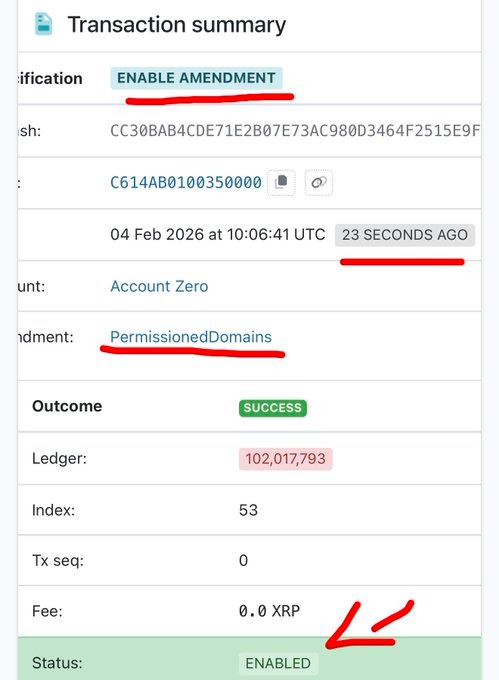
The amendment was activated at ledger index 102,017,953, and the first Permissioned Domain appeared on the network immediately after launch.
Strong Validator Support Drove the Upgrade
The amendment, known as XLS-80, needed at least 80% validator approval for two consecutive weeks to go live. That threshold was reached in late January, and by the time activation occurred, more than 90% of validators had voted in favor.
This level of support shows broad agreement within the XRP Ledger community that controlled access features are important for the network’s future growth.
Another related upgrade, called Permissioned DEX, is also approaching activation and is expected to go live around February 18 if voting continues at current levels.
Why This Matters for Banks and Enterprises
Ripple’s CTO explained that compliance has long been a barrier for institutions wanting to use public blockchains. Permissioned Domains help solve that problem by allowing liquidity pools, trading features, and payment flows to operate only among verified participants.
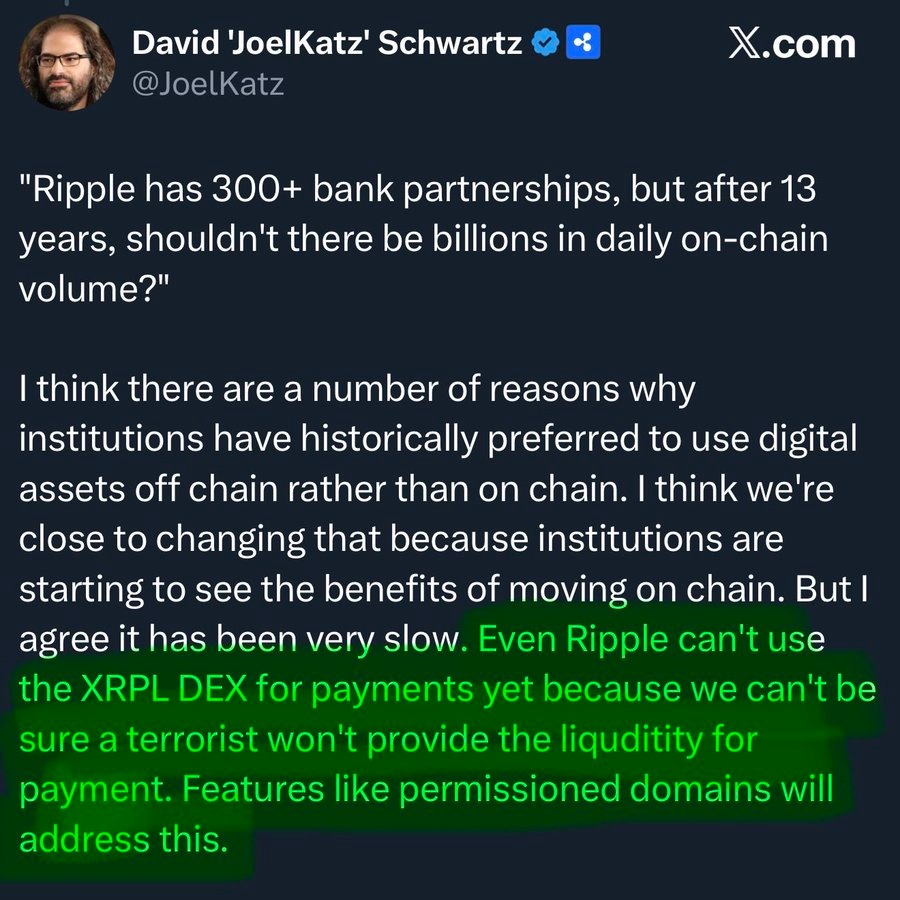
This makes it easier for institutions to safely use blockchain technology for stablecoins, foreign exchange trades, tokenized assets, and cross-border payments, without violating regulatory rules.
With Permissioned Domains now live, the XRP Ledger is positioning itself as a network that can support both open innovation and regulated financial use cases.
Never Miss a Beat in the Crypto World!
Stay ahead with breaking news, expert analysis, and real-time updates on the latest trends in Bitcoin, altcoins, DeFi, NFTs, and more.
FAQs
Permissioned Domains let institutions restrict access on XRP Ledger, allowing only verified accounts to use certain apps and services securely.
They work with blockchain credentials to enforce KYC and AML checks, letting banks and businesses operate safely on a public ledger.
Banks, developers, and regulated companies can use Permissioned Domains to run apps and services for verified participants only.
They enable secure trading, stablecoin flows, and tokenized assets while ensuring regulatory compliance on a public blockchain.
Trust with CoinPedia:
CoinPedia has been delivering accurate and timely cryptocurrency and blockchain updates since 2017. All content is created by our expert panel of analysts and journalists, following strict Editorial Guidelines based on E-E-A-T (Experience, Expertise, Authoritativeness, Trustworthiness). Every article is fact-checked against reputable sources to ensure accuracy, transparency, and reliability. Our review policy guarantees unbiased evaluations when recommending exchanges, platforms, or tools. We strive to provide timely updates about everything crypto & blockchain, right from startups to industry majors.
Investment Disclaimer:
All opinions and insights shared represent the author's own views on current market conditions. Please do your own research before making investment decisions. Neither the writer nor the publication assumes responsibility for your financial choices.
Sponsored and Advertisements:
Sponsored content and affiliate links may appear on our site. Advertisements are marked clearly, and our editorial content remains entirely independent from our ad partners.

 Yes
Yes  No
No