


 Advertise



- Zafar Naik
 Zafar Naik
- Jan 27, 2026 13:31 UTC
-


Vitalik Buterin Says Crypto Social Needs a Reset After X Ban Fallout
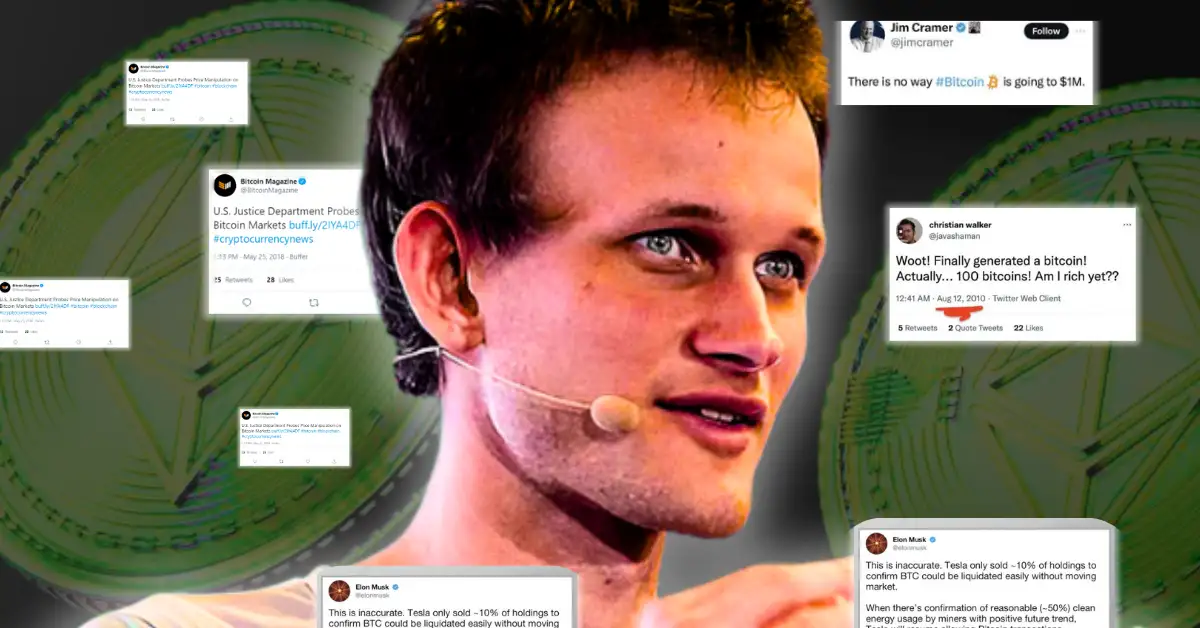
Vitalik says crypto social failed by chasing tokens over real conversation.
Network effects, not technology, remain the biggest barrier keeping decentralized social from breaking out.
Wallets, prediction markets, and slower user migration could shape the next phase of crypto social platforms.
As X rolls out mass bans and enforcement crackdowns, a familiar question is surfacing across crypto Twitter: if centralized platforms remain this fragile, where does crypto social really go next?
That question took center stage in a recent WuBlockchain Podcast interview featuring Ethereum co-founder Vitalik Buterin and Mask Network founder Suji Yan, where both laid out why decentralized social networks have struggled and why the next phase may look very different from past SocialFi experiments.
Why Decentralized Social Keeps Hitting a Wall
Vitalik didn’t sugarcoat the challenge. Despite years of experimentation, most decentralized social platforms fail for two core reasons: network effects and misaligned incentives.
“Almost no new social platforms have truly broken through at scale,” he said, pointing out that without users, even the best products feel empty. More importantly, many projects jump straight into tokenization, assuming finance can fix social problems.
“But if you start from social itself, the real issue is usually creator incentives,” Vitalik explained, noting that token-driven models often reward existing influence and speculation, not high-quality content.
Migration Is Real, But It’s Slow
Suji Yan framed the recent X bans as part of a longer pattern rather than a sudden turning point. User migration, he argued, is gradual and phased, not abrupt.
“The realistic path is moving from centralized platforms to semi-centralized models, and only then toward full decentralization,” Suji said, comparing the process to how DeFi and prediction markets evolved over time.
This helps explain why tools like aggregators and shared protocol layers are gaining attention, letting users explore decentralized social without fully abandoning existing networks.
Read More: Vitalik Buterin Wants Ethereum to Survive Without Him, Reveals 7-Step Plan
Wallets, Prediction Markets, and the Next Social Layer
One of the most forward-looking ideas discussed was the convergence of wallets and social platforms. Suji outlined a vision where users can post directly from any wallet, across any chain, reducing friction and onboarding barriers.
Vitalik added that wallets will increasingly protect identity and data, making interoperability essential.
He also highlighted prediction markets as a potential upgrade to online discourse.
“The market-implied probability can quickly show how unlikely that outcome actually is,” Vitalik said, describing how markets could cool down extreme claims faster than traditional fact-checking tools.
Playing the Long Game
Both speakers agreed on one thing: decentralized social isn’t about replacing X overnight. It’s about improving discussion quality, reducing platform risk, and giving users more control – even if that takes years.
As Vitalik put it, the projects that succeed won’t feel like “crypto apps” at all. Blockchain, he said, should “fade into the background,” while better social experiences move to the foreground.
Trust with CoinPedia:
CoinPedia has been delivering accurate and timely cryptocurrency and blockchain updates since 2017. All content is created by our expert panel of analysts and journalists, following strict Editorial Guidelines based on E-E-A-T (Experience, Expertise, Authoritativeness, Trustworthiness). Every article is fact-checked against reputable sources to ensure accuracy, transparency, and reliability. Our review policy guarantees unbiased evaluations when recommending exchanges, platforms, or tools. We strive to provide timely updates about everything crypto & blockchain, right from startups to industry majors.
Investment Disclaimer:
All opinions and insights shared represent the author's own views on current market conditions. Please do your own research before making investment decisions. Neither the writer nor the publication assumes responsibility for your financial choices.
Sponsored and Advertisements:
Sponsored content and affiliate links may appear on our site. Advertisements are marked clearly, and our editorial content remains entirely independent from our ad partners.

 Yes
Yes  No
No