

 Advertise



- Rizwan Ansari
 Rizwan Ansari
- Reviewed by:
 Sohrab Khawas
Sohrab is a passionate cryptocurrency news writer with over five years of experience covering the industry. He keeps a keen interest in blockchain technology and its potential to revolutionize finance. Whether he's trading or writing, Sohrab always keeps his finger on the pulse of the crypto world, using his expertise to deliver informative and engaging articles that educate and inspire. When he's not analyzing the markets, Sohrab indulges in his hobbies of graphic design, minimal design or listening to his favorite hip-hop tunes.
- Jan 22, 2026 06:44 UTC
-


U.S. Treasury Buys Back $2.8 Billion in Debt Securities
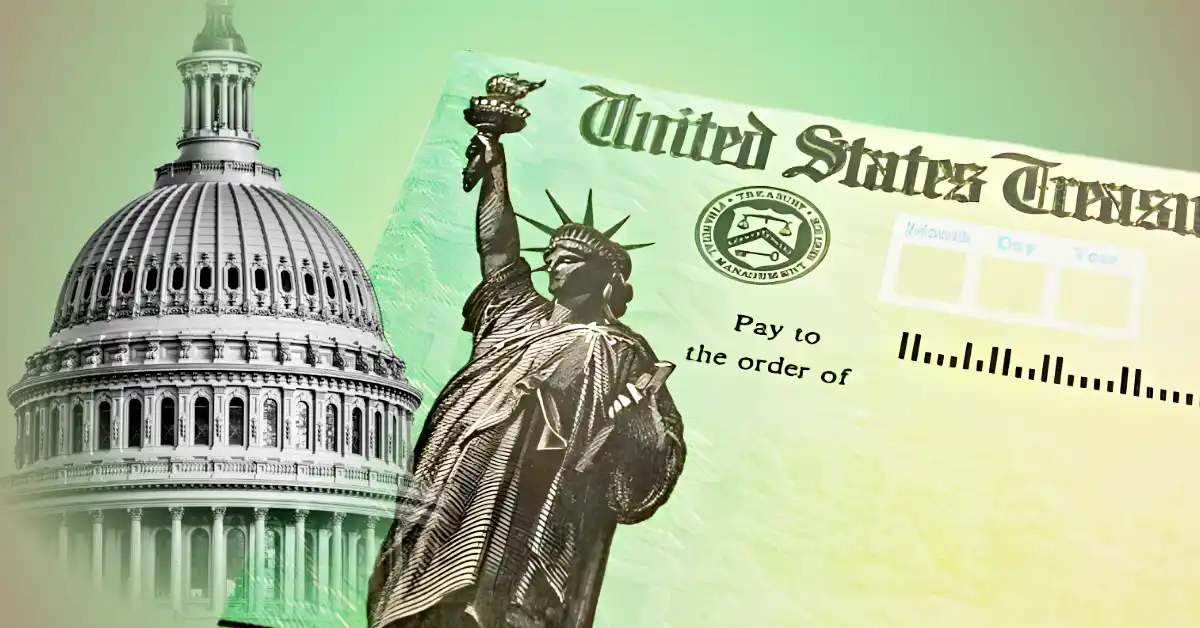
U.S. Treasury $2.8 billion buyback signals bond market stability as yields hold near 4.25 percent levels.
Record 10 billion buyback in 2025 highlighted strong institutional demand for older Treasuries globally.
Treasury buybacks influence liquidity flows, indirectly shaping Bitcoin sentiment and broader crypto markets cycles.
The U.S. Treasury recently repurchased $2.8 billion of its own debt, a move that sent a strong signal across bond markets. While bond yields stayed steady near 4.25%, showing no panic or stress.
These buybacks help manage liquidity, but also change how investors think about the crypto market next.
U.S. Treasury Buys Back $2.8 Billion
The U.S. Treasury is again buying back its own debt, including a recent $2.8 billion purchase of bonds due in 2028–2029. However, the dealer has offered about $8.7 billion, but the Treasury accepted only 32%, showing a careful and targeted approach to improve trading in less active bonds.
The Treasury has not always used buybacks. Between 2000 and 2002, the Treasury bought back over $67.5 billion in debt to improve liquidity and manage maturities. After many quiet years, buybacks returned as market conditions changed.
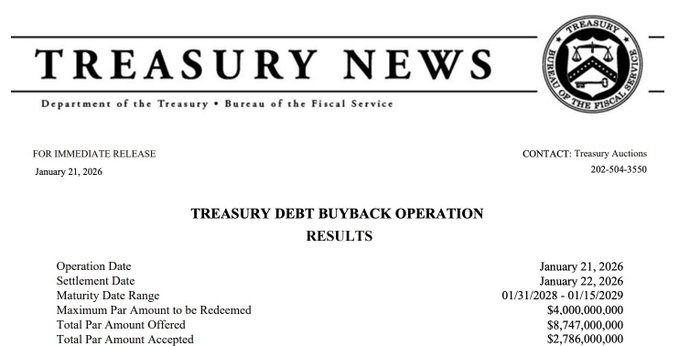
Last year, in 2025, the Treasury carried out its largest buyback ever, repurchasing $10 billion in debt from $22.87 billion in offers.
This showed strong demand from institutions and a growing use of buybacks to manage the bond market.
Bond Yields Remain Stable at 4.25%
After the buyback, Treasury yields stayed near 4.25%. This showed that markets were not shocked by the move. Some investors saw it as a sign of strength, while others raised concerns about long-term demand for U.S. debt.
Still, the steady yield suggests confidence that the government is managing its debt carefully.
Unlike Federal Reserve actions such as quantitative easing, this buyback used existing cash, not newly created money.
What This Means For Crypto Market
Many in the crypto community see these moves as part of “macro liquidity conditions” that influence crypto prices. When liquidity tightens and yields rise, crypto often weakens.
But if bond markets show stress or if yields fall, capital can rotate back into Bitcoin and other digital assets.
Meanwhile, U.S. debt buybacks don’t just affect bonds. They change how money flows in global markets, and that flow reaches crypto, too. As of now, the total crypto market cap has seen a slight rise to $3.2 trillion.
Never Miss a Beat in the Crypto World!
Stay ahead with breaking news, expert analysis, and real-time updates on the latest trends in Bitcoin, altcoins, DeFi, NFTs, and more.
FAQs
Individual investors may see smoother trading in U.S. bonds, with less price volatility. This can make fixed-income portfolios more predictable and reduce surprises in interest income.
Indirectly, yes. If buybacks help stabilize bond yields, long-term rates like mortgages may stay steadier, since U.S. Treasury yields often guide borrowing costs.
Institutional investors, including pension and hedge funds, can benefit from more predictable bond liquidity. This allows them to adjust portfolios without triggering sharp price swings.
Buybacks are generally low risk, but if overused, they could mask weak demand for debt. Long-term reliance might create market distortions or reduce transparency in pricing.
Trust with CoinPedia:
CoinPedia has been delivering accurate and timely cryptocurrency and blockchain updates since 2017. All content is created by our expert panel of analysts and journalists, following strict Editorial Guidelines based on E-E-A-T (Experience, Expertise, Authoritativeness, Trustworthiness). Every article is fact-checked against reputable sources to ensure accuracy, transparency, and reliability. Our review policy guarantees unbiased evaluations when recommending exchanges, platforms, or tools. We strive to provide timely updates about everything crypto & blockchain, right from startups to industry majors.
Investment Disclaimer:
All opinions and insights shared represent the author's own views on current market conditions. Please do your own research before making investment decisions. Neither the writer nor the publication assumes responsibility for your financial choices.
Sponsored and Advertisements:
Sponsored content and affiliate links may appear on our site. Advertisements are marked clearly, and our editorial content remains entirely independent from our ad partners.

 Yes
Yes  No
No