

 Advertise



- Rizwan Ansari
 Rizwan Ansari
- Reviewed by:
 Sohrab Khawas
Sohrab is a passionate cryptocurrency news writer with over five years of experience covering the industry. He keeps a keen interest in blockchain technology and its potential to revolutionize finance. Whether he's trading or writing, Sohrab always keeps his finger on the pulse of the crypto world, using his expertise to deliver informative and engaging articles that educate and inspire. When he's not analyzing the markets, Sohrab indulges in his hobbies of graphic design, minimal design or listening to his favorite hip-hop tunes.
- Mar 06, 2026 11:57 UTC
-


U.S. CLARITY Act Delayed as Banks Oppose Stablecoin Rewards, ALL Eye On April 16
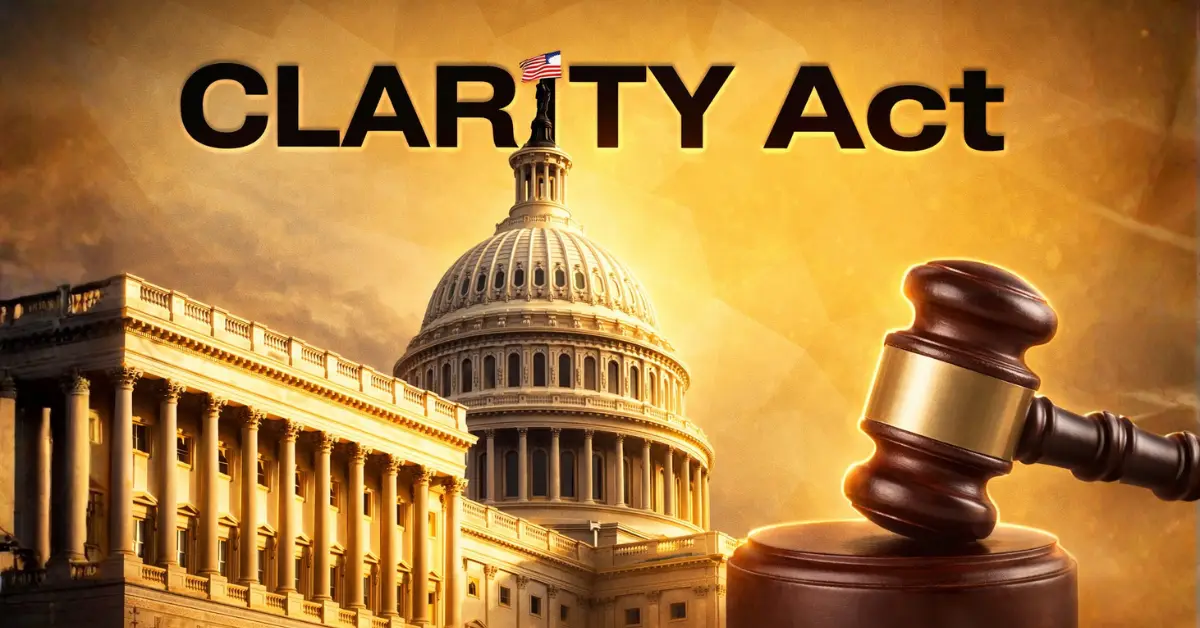
The U.S. CLARITY Act negotiations slowed after banks opposed a White House compromise on stablecoin rewards.
Crypto companies want stablecoin rewards of 3–4% to attract users and compete with traditional payment systems.
Banks fear stablecoins could pull up to $500 billion from deposits, reducing lending capacity.
Meanwhile, the SEC will host an April 16 roundtable to discuss future rules for digital assets.
The U.S. crypto bill has hit a roadblock after banks said they cannot support a White House plan on stablecoin rewards. Because of this disagreement, talks have slowed down.
Now many are watching the April 16 roundtable by the U.S. Securities and Exchange Commission, where regulators and industry leaders will discuss the bill’s future.
CLARITY Act Hit A Roadblock, Why?
The ongoing negotiations over the CLARITY Act, a major U.S. crypto regulation bill, have hit a roadblock after banks opposed a proposed rule on stablecoin rewards. The bill, which passed the House last July, aims to bring clear rules to the digital asset market.
Under the proposal, the Commodity Futures Trading Commission would oversee digital commodities like Bitcoin, while the U.S. Securities and Exchange Commission would regulate crypto assets that qualify as securities.
Supporters believe the law could give the U.S. crypto market a clear legal structure and help companies operate with more certainty.
Stablecoin Rewards Dispute Between Banks and Crypto Firms
The biggest disagreement centers on stablecoin rewards. Crypto companies want to offer 3 to 4% incentives to attract users and compete in the growing digital payments market.
Banks strongly oppose this idea. They worry that rewards could encourage people to move money out of traditional bank accounts and into crypto wallets.
Some financial institutions estimate that stablecoins could pull $500 billions from bank deposits in the coming years. Such outflows could reduce funds available for loans and weaken parts of the banking system.
White House Proposal Fails to Win Bank Support
To resolve the dispute, the White House proposed a middle-ground solution. The plan allowed rewards only for limited uses, such as peer-to-peer payments, while banning incentives for stablecoins that remain idle in wallets.
Most crypto companies accepted the proposal because it still allows them to compete for users. However, banks rejected the compromise and pushed for stricter limits.
Following the disagreement, Donald Trump criticized banks on Truth Social and said he would not allow them to undermine his crypto agenda.
April 16: SEC Hosting Roundtable On Clarity Act
Despite the setback, discussions around crypto regulation continue. The U.S. Securities and Exchange Commission plans to hold a roundtable to review how federal securities laws should apply to digital assets.
The debate will also examine how new crypto rules could support innovation while protecting investors.
However, with negotiations stalled and banks still resisting stablecoin rewards, many observers now believe the CLARITY Act may not become law until 2026.
Never Miss a Beat in the Crypto World!
Stay ahead with breaking news, expert analysis, and real-time updates on the latest trends in Bitcoin, altcoins, DeFi, NFTs, and more.
FAQs
The bill is stalled because banks oppose a White House plan to allow interest payments, or rewards, on stablecoins, causing a major disagreement in negotiations.
Crypto firms push 3-4% rewards to lure users for payments; banks oppose, worried it’ll drain deposits and hurt lending. White House offered limited P2P rewards, but banks said no.
SEC hosts an April 16, 2026 roundtable on applying securities laws to crypto, debating innovation vs. investor protection—key step amid stalled talks, possible law in 2026.
Trust with CoinPedia:
CoinPedia has been delivering accurate and timely cryptocurrency and blockchain updates since 2017. All content is created by our expert panel of analysts and journalists, following strict Editorial Guidelines based on E-E-A-T (Experience, Expertise, Authoritativeness, Trustworthiness). Every article is fact-checked against reputable sources to ensure accuracy, transparency, and reliability. Our review policy guarantees unbiased evaluations when recommending exchanges, platforms, or tools. We strive to provide timely updates about everything crypto & blockchain, right from startups to industry majors.
Investment Disclaimer:
All opinions and insights shared represent the author's own views on current market conditions. Please do your own research before making investment decisions. Neither the writer nor the publication assumes responsibility for your financial choices.
Sponsored and Advertisements:
Sponsored content and affiliate links may appear on our site. Advertisements are marked clearly, and our editorial content remains entirely independent from our ad partners.

 Yes
Yes  No
No