

 Advertise



- Debashree Patra
 Debashree Patra
- Reviewed by:
 Anjali Belgaumkar
Writer by choice, CryptoCurrency Writer, and Researcher by chance. Currently, focusing on financial news and analysis, as well as cryptocurrency news and data. One may not call me a crypto “Enthusiast” but trust me I'm getting there.
- Mar 18, 2026 05:07 UTC
-


SEC CFTC Crypto Commodity List 2026: All 16 Digital Assets Named and What It Means
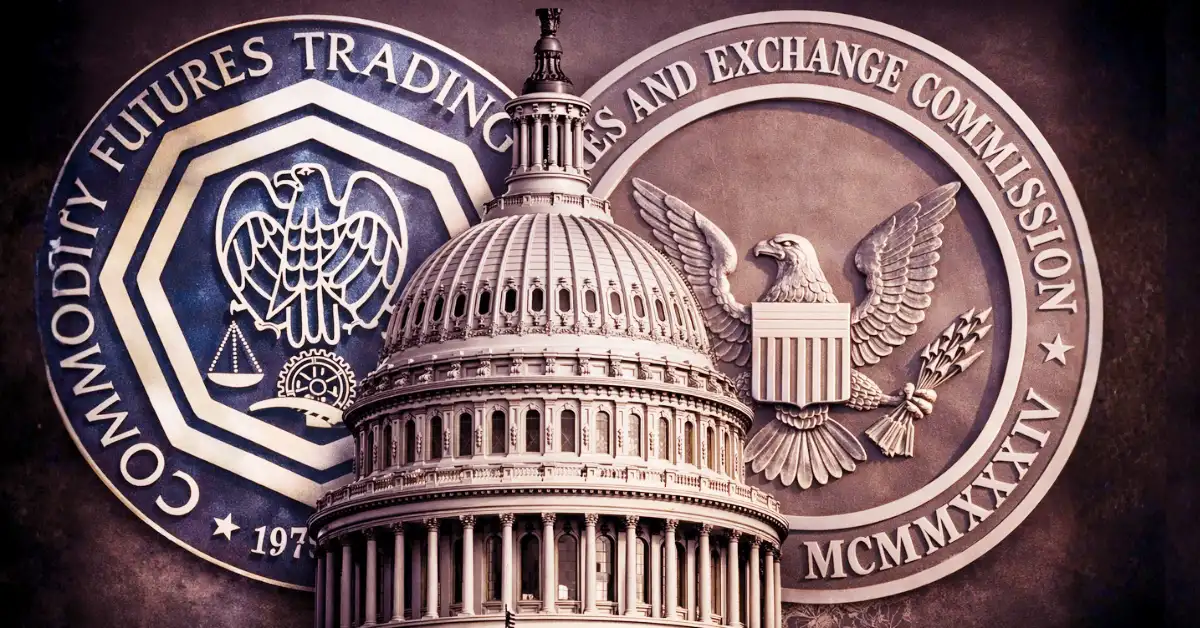
SEC and CFTC jointly classify 16 crypto assets as digital commodities, ending years of uncertainty and giving investors a clear legal framework to operate.
XRP, Solana, and Dogecoin gain regulatory clarity, opening doors for institutional adoption, new products, and broader crypto market expansion.
Regulatory bodies have given investors a tough time for years over the classification of securities and commodities. Finally, in a historic decision on March 17, the U.S. Securities and Exchange Commission and Commodity Futures Trading Commission jointly finalized a rule classifying 16 crypto assets as digital commodities, bringing long-awaited clarity to the market.
The list includes XRP, Ethereum, Solana, Cardano, Chainlink, Avalanche, Polkadot, Stellar, Hedera, Litecoin, Dogecoin, Shiba Inu, Tezos, Bitcoin Cash, Aptos, and Algorand.
A Binding Rule With Clear Authority
This decision carries full legal weight, not just guidance. It defines how these assets are treated under federal law and confirms a coordinated stance between both agencies.
SEC Chairman Paul S. Atkins stated that the move finally delivers clarity after years of confusion. At the same time, CFTC Chairman Michael S. Selig noted that the framework provides builders and investors with a stable environment to operate in.
“For far too long, American builders, innovators, and entrepreneurs have awaited clear guidance on the status of crypto assets under the federal securities and commodity laws,” said CFTC Chairman Michael S. Selig.
The rule also outlines how crypto activities, such as staking, mining, airdrops, and token wrapping, fit within existing laws, while introducing a structured classification system across different types of digital assets.
From Major Coins to Meme Tokens
The list covers a wide spectrum of the crypto market. Established networks like Ethereum, XRP, Solana, and Cardano sit alongside infrastructure-focused projects like Chainlink and Polkadot.
At the same time, meme tokens such as Dogecoin and Shiba Inu being included shows that high-activity assets, regardless of origin, are now part of the regulated landscape.
This broad inclusion removes the long-standing divide between “serious” projects and community-driven tokens, placing them under a unified regulatory framework.
What This Means for These 16 Assets
For XRP, this closes years of legal battles and uncertainty around its classification. For Solana and Avalanche, which previously faced scrutiny, it clears a major roadblock for wider participation.
Projects like Hedera and Stellar, built with enterprise use in mind, now have a clearer path to expand within regulated markets. Across the board, these 16 assets now share a defined status that removes the ambiguity that once slowed adoption.
Impact on the Crypto Market
This move reshapes how institutions approach crypto. Banks, asset managers, and exchanges now have a defined framework to work with, replacing hesitation with clearer entry points.
It opens the door for new trading products, custody services, and broader capital allocation into these assets. Interest is expected to spread beyond Bitcoin and Ethereum, as these 16 tokens now carry a recognized legal status.
For the wider market, this creates a shift in focus, from regulatory uncertainty to growth, participation, and infrastructure buildout.
Never Miss a Beat in the Crypto World!
Stay ahead with breaking news, expert analysis, and real-time updates on the latest trends in Bitcoin, altcoins, DeFi, NFTs, and more.
FAQs
Yes, more assets could be added if they meet criteria, signaling a gradual expansion of regulated crypto and broader market inclusion.
It may set a benchmark, pushing other countries to adopt clearer frameworks and align crypto rules for smoother cross-border activity.
Yes, expect more ETFs, derivatives, and structured products as institutions gain confidence in a defined regulatory environment.
Clarity encourages institutional entry, improves trust, and supports mainstream use, accelerating crypto’s integration into global finance.
Trust with CoinPedia:
CoinPedia has been delivering accurate and timely cryptocurrency and blockchain updates since 2017. All content is created by our expert panel of analysts and journalists, following strict Editorial Guidelines based on E-E-A-T (Experience, Expertise, Authoritativeness, Trustworthiness). Every article is fact-checked against reputable sources to ensure accuracy, transparency, and reliability. Our review policy guarantees unbiased evaluations when recommending exchanges, platforms, or tools. We strive to provide timely updates about everything crypto & blockchain, right from startups to industry majors.
Investment Disclaimer:
All opinions and insights shared represent the author's own views on current market conditions. Please do your own research before making investment decisions. Neither the writer nor the publication assumes responsibility for your financial choices.
Sponsored and Advertisements:
Sponsored content and affiliate links may appear on our site. Advertisements are marked clearly, and our editorial content remains entirely independent from our ad partners.

 Yes
Yes  No
No