

 Advertise



- Debashree Patra
 Debashree Patra
- Reviewed by:
 Qadir AK
Qadir Ak is the founder of Coinpedia. He has over a decade of experience writing about technology and has been covering the blockchain and cryptocurrency space since 2010. He has also interviewed a few prominent experts within the cryptocurrency space.
- Dec 04, 2025 15:30 UTC
-


Russia to Include Crypto Payments in Balance-of-Payments Data
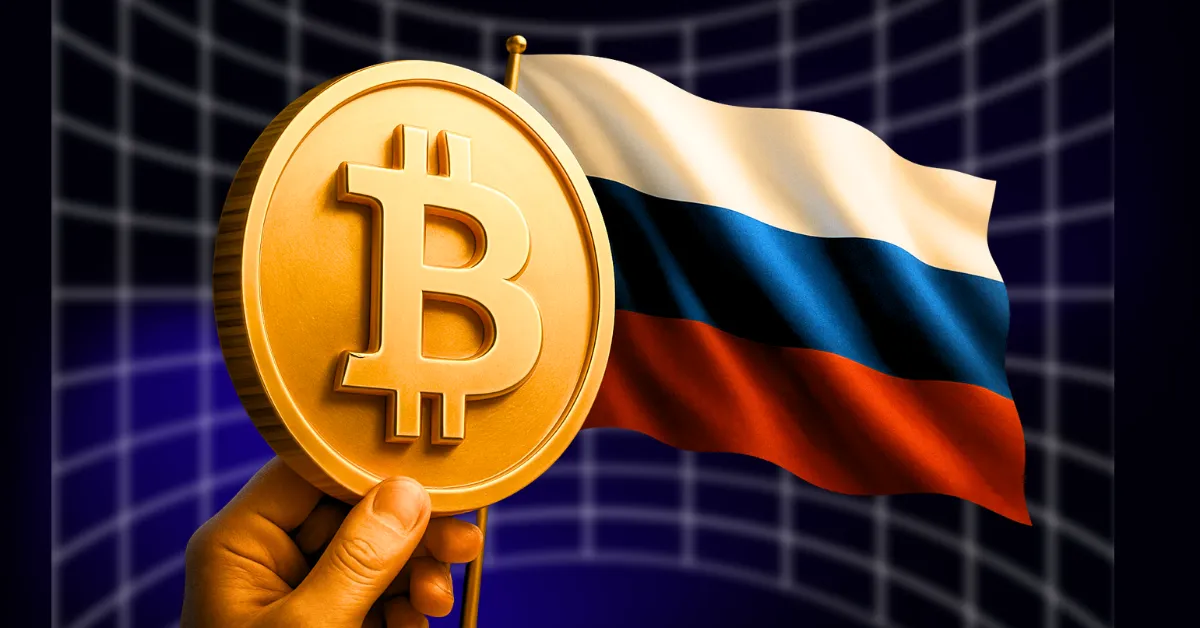
Russia plans to include crypto in its economic stats as mining grows into a major “hidden export” and digital assets become key for cross-border trade amid sanctions.
With rising mining investments and sanctioned trade shifting to crypto, Russia moves toward full regulation and economic integration of digital assets in national planning.
Russia is moving to formally include cryptocurrency in its economic calculations. According to Russian media reports, Maxim Oreshkin, a top aide to President Vladimir Putin, said crypto should be reflected in the country’s balance-of-payments statistics.
At present, cross-border payments made with digital assets aren’t counted in official data, even though they influence the ruble and the broader financial markets. Authorities are now viewing crypto not just as an investment asset, but as a functional part of the economy.
Why Russia Is Pushing Crypto
Crypto mining has become a major economic force in Russia. The country now accounts for nearly 16% of global Bitcoin mining, second only to the United States. Mining generates millions of dollars in daily revenue, and Russian companies have invested more than $1.3 billion in infrastructure such as data centers, electricity, and mining equipment. Experts describe mining as a “hidden export” that boosts national revenue and strengthens Russia’s global economic presence.
Beyond mining, crypto is increasingly used for cross-border trade. Russian firms have conducted billions of dollars’ worth of transactions using digital assets, often as a way to navigate Western sanctions. The government views crypto as a tool to maintain economic activity amid restrictions on traditional currencies like the U.S. dollar and euro.
What’s Next for Russian Crypto Regulations
Russia is working to regulate crypto while encouraging its growth. Recent steps include legalizing cryptocurrency payments for international trade and launching a confidential regulatory sandbox for companies experimenting with cross-border crypto transactions. Authorities aim to fully integrate crypto into national economic accounting, ensuring these flows are tracked, measured, and properly overseen.
Analysts say this shift could make crypto mining and digital-asset policy a strategic pillar of Russia’s economy. With sanctions still in place, Russia may continue relying on digital assets for trade flexibility while promoting mining as a legitimate export sector. The move could also push other nations to consider incorporating crypto into their economic planning, potentially reshaping global hashpower distribution and cross-border trade dynamics.
Never Miss a Beat in the Crypto World!
Stay ahead with breaking news, expert analysis, and real-time updates on the latest trends in Bitcoin, altcoins, DeFi, NFTs, and more.
FAQs
Yes, Russia legalized digital financial asset (DFA) transactions in July 2020. In 2025, it’s strengthening its framework with stricter laws to balance innovation and security.
Binance has largely exited Russia. In September 2023, Binance announced it sold its entire Russian business to CommEX. While it initially maintained service for a “limited number of existing Russian users,” it has been scaling back and looking for a new buyer after CommEX announced its closure in March 2024. Therefore, Binance has largely ceased its operations for new users and is in the process of a full exit for existing ones.
Russia wants official data to reflect real crypto use in mining and cross-border trade, helping track flows that already affect its economy.
Russia has become a major miner, generating significant revenue and treating mining as a growing export that supports its economy.
Russia’s shift may influence other nations to track crypto more closely, reshaping mining distribution and digital-asset trade patterns.
Trust with CoinPedia:
CoinPedia has been delivering accurate and timely cryptocurrency and blockchain updates since 2017. All content is created by our expert panel of analysts and journalists, following strict Editorial Guidelines based on E-E-A-T (Experience, Expertise, Authoritativeness, Trustworthiness). Every article is fact-checked against reputable sources to ensure accuracy, transparency, and reliability. Our review policy guarantees unbiased evaluations when recommending exchanges, platforms, or tools. We strive to provide timely updates about everything crypto & blockchain, right from startups to industry majors.
Investment Disclaimer:
All opinions and insights shared represent the author's own views on current market conditions. Please do your own research before making investment decisions. Neither the writer nor the publication assumes responsibility for your financial choices.
Sponsored and Advertisements:
Sponsored content and affiliate links may appear on our site. Advertisements are marked clearly, and our editorial content remains entirely independent from our ad partners.

 Yes
Yes  No
No