


 Advertise



- Debashree Patra
 Debashree Patra
- Reviewed by:
 Qadir AK
Qadir Ak is the founder of Coinpedia. He has over a decade of experience writing about technology and has been covering the blockchain and cryptocurrency space since 2010. He has also interviewed a few prominent experts within the cryptocurrency space.
- Dec 17, 2025 05:34 UTC
-


Russia Rules Out Crypto Payments, Says Bitcoin Will Never Be Legal Money
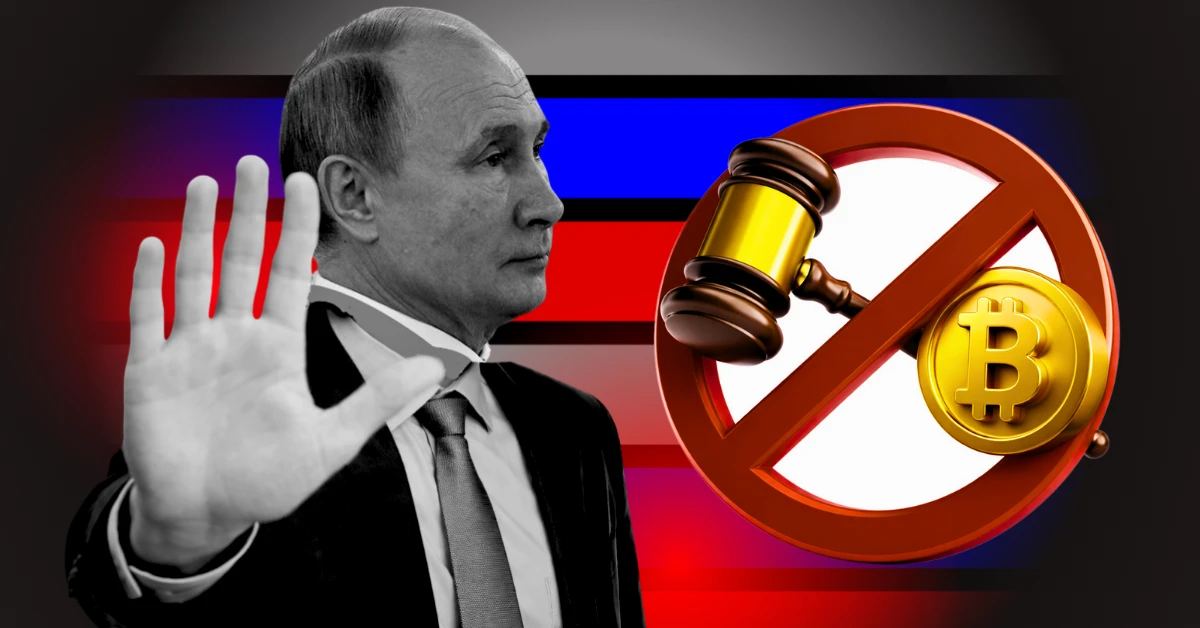
Russia draws a firm line on crypto: Bitcoin and other digital assets will never be allowed for payments—only the ruble can be used for goods and services.
Crypto yes, payments no: Russian lawmakers allow crypto as an investment and for cross-border trade, but domestic transactions remain strictly banned.
Russia’s stance on cryptocurrency payments is becoming increasingly clear. Despite growing adoption and interest in digital assets, senior lawmakers insist that Bitcoin and other cryptocurrencies will never be allowed as a means of payment for goods and services inside the country. According to top officials, crypto may have a place in Russia’s financial system, but strictly as an investment tool, not as money.
Crypto Regulations: “Only the Ruble Can Be Money”
Anatoly Aksakov, chairman of the State Duma’s Committee on Financial Markets and the key architect of Russia’s crypto legislation, made the position unmistakable. Speaking to the state news agency TASS, Aksakov stated that Russians will never be permitted to pay for goods or services using Bitcoin, Ethereum, or other cryptocurrencies. Any form of payment, he emphasized, must be made exclusively in rubles.
Aksakov reinforced that cryptocurrencies will not be recognized as legal money in Russia under any circumstances. Instead, lawmakers see digital assets as speculative instruments that can be held or traded, but not used for everyday transactions between individuals or businesses.
Central Bank’s Longstanding Resistance
The Bank of Russia has been the strongest and most consistent opponent of crypto payments. Governor Elvira Nabiullina has repeatedly pushed for sweeping restrictions, including bans on crypto transactions, exchanges, and even mining. This hardline view shaped Russia’s 2020 law that formally outlawed cryptocurrency payments within the country.
Since then, tensions have simmered between the central bank and the Ministry of Finance. While the bank favored a near-total ban similar to China’s approach, the finance ministry advocated regulation, oversight, and taxation instead. For years, competing bills stalled in parliament, leaving Russia’s crypto framework in limbo.
Russia’s Plan B for Crypto
Despite the firm ban on payments, Russia is making efforts towards crypto. Officials, including Aksakov himself, have acknowledged that Russian companies have already used cryptocurrencies to settle billions of dollars in cross-border trade. President Vladimir Putin has also spoken favorably about the growth of the country’s crypto mining sector, signaling a pragmatic shift driven by economic realities.
Major Russian banks have echoed this sentiment, noting rising demand for crypto exposure among customers, even as domestic payment use remains prohibited.
Moreover, the recent comments from policymakers suggest that regulation, not legalization of payments, is now the priority. Evgeny Masharov, a member of the Civic Chamber’s regulatory commission, argued that properly regulating crypto could boost federal revenues and help law enforcement combat financial crimes such as fraud and money laundering.
Never Miss a Beat in the Crypto World!
Stay ahead with breaking news, expert analysis, and real-time updates on the latest trends in Bitcoin, altcoins, DeFi, NFTs, and more.
FAQs
Yes, Russia legalized digital financial asset (DFA) transactions in July 2020. In 2025, it’s strengthening its framework with stricter laws to balance innovation and security.
Binance has largely exited Russia. In September 2023, Binance announced it sold its entire Russian business to CommEX. While it initially maintained service for a “limited number of existing Russian users,” it has been scaling back and looking for a new buyer after CommEX announced its closure in March 2024. Therefore, Binance has largely ceased its operations for new users and is in the process of a full exit for existing ones.
Regulation may evolve for investment and cross-border use, but officials consistently say crypto payments inside Russia will remain prohibited.
Trust with CoinPedia:
CoinPedia has been delivering accurate and timely cryptocurrency and blockchain updates since 2017. All content is created by our expert panel of analysts and journalists, following strict Editorial Guidelines based on E-E-A-T (Experience, Expertise, Authoritativeness, Trustworthiness). Every article is fact-checked against reputable sources to ensure accuracy, transparency, and reliability. Our review policy guarantees unbiased evaluations when recommending exchanges, platforms, or tools. We strive to provide timely updates about everything crypto & blockchain, right from startups to industry majors.
Investment Disclaimer:
All opinions and insights shared represent the author's own views on current market conditions. Please do your own research before making investment decisions. Neither the writer nor the publication assumes responsibility for your financial choices.
Sponsored and Advertisements:
Sponsored content and affiliate links may appear on our site. Advertisements are marked clearly, and our editorial content remains entirely independent from our ad partners.

 Yes
Yes  No
No