



 Advertise



Jake Claver Says RLUSD Makes XRP “Pointless”



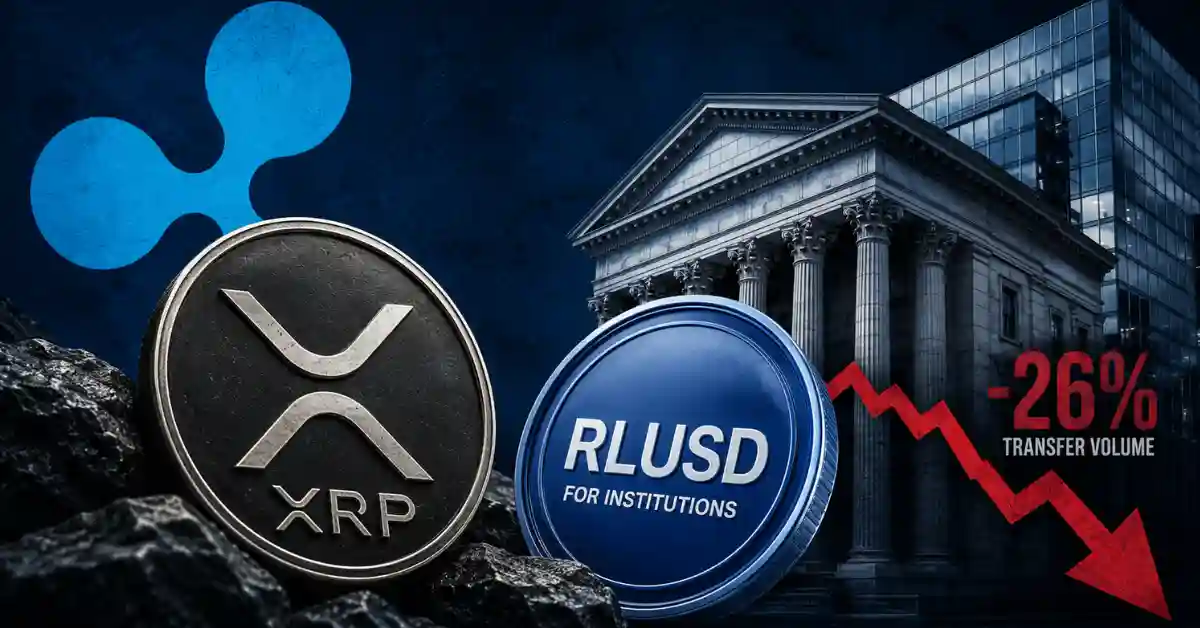
Jake Claver argues that RLUSD could reduce the need for XRP on XRPL.
XRP can connect tokenized assets that lack direct trading liquidity.
More tokenized assets could increase demand for shared liquidity routes.
Since Ripple launched its RLUSD stablecoin, debate over XRP’s future has begun. Digital Ascension Group Chairman Jake Claver says RLUSD could make XRP pointless.
As tokenized assets continue to grow on the XRP Ledger, many are asking whether a stablecoin can truly replace XRP as the bridge asset that connects different markets.
Why Jake Claver Says RLUSD Could Replace XRP
Claver’s argument starts with a simple example, that a user on the XRP Ledger may want to swap a tokenized money market fund for a yen-based stablecoin. There may be no direct market between the two assets, but the ledger can route the trade through XRP.
That means the transaction can move from the tokenized fund to XRP and then from XRP to the yen stablecoin.

The two trades can happen together in one transaction, making the middle step almost invisible to the user.
Claver argues that RLUSD could take over this role because it is already built for fast digital settlement and maintains a stable value linked to the U.S. dollar.
But that raises another question: Can a dollar stablecoin work as the middle asset for every type of trade?
Why XRP Still Has a Unique Role
To understand XRP’s uniqueness, Jake considers an explanation of how XRP works like a hub at an airport.
Without a hub, 100 assets would need 4,950 direct trading pairs. Using one bridge asset reduces that to just 100 connections.
On the XRP Ledger, XRP allows assets that do not have direct liquidity to trade with each other. For example, a tokenized bond fund can swap into XRP before moving into a tokenized commodity. This becomes more useful as more tokenized assets enter the market.
RLUSD Serves a Different Purpose
RLUSD is designed as a digital dollar. It keeps a value close to $1, making it useful for payments, settlement, and trades where the dollar is already the preferred asset.
However, not every trade involves dollars. Some tokenized assets may need to trade directly with other non-dollar assets. In those cases, using a dollar stablecoin as the middle asset adds another step, where XRP can still act as a neutral bridge.
Another key difference is that RLUSD has an issuer, while XRP does not.
RLUSD is backed by reserves and operates under regulatory rules, including compliance checks and legal requirements. XRP, as the native asset of the XRP Ledger, does not rely on an issuer.
Using a regulated stablecoin as the main bridge across many markets could introduce extra restrictions if regulatory actions affect its use.
Can XRP and RLUSD Coexist?
RLUSD and XRP do not have to compete. RLUSD is built to act as a digital dollar for payments and settlements, while XRP helps connect different assets when there is no direct trading market.
As more real-world assets move on-chain, both can have different jobs. However, RLUSD’s fast growth also raises questions.
Its market value has already reached $1.53 billion, but more than 88% of its supply is on Ethereum, not the XRP Ledger. This shows RLUSD is growing beyond XRPL instead of depending only on it.
Was this writing helpful?

Trust with CoinPedia:
CoinPedia has been delivering accurate and timely cryptocurrency and blockchain updates since 2017. All content is created by our expert panel of analysts and journalists, following strict Editorial Guidelines based on E-E-A-T (Experience, Expertise, Authoritativeness, Trustworthiness). Every article is fact-checked against reputable sources to ensure accuracy, transparency, and reliability. Our review policy guarantees unbiased evaluations when recommending exchanges, platforms, or tools. We strive to provide timely updates about everything crypto & blockchain, right from startups to industry majors.
Investment Disclaimer:
All opinions and insights shared represent the author's own views on current market conditions. Please do your own research before making investment decisions. Neither the writer nor the publication assumes responsibility for your financial choices.
Sponsored and Advertisements:
Sponsored content and affiliate links may appear on our site. Advertisements are marked clearly, and our editorial content remains entirely independent from our ad partners.