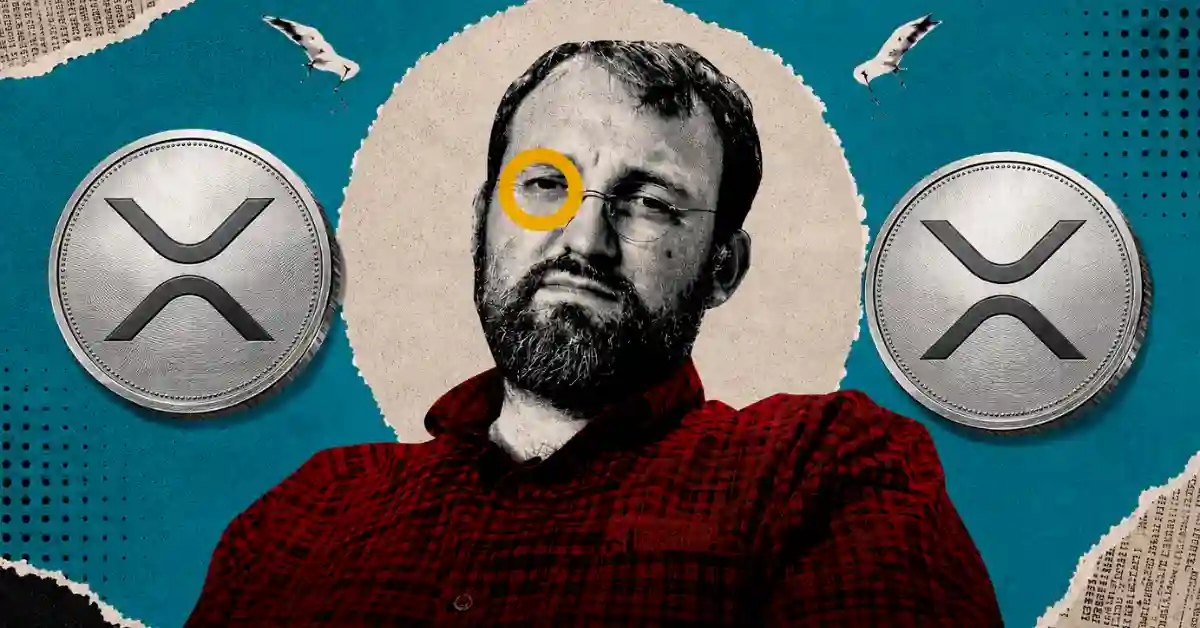
Cardano founder Charles Hoskinson said the enthusiasm surrounding XRP stems from a structural dynamic he calls Web 2.5, where a centralised company continuously builds real-world value around its native blockchain, creating a self-reinforcing cycle that retail and institutional markets reward.
Speaking in a wide-ranging discussion, Hoskinson described the pattern plainly. Ripple acquires a prime broker, closes a partnership, secures a licence, and each move adds to the value proposition of the XRP Ledger. The company and the token are linked, and the market prices in every step forward.
“Brad and the other gang, they just bought a prime broker and they just did this,” Hoskinson said. “Well, that’s a centralised company, right? But they know that that company’s going to use the XRP Ledger and so they’re going to kind of create this virtuous cycle here. The efforts of one actor is kind of driving the value proposition of the thing.”
Also Read :Ripple (XRP) Price Prediction 2026, 2027-2030: Will XRP Reach $5?
A Model He Once Resisted
Hoskinson placed XRP alongside Tether, Circle, BNB, and Canton as examples of what he calls Web 2.5, hybrid structures that combine regulated corporate entities with blockchain infrastructure underneath. He acknowledged he spent years pushing back against this model before concluding the market had settled the argument.
“There’s nothing wrong with it. I’ve been fighting it. I mean, I’ve thrown in that towel a long time ago,” he said. “If you look at CoinMarketCap, XRP, BNB, Circle, Tether, look at where they sit. That’s where all the growth is right now.”
The Web 2.5 category, in his framing, functions like a club. A central entity builds the infrastructure, attracts institutional participation, and drives network effects. Users and capital follow.
Also Read : Is XRP Really ‘Nothing’? Exclusive: What Hayes and Hoskinson Are Missing About Ripple
Where the Growth Goes Next
Hoskinson said the Web 2.5 boom will not stay contained to those platforms. As these hybrid networks bring billions of users into crypto, he expects activity to migrate into true Web 3 markets if cross-chain bridging infrastructure develops properly. Projects focused on interoperability and privacy, he argued, stand to capture that overflow.
For XRP specifically, the implication is that its position at the front of the institutional adoption wave, backed by Ripple’s regulatory wins and acquisition strategy, gives it structural advantages that pure decentralised protocols currently lack.
Charles Hoskinson  Charles Hoskinson
 at Ethereum Charles Hoskinson is a prominent American entrepreneur and a visionary in the blockchain spaceHe also co-founded the Ethereum blockchain platform and founder of IOHK. He developed a Module proof-of-stake(Pos) blockchain that helps Charles scale and secure enterprise blockchain adoption. Quick Facts Full Name Charles Hoskinson Birth 05-11-1987 in Hawaii, United States Nationality American Education University of Colorado Boulder, Metropolitan State University of Denver Marital Status Unmarried as of 2025 Net Worth Estimated to be around $700 million Experience Co-founder of Ethereum, contributing to smart contracts and Dapps in the year 2013. Established IOHK ( Input Output Hong Kong) on the year 2014. Developed and launched Cardano with the (PoS) model in the year 2015 to 2017. Growth of Cardano's Web3, improving blockchain system I the year 2022. Promoted insights about blockchain in Africa and other developing countries in the year 2023. Promoted a digital identity control system, improving the Cardano network in the year 2024. At present, driving innovation in blockchain DeFi and decentralized systems at IOHK. Chief Executive Officer
Ripple
Ripple
Ripple is a blockchain and fintech company focused on improving how money moves across borders. Founded in 2012, Ripple develops blockchain-based payment solutions that help financial institutions make faster, more efficient, and transparent international payments. Ripple is closely connected to XRP and the XRP Ledger (XRPL), a decentralized blockchain designed for fast and low-cost transactions. Its ecosystem supports cross-border payments, digital assets, and other financial applications. Ripple has also expanded its offerings to areas such as stablecoins, institutional crypto services, and digital asset infrastructure.
Ripple Details
Attribute
Details
Key Technology
XRP Ledger (XRPL)
Native Digital Asset
XRP
Stablecoin
Ripple USD (RLUSD)
Primary Use Cases
Cross-border payments, digital asset custody, stablecoins, tokenization, treasury management, digital asset infrastructure
Payments Product
Ripple Payments
Stablecoin Platform
Ripple Mint
Blockchain Ecosystem
XRP Ledger
Payment Asset
XRP, RLUSD and other supported digital assets
Ripple Products & Services
Ripple Payments: Enables fast, global cross-border payments using digital assets and local currencies.
Ripple USD (RLUSD): A U.S. dollar-backed stablecoin built for institutional payments and financial use cases.
Ripple Mint: Helps institutions mint, redeem, and manage RLUSD.
XRP Ledger Integration: Uses the XRP Ledger for fast settlement, tokenization, and asset exchange.
Institutional Stablecoin Infrastructure: Supports stablecoin payments, treasury management, and liquidity.
Real-World Asset Tokenization: Supports tokenization of securities, treasuries, bonds, and other RWAs.
AI & Agentic Payments: Enables AI agents and machine-to-machine payments using XRP and RLUSD.
Cross-Chain Stablecoin Infrastructure: RLUSD is issued on XRP Ledger and Ethereum and supports additional networks.
Ripple, XRPL, and XRP Token
Ripple is a tech firm utilizing XRP and XRPL technologies in its financial products, while XRP, on the other hand, is an independent native digital currency of the XRP Ledger. Ripple is one of several contributors to XRPL technology.
Attribute
Details
Native Token
XRP
Token Type
Native Digital Asset
Native Blockchain
XRP Ledger (XRPL)
Ripple's Relationship with XRP
Ripple holds XRP and uses it in certain payment and liquidity solutions
XRP Utility in Ripple Ecosystem
Cross-border liquidity, bridge asset, and payment settlement
XRP Utility on XRPL
Transaction fees, anti-spam mechanism, DEX liquidity, and bridge asset
XRP Ownership
Ripple owns a substantial amount of XRP, including XRP held in escrow
Blockchain Ownership
XRP Ledger is an open-source, decentralized blockchain that Ripple neither owns nor controls
The RLUSD Stablecoin
Token Name - Ripple USD
Token Symbol - RLUSD
Token Type - Fiat-backed stablecoin
Primary Utility - Payments, settlement, liquidity, treasury management, trading, and onchain financial applications
Blockchain Networks - XRP Ledger, Ethereum, Base, Ink, Optimism, Unichain, and XRPL EVM Sidechain
Native Issuance - XRP Ledger and Ethereum, with availability on additional supported networks
Regulatory Framework - The structure was designed in accordance with applicable regulations, such as NYDFS rules on stablecoins.
Token Standard - Native token of the XRP Ledger (XRPL); tokenized asset on EVM-compatible networks.
Key Platform - Ripple Mint
AI Payments - Ripple is expanding RLUSD into AI agent and machine-to-machine payment use cases.
info@ripple.com
Crypto / Blockchain SolutionPayment solution
Trust with CoinPedia:
CoinPedia has been delivering accurate and timely cryptocurrency and blockchain updates since 2017. All content is created by our expert panel of analysts and journalists, following strict Editorial Guidelines based on E-E-A-T (Experience, Expertise, Authoritativeness, Trustworthiness). Every article is fact-checked against reputable sources to ensure accuracy, transparency, and reliability. Our review policy guarantees unbiased evaluations when recommending exchanges, platforms, or tools. We strive to provide timely updates about everything crypto & blockchain, right from startups to industry majors.
Investment Disclaimer:
All opinions and insights shared represent the author's own views on current market conditions. Please do your own research before making investment decisions. Neither the writer nor the publication assumes responsibility for your financial choices.
Sponsored and Advertisements:
Sponsored content and affiliate links may appear on our site. Advertisements are marked clearly, and our editorial content remains entirely independent from our ad partners.