

 Advertise



- Rizwan Ansari
 Rizwan Ansari
- Apr 07, 2026 08:42 UTC
-


India Crypto Tax Alert: Section 148A Notices Target Unreported Trades
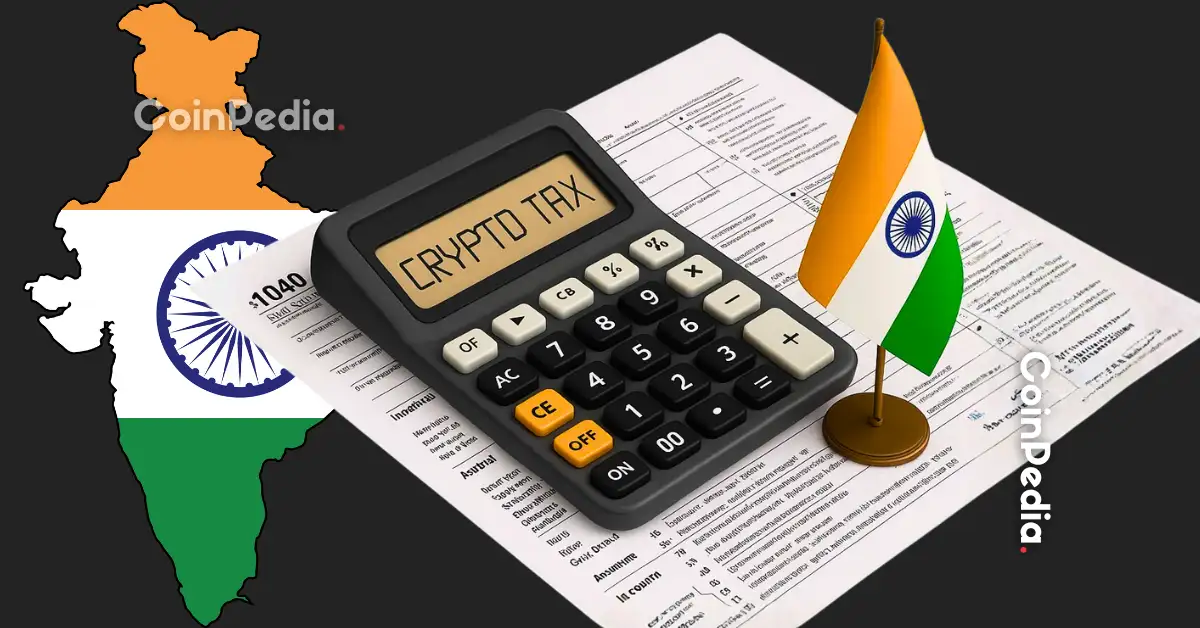
India begins issuing Section 148A notices targeting unreported crypto transactions from FY 2021–22.
Some notices show inflated income like ₹1.63 crore based on turnover, not actual trading profits.
Section 148A notice is show-cause only, traders can respond by submitting reconciled transaction records.
India’s tax authorities are now cracking down on crypto traders. The Income Tax Department has begun sending Section 148A notices for FY 2021–22, targeting unreported crypto transactions.
With exchanges, bank records, and PAN data under review, many traders could face reassessments and pressure to explain hidden profits.
Are you on their radar? Check it out!
Why Crypto Users Are Receiving India Crypto Tax Notices?
The notices are being triggered after the tax department began scanning trading data through its Insight Portal and risk engines. These systems compare PAN-linked KYC information, exchange transactions, bank movements, and ITR filings.
If mismatches appear, users may receive a Section 148A notice. This typically happens when crypto income was not reported, returns were not filed, or transaction trails appear incomplete due to multiple exchanges and wallets.
Many traders assumed reporting was not required in FY 2021–22 because crypto rules were unclear at the time. However, income disclosure was still mandatory, and authorities are now reviewing past activity.
Notices May Show Inflated “Undisclosed Income”
One major issue is that some notices display very high income figures. In certain cases, notices show amounts like ₹1.63 crore as “undisclosed income.” But this is often not the actual profit.
The system frequently calculates gross trading volume instead of net gains. For example, if a trader had a total trading volume of ₹ 1.6 crore but only ₹4–5 lakh in profit, the system may still flag the full ₹1.6 crore as income until it is clarified.
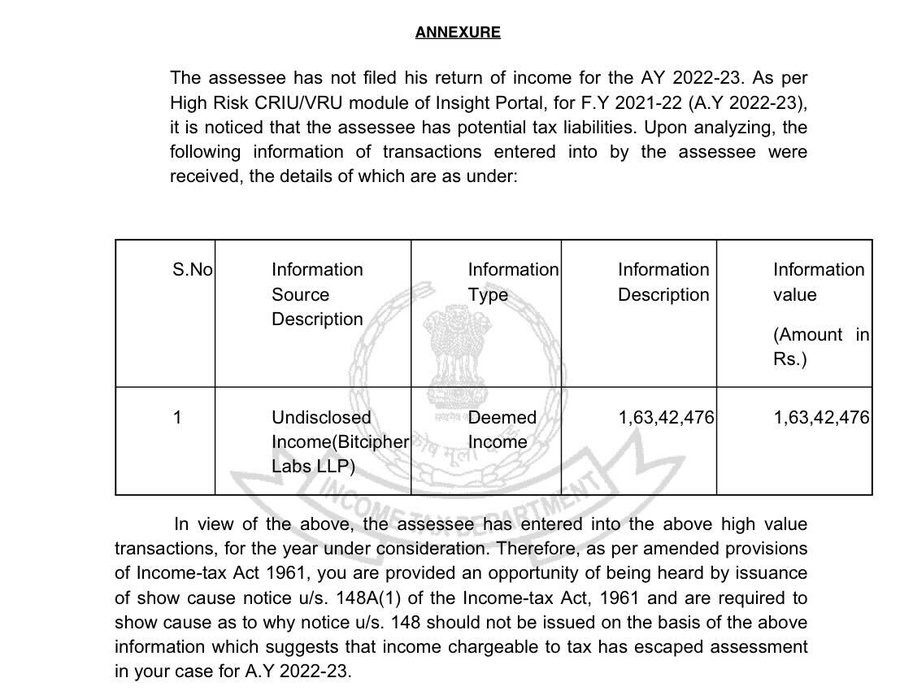
This usually happens when the tax department sees only partial transaction data.
Multiple Exchanges Increasing Risk
Users who traded across several platforms are more likely to get flagged. A typical flow, such as CoinSwitch to Binance, then to a wallet, and later to another exchange, can create gaps in the data.
If the system sees only deposits or withdrawals without the full chain, it may treat transfers as fresh income. This leads to inflated estimates and triggers notices.
Another major red flag is not filing an ITR for AY 2022–23 despite having crypto activity. In such cases, the risk score rises sharply.
148A Notice Is Not a Tax Demand
Importantly, a Section 148A notice is not a final tax demand. It is a show-cause notice asking the taxpayer to explain the mismatch before the assessment is reopened.
Recipients are advised to reconstruct all transactions, calculate actual gains or losses, and submit supporting documents. In many cases, proper reconciliation can resolve the issue.
The development signals that crypto transactions in India are now fully traceable through AIS data, exchange reporting, and KYC records.
With enforcement increasing, more notices for FY 2021–22 and FY 2022–23 are likely.
Trust with CoinPedia:
CoinPedia has been delivering accurate and timely cryptocurrency and blockchain updates since 2017. All content is created by our expert panel of analysts and journalists, following strict Editorial Guidelines based on E-E-A-T (Experience, Expertise, Authoritativeness, Trustworthiness). Every article is fact-checked against reputable sources to ensure accuracy, transparency, and reliability. Our review policy guarantees unbiased evaluations when recommending exchanges, platforms, or tools. We strive to provide timely updates about everything crypto & blockchain, right from startups to industry majors.
Investment Disclaimer:
All opinions and insights shared represent the author's own views on current market conditions. Please do your own research before making investment decisions. Neither the writer nor the publication assumes responsibility for your financial choices.
Sponsored and Advertisements:
Sponsored content and affiliate links may appear on our site. Advertisements are marked clearly, and our editorial content remains entirely independent from our ad partners.

 Yes
Yes  No
No