

 Advertise



- Rizwan Ansari
 Rizwan Ansari
- Dec 05, 2025 05:40 UTC
-


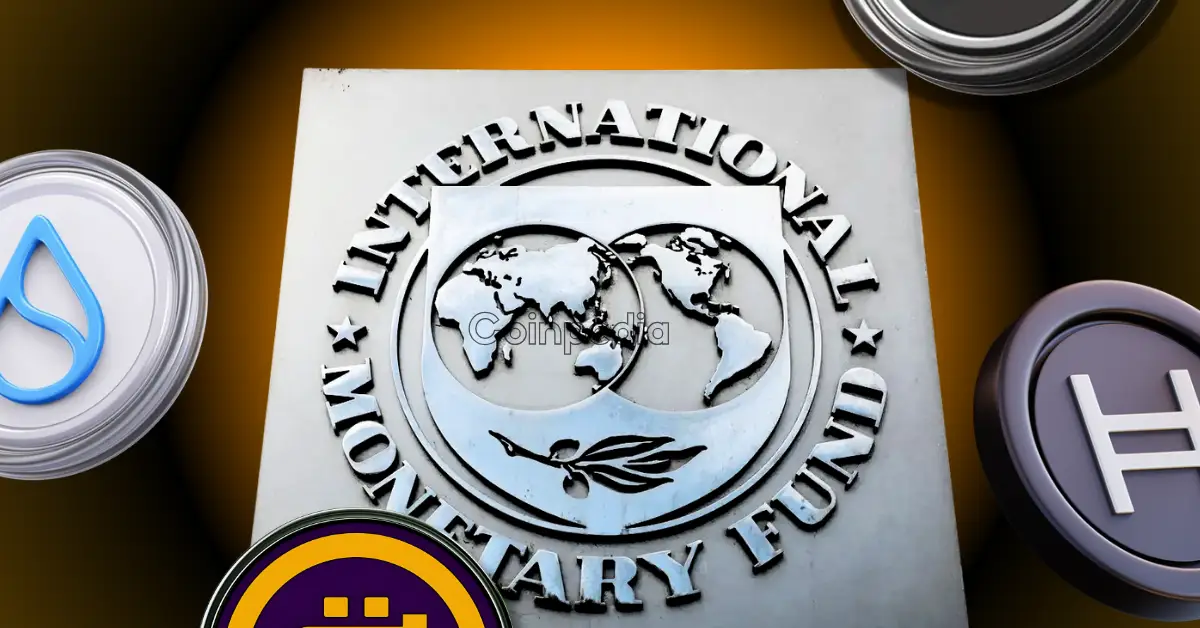
IMF Report 2025 Warns How Stablecoins Could Damage National Currencies
IMF warns that 97% dollar-pegged stablecoins could weaken national currencies in vulnerable economies.
IMF urges nations to block digital assets becoming legal tender to preserve monetary control.
Only 45 countries currently have clear stablecoin rules, leaving dangerous gaps in oversight.
The International Monetary Fund (IMF) has issued a strong warning about the growing risks stablecoins may create for national currencies, especially in countries that already have weak financial systems.
The IMF noted that 97% of stablecoins are tied to the US dollar and said governments should not allow digital assets to become legal tender.
Stablecoins Could Replace Weak Currencies
According to the recently released departmental paper, the IMF identifies stablecoins as a significant threat to central bank control, particularly in economies with weaker currencies.
Since stablecoins are linked to strong currencies like the US dollar, people may slowly stop using their national money, which could hurt the country’s ability to control inflation or interest rates.
The concern is not new. In November, the European Central Bank also warned that dollar-based stablecoins could drain money from banks and reduce their financial stability.
Today, the stablecoin market is huge, worth about $316 billion in 2025. Most of it is controlled by USDT and USDC, which together hold over 90% of the market. Even euro- and yen-based stablecoins are growing, worth $675 million and $15 million, respectively.
Why Poorer Countries Are Most at Risk
Some countries with very high inflation are already turning to stablecoins to protect their money. For example,
- Argentina’s inflation went above 140% in 2023
- Turkey has inflation above 60%
Because of this, people are using stablecoins as a safer option, and transactions in these countries have increased by more than 300% in a year.
The IMF also explains that stablecoins are easy to access. Anyone with a smartphone can get them. Today, more than 420 million people around the world use crypto wallets, and stablecoins make up nearly 25% of all crypto transactions.
What the IMF Wants Countries to Do
The IMF says countries need stricter and clearer rules for stablecoins. Right now, only 45 countries have proper regulations, which leaves many gaps and increases risk.
To protect their own currencies, the IMF suggests two main steps.
- First, countries should strengthen their local currency by following strong economic policies.
- Second, they should set clear rules for stablecoins so these digital assets don’t end up being treated like official money.
The IMF also warns that digital assets should not become legal tender, because that would weaken a country’s ability to control its financial system.
Never Miss a Beat in the Crypto World!
Stay ahead with breaking news, expert analysis, and real-time updates on the latest trends in Bitcoin, altcoins, DeFi, NFTs, and more.
FAQs
The IMF says stablecoins could weaken national currencies, especially in countries with fragile financial systems.
People may abandon unstable local currencies for dollar-backed stablecoins, reducing a country’s control over inflation and interest rates.
The stablecoin market is over $316B, with USDT and USDC dominating, and transactions rising in high-inflation countries.
Trust with CoinPedia:
CoinPedia has been delivering accurate and timely cryptocurrency and blockchain updates since 2017. All content is created by our expert panel of analysts and journalists, following strict Editorial Guidelines based on E-E-A-T (Experience, Expertise, Authoritativeness, Trustworthiness). Every article is fact-checked against reputable sources to ensure accuracy, transparency, and reliability. Our review policy guarantees unbiased evaluations when recommending exchanges, platforms, or tools. We strive to provide timely updates about everything crypto & blockchain, right from startups to industry majors.
Investment Disclaimer:
All opinions and insights shared represent the author's own views on current market conditions. Please do your own research before making investment decisions. Neither the writer nor the publication assumes responsibility for your financial choices.
Sponsored and Advertisements:
Sponsored content and affiliate links may appear on our site. Advertisements are marked clearly, and our editorial content remains entirely independent from our ad partners.

 Yes
Yes  No
No