

 Advertise



- Zafar Naik
 Zafar Naik
- Reviewed by:
 Qadir AK
Qadir Ak is the founder of Coinpedia. He has over a decade of experience writing about technology and has been covering the blockchain and cryptocurrency space since 2010. He has also interviewed a few prominent experts within the cryptocurrency space.
- Dec 16, 2025 12:07 UTC
-


How Did Solana Stay Online During the 4th Largest DDoS Attack Ever Recorded?

Solana remained fully operational while facing one of the largest DDoS attacks ever recorded on the internet.
Despite attack traffic at cloud-provider scale, the network continued processing transactions without visible disruption.
The incident triggered widespread discussion across the crypto community.
For most blockchains, a sustained DDoS attack at internet-scale would mean stalled transactions, missed blocks, and visible network stress. That didn’t happen this time.
Over the past week, the Solana network has been operating under a massive distributed denial-of-service (DDoS) attack that peaked near 6 terabits per second, ranking it as the fourth-largest DDoS attack ever recorded on any distributed system.
Despite the scale, on-chain data shows the network continued to function normally.
A Week Under Attack With No Network Slowdown
A DDoS attack is designed to overwhelm a network by flooding it with traffic, usually causing slowdowns or outages.
SolanaFloor reported that the Solana network had been facing a “sustained DDoS attack for the past week, peaking near 6 Tbps,” while noting that data showed “no impact, with sub-second confirmations and stable slot latency.”
Pipe Network described the scale as unusual even by internet standards.
“6 Tbps volumetric attack translates to billions of packets per second,” the firm said. “Under that kind of load, you’d normally expect rising latency, missed slots, or confirmation delays.”
- Also Read :
Transaction Speeds Remain Steady Under Pressure
Data shared showed that transactions continued to confirm in under a second, with block production staying on schedule throughout the attack. In simple terms, users were able to send and confirm transactions as usual, even while the network was being flooded with attack traffic.
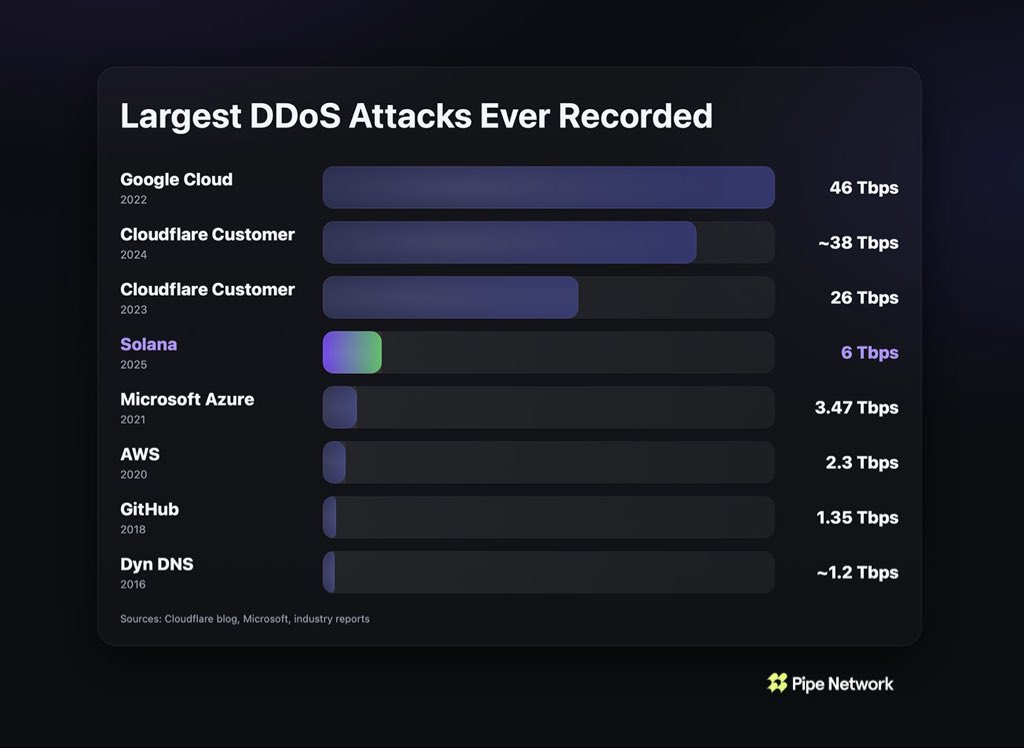
DDoS attacks of this scale have historically targeted cloud providers such as Google Cloud and Cloudflare, making Solana’s ability to stay online stand out.
A Clear Contrast With Other Blockchain Disruptions
According to reports, the episode also contrasts with a recent DDoS attack on the Sui network, which resulted in block production delays and degraded performance.
As details of the attack spread, the crypto community took to X to point out the scale of the event and the lack of visible impact on the network.
This has reinforced Solana’s strong reputation as a trustworthy network built to handle heavy demand.
Never Miss a Beat in the Crypto World!
Stay ahead with breaking news, expert analysis, and real-time updates on the latest trends in Bitcoin, altcoins, DeFi, NFTs, and more.
FAQs
It means the network was flooded with billions of data packets per second—traffic levels usually seen only in the largest global internet attacks.
Many blockchains rely on shared network resources or limited validator bandwidth, making them sensitive to traffic floods that disrupt consensus.
Yes. Proven resilience builds confidence among developers, institutions, and users that the network can handle peak demand safely.
Trust with CoinPedia:
CoinPedia has been delivering accurate and timely cryptocurrency and blockchain updates since 2017. All content is created by our expert panel of analysts and journalists, following strict Editorial Guidelines based on E-E-A-T (Experience, Expertise, Authoritativeness, Trustworthiness). Every article is fact-checked against reputable sources to ensure accuracy, transparency, and reliability. Our review policy guarantees unbiased evaluations when recommending exchanges, platforms, or tools. We strive to provide timely updates about everything crypto & blockchain, right from startups to industry majors.
Investment Disclaimer:
All opinions and insights shared represent the author's own views on current market conditions. Please do your own research before making investment decisions. Neither the writer nor the publication assumes responsibility for your financial choices.
Sponsored and Advertisements:
Sponsored content and affiliate links may appear on our site. Advertisements are marked clearly, and our editorial content remains entirely independent from our ad partners.

 Yes
Yes  No
No