


 Advertise



- Zafar Naik
 Zafar Naik
- Feb 06, 2026 12:40 UTC
-


Ethereum Founder Vitalik Buterin Says Relying on L2s Could Cost Users Their Funds
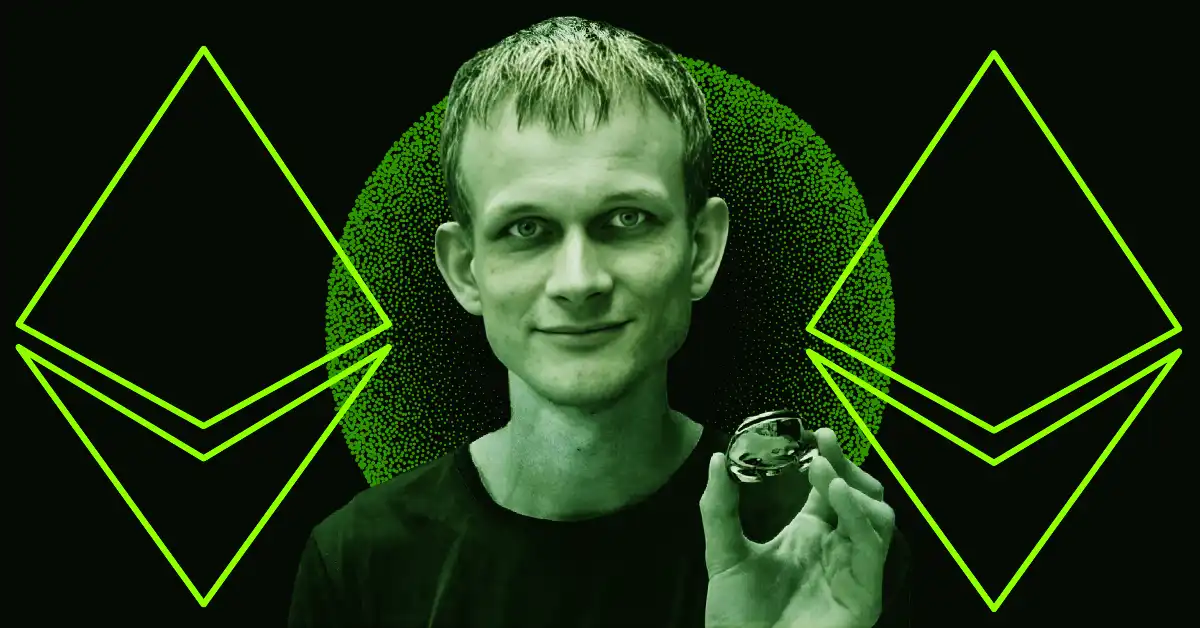
Vitalik Buterin warned that heavy reliance on Ethereum L2s could put user funds at risk if off-chain systems fail.
A public disagreement between Ethereum’s top leaders has reopened the debate over stateless L1 scaling.
The discussion signals a possible shift in how Ethereum balances security, scalability, and protocol-level trust.
Two of Ethereum’s most senior figures just disagreed publicly on how the protocol should scale, and the conversation is worth paying attention to.
Ethereum Foundation Co-Executive Director Tomasz Stańczak suggested that Ethereum should drop its built-in statelessness effort at L1 and let L2s handle state scaling instead. He called the current approach too complex and “against the idea of simplicity,” adding that the current design leads to “nothing better than L2s.”
Vitalik Buterin responded directly and disagreed.
What Did Vitalik Buterin Say About L1 Statelessness?
Buterin first corrected how Stańczak framed the issue. He said current proposals are not about “higher-security vs lower-security” state but about “higher-accessibility vs lower-accessibility.”
He then laid out a path where Ethereum scales execution by 1000x but state by only 20x. In that setup, creating new storage slots becomes very expensive compared to computation.
Apps would need to provide merkle proofs to update virtual state trees instead of using native L1 storage. He noted that privacy protocols already work this way.
L2 Dependency Puts User Funds at Risk
This is where it matters most. Buterin said that relying too heavily on L2s means more dependency on extra-protocol code. When that code breaks, users lose money, and there is no hard fork to fix it.
He was clear: consensus failure followed by a hard fork is “less bad” than people quietly losing funds through broken L2 infrastructure. This lines up with his recent comments where he called most L2s “copypasta EVM chains” and said Ethereum does not need more of them.
Buterin Floats a UTXO-Style Alternative
If the goal is to minimize L1 work, Buterin said he would go with a bare-bones UTXO approach, starting with moving receipts to SSZ for better provability.
But he is not locking anything in.
“There is no need for us to commit to an exact path this year,” he said, emphasizing that L1-native solutions reduce the code apps depend on for security while protecting “privacy, availability and censorship resistance for users.”
Also Read: Vitalik Buterin Wants Ethereum to Survive Without Him, Reveals 7-Step Plan
With Ethereum L1 gas limit increases planned for 2026 and Buterin openly questioning the role of L2s, this debate inside the Foundation could shape the protocol’s scaling roadmap going forward.
Trust with CoinPedia:
CoinPedia has been delivering accurate and timely cryptocurrency and blockchain updates since 2017. All content is created by our expert panel of analysts and journalists, following strict Editorial Guidelines based on E-E-A-T (Experience, Expertise, Authoritativeness, Trustworthiness). Every article is fact-checked against reputable sources to ensure accuracy, transparency, and reliability. Our review policy guarantees unbiased evaluations when recommending exchanges, platforms, or tools. We strive to provide timely updates about everything crypto & blockchain, right from startups to industry majors.
Investment Disclaimer:
All opinions and insights shared represent the author's own views on current market conditions. Please do your own research before making investment decisions. Neither the writer nor the publication assumes responsibility for your financial choices.
Sponsored and Advertisements:
Sponsored content and affiliate links may appear on our site. Advertisements are marked clearly, and our editorial content remains entirely independent from our ad partners.

 Yes
Yes  No
No