


 Advertise



- Steve Muchoki
 Steve Muchoki
- Mar 31, 2026 20:47 UTC
-


Elon Musk: Why Quantum Computing Could Actually Help Bitcoin Owners

Elon Musk has said quantum computers could enable the recovery of lost crypto wallet passwords.
The statement comes in response to Google’s recent warning that Bitcoin’s cryptography could be cracked with fewer quantum resources and less time than previously expected.
Debate abounds over the potential benefits and risks the achievement would have for cryptocurrencies.
Tech mogul Elon Musk is convinced that quantum computers could enable the recovery of lost crypto wallet passwords – a plus side of the computing technology amid all the recent buzz of the great risks it poses to blockchain and cryptocurrencies.
Blockchain analytics estimates that at least 3-4 million Bitcoin (BTC), or 15%-20% of the total circulation, have been irretrievably lost. Additionally, the number of BTC lost due to forgotten or misplaced seed phrases surpassed that lost from exchange hacks.
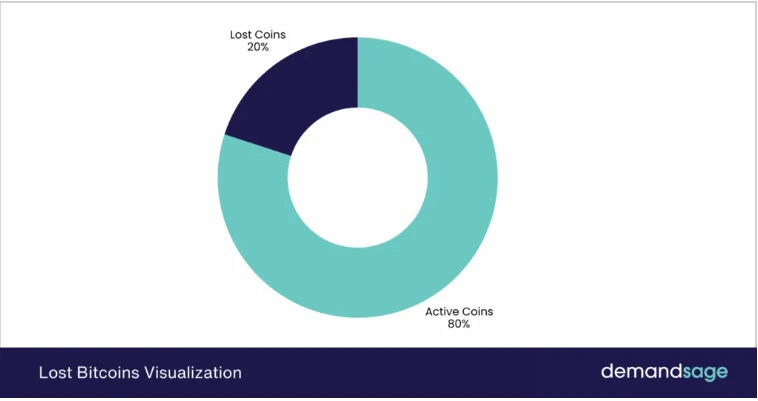
Source: DemandSage
A quantum computer capable of solving for private keys given known public keys could therefore prove beneficial to this population. That said, wallet inactivity does not necessarily mean the owner forgot/lost their password.
Quantum developments and the crypto ecosystem
Musk’s statement came as a humorous response to Google’s recent research, which concluded that Bitcoin could be cracked with far less quantum resources and less time than previously anticipated.
Several blockchains have taken the quantum threat seriously and are actively upgrading their cryptography to render it quantum-proof.
Ethereum has developed a quantum-resistance roadmap, while Cardano has partnered with experts from Google, Microsoft, and Linux for the same purpose. Bitcoin lags behind this front in terms of timelines, contingency plans, and dedicated teams.
Still, crypto proponents Michael Syalor and Changpeng Zhao are confident that crypto will survive quantum risks.
Risks vs benefits
The timeline for achieving quantum capabilities at any level is widely estimated to be between 2029 and 2035. And while certain risks rattle the crypto community, it might be helpful to consider some of the benefits such an advancement could pose in a post-quantum era. These include:
- Enhanced security through true randomness in cryptographic key generation and non-copyable digital currency (quantum money).
- Scalability through parallel transaction processing and faster block finality.
- Real-time and complex logic smart contracts.
- Energy consumption reduction for Proof-of-Work networks.
- Lower transaction costs following improved network speed and efficiency.
Trust with CoinPedia:
CoinPedia has been delivering accurate and timely cryptocurrency and blockchain updates since 2017. All content is created by our expert panel of analysts and journalists, following strict Editorial Guidelines based on E-E-A-T (Experience, Expertise, Authoritativeness, Trustworthiness). Every article is fact-checked against reputable sources to ensure accuracy, transparency, and reliability. Our review policy guarantees unbiased evaluations when recommending exchanges, platforms, or tools. We strive to provide timely updates about everything crypto & blockchain, right from startups to industry majors.
Investment Disclaimer:
All opinions and insights shared represent the author's own views on current market conditions. Please do your own research before making investment decisions. Neither the writer nor the publication assumes responsibility for your financial choices.
Sponsored and Advertisements:
Sponsored content and affiliate links may appear on our site. Advertisements are marked clearly, and our editorial content remains entirely independent from our ad partners.

 Yes
Yes  No
No