

 Advertise



- Rizwan Ansari
 Rizwan Ansari
- Reviewed by:
 Sohrab Khawas
Sohrab is a passionate cryptocurrency news writer with over five years of experience covering the industry. He keeps a keen interest in blockchain technology and its potential to revolutionize finance. Whether he's trading or writing, Sohrab always keeps his finger on the pulse of the crypto world, using his expertise to deliver informative and engaging articles that educate and inspire. When he's not analyzing the markets, Sohrab indulges in his hobbies of graphic design, minimal design or listening to his favorite hip-hop tunes.
- Dec 20, 2025 06:18 UTC
-


Crypto User Loses $50M in One Copy-Paste Mistake Address Poisoning Scam

Crypto user loses nearly $50 million USDT after copying a fake address accidentally.
Scammer used address poisoning by mimicking wallet address characters in transaction history.
Lookonchain confirms scammers exploit copy-paste habits, not wallet hacks or private keys.
A crypto user has lost nearly $50 million in USDT after falling victim to an address poisoning scam, according to on-chain analytics platform Lookonchain. The incident happened due to a simple copy-paste mistake during a large transfer and is now being described as one of the costliest errors in crypto history.
How the $50 Million Transfer Went Wrong
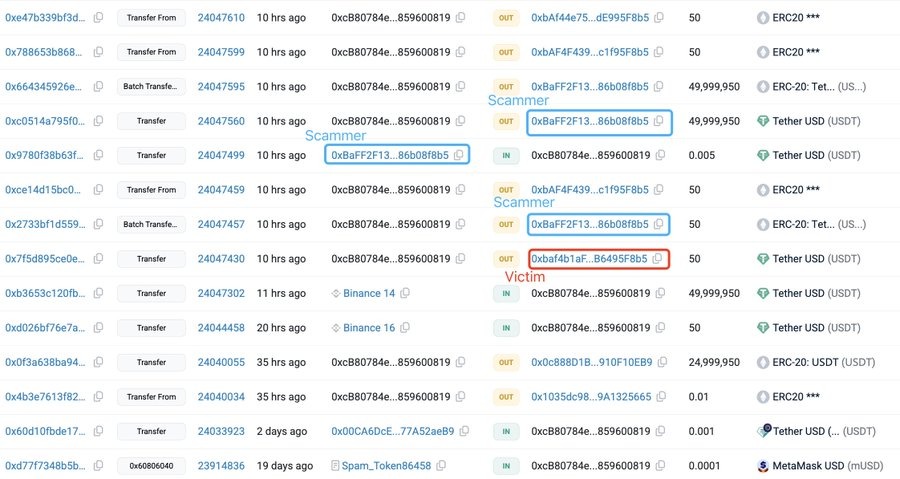
The incident began with what looked like a careful move. Before sending a large amount, the victim first transferred 50 USDT as a test transaction to their own wallet address. This is a common habit among crypto users to avoid errors.
However, scammers were closely monitoring the wallet.
Soon after the test transaction, the scammer created a fake wallet address that looked almost identical to the victim’s real address, matching the same first and last four characters.
The scammer then sent small transactions to the victim so the fake address appeared in the transaction history. This tactic is the core of an address poisoning scam.
The Costly Copy-Paste Error
When the victim later sent the remaining 49,999,950 USDT, they copied the address directly from their transaction history. Unfortunately, they unknowingly copied the spoofed address instead of their real one.
Within seconds, the entire amount was sent straight to the scammer’s wallet. Since blockchain transactions are irreversible, the funds were lost instantly with no recovery option.
Why Address Poisoning Scams Are So Dangerous
This type of scam, known as address poisoning, does not hack wallets or steal private keys. Instead, they exploit human habits and wallet design limitations. Many users only check the beginning and ending characters of an address, which scammers take advantage of.
Lookonchain’s shared image clearly shows how repeated small transfers were used to trick the victim into copying the wrong address.
Never Miss a Beat in the Crypto World!
Stay ahead with breaking news, expert analysis, and real-time updates on the latest trends in Bitcoin, altcoins, DeFi, NFTs, and more.
FAQs
An address poisoning scam tricks users into sending crypto to a fake wallet by mimicking their real address.
Always double-check full wallet addresses, avoid relying on transaction history, and test with small transfers.
Blockchain transactions are irreversible, so once funds are sent to a scammer, they cannot be recovered.
Look for unusual small transactions in your wallet history and addresses that closely resemble your own.
Use multi-step verification, test small transactions, and confirm addresses outside wallet history logs.
Trust with CoinPedia:
CoinPedia has been delivering accurate and timely cryptocurrency and blockchain updates since 2017. All content is created by our expert panel of analysts and journalists, following strict Editorial Guidelines based on E-E-A-T (Experience, Expertise, Authoritativeness, Trustworthiness). Every article is fact-checked against reputable sources to ensure accuracy, transparency, and reliability. Our review policy guarantees unbiased evaluations when recommending exchanges, platforms, or tools. We strive to provide timely updates about everything crypto & blockchain, right from startups to industry majors.
Investment Disclaimer:
All opinions and insights shared represent the author's own views on current market conditions. Please do your own research before making investment decisions. Neither the writer nor the publication assumes responsibility for your financial choices.
Sponsored and Advertisements:
Sponsored content and affiliate links may appear on our site. Advertisements are marked clearly, and our editorial content remains entirely independent from our ad partners.

 Yes
Yes  No
No