

 Advertise



- Rizwan Ansari
 Rizwan Ansari
- Reviewed by:
 Sohrab Khawas
Sohrab is a passionate cryptocurrency news writer with over five years of experience covering the industry. He keeps a keen interest in blockchain technology and its potential to revolutionize finance. Whether he's trading or writing, Sohrab always keeps his finger on the pulse of the crypto world, using his expertise to deliver informative and engaging articles that educate and inspire. When he's not analyzing the markets, Sohrab indulges in his hobbies of graphic design, minimal design or listening to his favorite hip-hop tunes.
- Dec 27, 2025 08:11 UTC
-


Crypto Analyst Calls XRP a “Zombie Asset” Despite Ripple’s Growth
-
 XRP $ 1.46 (-4.21%)

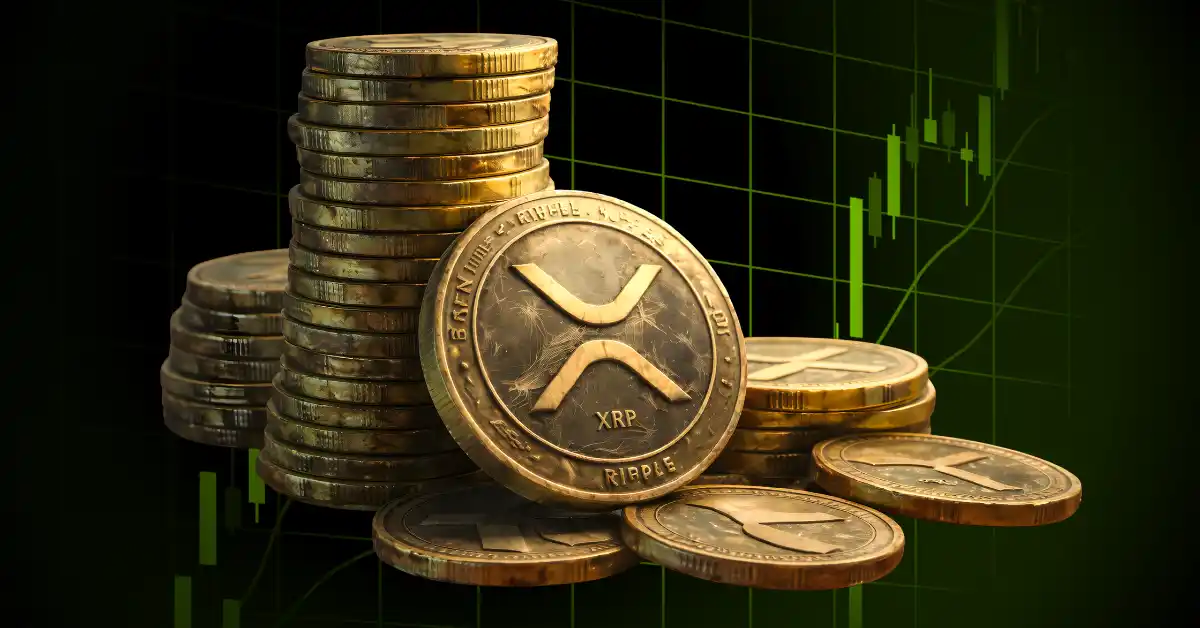
Analyst Atlas calls XRP a “zombie asset,” surviving more on belief than genuine demand.
Ripple continues expanding payment services, but banks can use its technology without XRP.
XRP price movements often follow legal headlines, not sustained growth in network adoption.
Ripple’s native token XRP has been under debate almost since the day it launched. While Ripple continues to grow as a blockchain payments company, many argue that XRP’s price no longer reflects how much it is actually used.
Now, those questions are back in focus again.
Crypto analyst Atlas recently shared an on-chain analysis, calling XRP the most useless token.
Ripple Thrives, But XRP Lags Behind
In a detailed breakdown of Ripple’s business model and on-chain data, Atlas argues that while Ripple as a company remains active and profitable, its native token XRP is becoming increasingly disconnected from real-world usage.
His main point is simple: Ripple can operate without XRP, and in many cases, it already does. Banks and institutions can use Ripple’s payment technology without holding or using the XRP token at all.
Atlas highlights a growing gap between XRP’s market value and its actual demand. XRP’s market cap is close to $100 billion, yet activity on the XRP Ledger tells a very different story.
DeFi usage on XRPL is still small, with total value locked in the tens of millions, not billions. For Atlas, this isn’t just a small mismatch, it’s a fundamental problem.
Ripple, XRP, and XRPL Are Not the Same Thing
Another key point Atlas stresses is that Ripple, XRP, and the XRP Ledger are not the same thing. Ripple sells software and payment infrastructure to banks and institutions, but those services do not always require XRP.
Due to this, Ripple’s success does not automatically increase demand for XRP.
Atlas also raises concerns about decentralization, noting that the XRP Ledger relies on trusted validator lists that remain closely tied to Ripple.
Activity Spikes Don’t Equal Adoption
AAtlas questions recent increases in XRP transaction activity. He points out that Ripple has admitted some of this growth came from micro-transaction spam, meaning higher transaction counts did not reflect real economic use.
He also notes that past adoption was often supported by incentives. Programs such as XRP rebates helped create liquidity, but partners like MoneyGram reportedly sold the tokens quickly, suggesting demand was artificial rather than organic.
- Also Read :
- Ripple IPO Back in Spotlight as Valuation Hits $50B
- ,
Atlas Calls XRP a “Zombie Asset”
Despite his criticism, Atlas does not expect XRP to collapse. Instead, he calls it a “zombie asset,” one that survives on belief, liquidity, and supply control rather than growing utility. For now, he believes XRP’s price remains driven more by faith than usage.
Atlas says the SEC lawsuit kept XRP alive through headlines, not usage. When the SEC sued Ripple in December 2020, XRP was trading near $0.60, then dropped to $0.17 as exchanges delisted it.
Now, SEC lawsuits have ended, XRP price is trading around $1.85 with a market cap hitting $111.89 billion.
Never Miss a Beat in the Crypto World!
Stay ahead with breaking news, expert analysis, and real-time updates on the latest trends in Bitcoin, altcoins, DeFi, NFTs, and more.
FAQs
XRP is seen as a long-term bet on payments and institutional adoption, but its price will depend on market trends, regulation, and real-world usage.
XRP price prediction for 2026 ranges between $1.75 and $5.05, depending on market recovery, adoption growth, and overall crypto sentiment.
Major risks include regulatory setbacks, weak market liquidity, competition from other payment-focused blockchains, and prolonged bearish market cycles.
Triple-digit targets assume massive global adoption and long-term dominance in payments, making them highly speculative rather than guaranteed outcomes.
Trust with CoinPedia:
CoinPedia has been delivering accurate and timely cryptocurrency and blockchain updates since 2017. All content is created by our expert panel of analysts and journalists, following strict Editorial Guidelines based on E-E-A-T (Experience, Expertise, Authoritativeness, Trustworthiness). Every article is fact-checked against reputable sources to ensure accuracy, transparency, and reliability. Our review policy guarantees unbiased evaluations when recommending exchanges, platforms, or tools. We strive to provide timely updates about everything crypto & blockchain, right from startups to industry majors.
Investment Disclaimer:
All opinions and insights shared represent the author's own views on current market conditions. Please do your own research before making investment decisions. Neither the writer nor the publication assumes responsibility for your financial choices.
Sponsored and Advertisements:
Sponsored content and affiliate links may appear on our site. Advertisements are marked clearly, and our editorial content remains entirely independent from our ad partners.

 Yes
Yes  No
No