



 Advertise



CLARITY Act Timeline: Can the U.S. Crypto Bill Finally Pass in July?



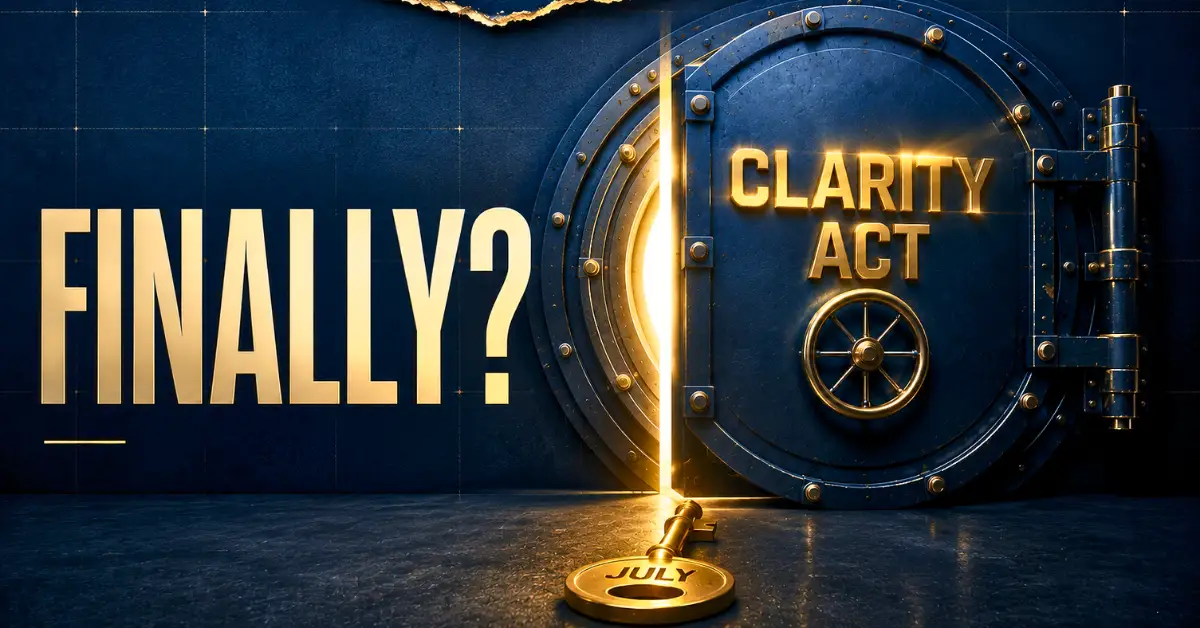
CLARITY Act returns to the Senate on July 13 for another crucial voting attempt.
Ethics bill remains the biggest hurdle delaying the Senate's final vote on the crypto bill.
Perhaps, CFTC Chair Michael Selig says the CLARITY Act is close despite recent legislative delays.
The U.S. CLARITY Act has entered into one of its most important months. After missing its earlier July 4 target, lawmakers are preparing for another push as the Senate returns on July 13. However, political disagreements, ethics rules, and key crypto provisions still stand in the way.
Here’s the key timeline for the Clarity Act.
CLARITY Act Timeline To Watch
The CLARITY Act, which aims to create a federal regulatory framework for digital assets, is waiting for a full Senate floor vote.
The bill passed the House in late 2025 and cleared the Senate Banking Committee on May 14, 2026. But it still needs enough Senate votes before reaching President Donald Trump’s desk.
If everything moves on schedule, the expected timeline is,

- July 13–17: Senate Procedural Vote
Senate returns from recess and begins procedural work before holding a final floor vote.
- July 20–24: House and Senate Reconciliation Process.
House and Senate work to resolve differences between their versions of the bill.
- July 27–August 7: On Trump’s Desk For Final Signature
If approved by both chambers, the bill could be sent to President Trump for his signature before the Senate begins its summer recess.
Lawmakers say missing this window could delay the bill until September or even later because of the upcoming election calendar.
Why Is the Bill Still Stuck?
The biggest hurdle remains an ethics bill introduced by Senator Chris Van Hollen. Democratic lawmakers want stricter rules that would stop government officials from personally profiting through crypto investments while in office. Republicans and Democrats are still negotiating the final language.
Another issue is Section 604, also known as the Blockchain Regulatory Certainty Act (BRCA). The provision protects non-custodial software developers from being treated as money transmitters.
Senator Ron Wyden has urged Senate leaders to keep the provision, saying developers who never control customer funds should not face money transmitter rules.
Meanwhile, Senator Elizabeth Warren continues opposing the bill, warning that parts of the current draft could create loopholes for sanctions evasion and illicit finance.
Because of these disagreements, the bill will face a huge hurdle in getting 60 Senate votes before it can move ahead.
CFTC Chair Says, We’re So Close”
Despite the delays, regulators remain optimistic.
Speaking to Fox Business after Congress missed its July 4 goal, CFTC Chair Michael Selig said, “We’re so close.”
“We have to get this done. It’s absolutely critical that we have a federal standard for crypto assets.”
Perhaps on the prediction market Polymarket, the chances of the CLARITY Act passing in 2026 have recently dropped to around 49%.
Was this writing helpful?

Trust with CoinPedia:
CoinPedia has been delivering accurate and timely cryptocurrency and blockchain updates since 2017. All content is created by our expert panel of analysts and journalists, following strict Editorial Guidelines based on E-E-A-T (Experience, Expertise, Authoritativeness, Trustworthiness). Every article is fact-checked against reputable sources to ensure accuracy, transparency, and reliability. Our review policy guarantees unbiased evaluations when recommending exchanges, platforms, or tools. We strive to provide timely updates about everything crypto & blockchain, right from startups to industry majors.
Investment Disclaimer:
All opinions and insights shared represent the author's own views on current market conditions. Please do your own research before making investment decisions. Neither the writer nor the publication assumes responsibility for your financial choices.
Sponsored and Advertisements:
Sponsored content and affiliate links may appear on our site. Advertisements are marked clearly, and our editorial content remains entirely independent from our ad partners.