



 Advertise



China’s Top Court Signals New Judicial Rules for Crypto Under 15th Five-Year Plan



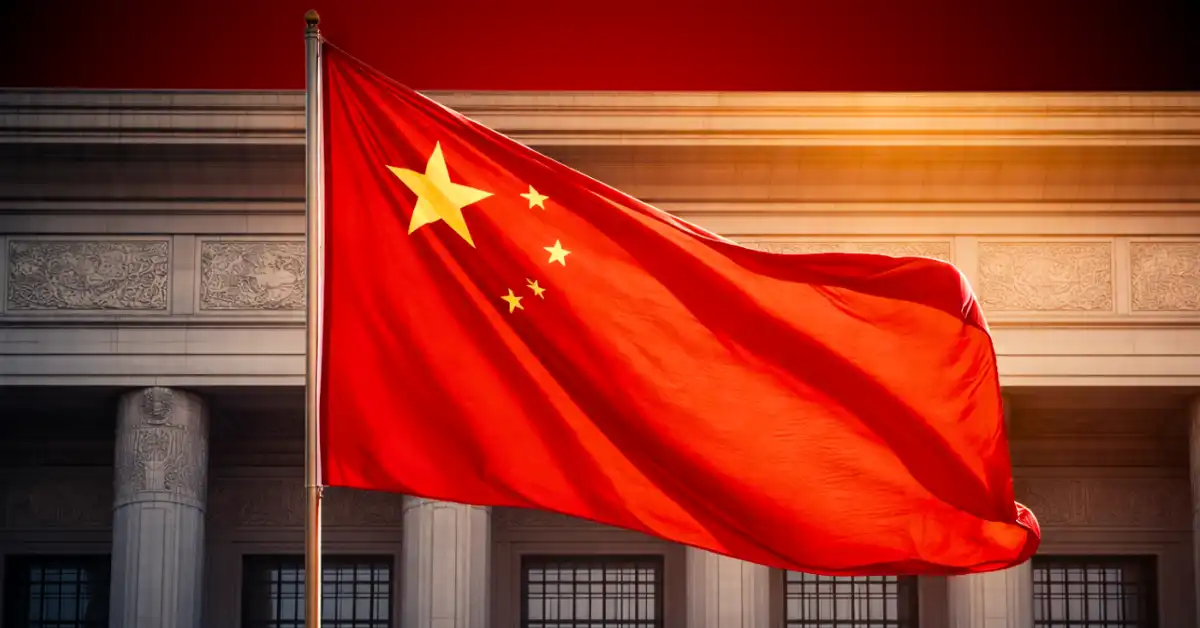
China’s Supreme People’s Court said it will study judicial rules for cryptocurrency and cross-border finance disputes.
The announcement came during a State Council press conference tied to China’s 15th Five-Year Plan roadmap through 2030.
Beijing is also expanding legal frameworks for AI, blockchain infrastructure, digital property rights, and the broader digital economy.
China’s Supreme People’s Court announced plans to study new judicial rules for cryptocurrency and cross-border digital finance cases during a major State Council press conference tied to the country’s 15th Five-Year Plan.
Meanwhile, all this will be done while maintaining its strict ban on crypto trading domestically.
China’s 15th Five-Year Plan
During a May 27 press conference tied to China’s upcoming 15th Five-Year Plan, senior officials confirmed that the country’s highest court will now study formal judicial rules for virtual currencies and cross-border crypto finance.
The announcement came during a high-level State Council Information Office briefing attended by officials from China’s Supreme People’s Court, Supreme People’s Procuratorate, Ministry of Justice, and Ministry of Public Security. The meeting focused on strengthening financial oversight, AI governance, cybersecurity, and digital economy regulation through 2030.

The statement is important because China has rarely publicly discussed national judicial standards for crypto disputes since banning crypto mining and exchanges in 2021.
China’s Top Court Finally Addresses Crypto Disputes
During the briefing, Supreme People’s Court official Liu Guixiang said Chinese courts will:
- Study judicial standards for “virtual currency” cases
- Develop rules around cross-border financial disputes
- Strengthen the regulation of capital markets
- Improve judicial interpretations for financial misconduct like insider trading and market manipulation
- Expand legal frameworks tied to the digital economy and AI-generated content
Despite the ban, Chinese courts are still seeing more crypto-related cases involving stablecoins, OTC trading, frozen assets, fraud, mining deals, and cross-border transfers.
Because different provinces were giving different rulings, Beijing now wants more consistent rules for handling crypto disputes while keeping tighter control over financial risks.
However, this does not mean China is legalizing Bitcoin or reopening domestic exchanges.
AI, Blockchain, and Digital Governance Become Bigger Focus
Another important development is China’s push toward legal frameworks for regulating AI-generated content, data ownership, and digital economy infrastructure.
Officials said courts will introduce new rules for AI-generated content, data ownership, digital assets, and online financial activity. The Supreme People’s Court said it plans to improve laws around data rights and support the growth of the digital economy.
This shows China is building broader legal rules for new technologies, including systems connected to blockchain and tokenized digital assets.
Was this writing helpful?

Trust with CoinPedia:
CoinPedia has been delivering accurate and timely cryptocurrency and blockchain updates since 2017. All content is created by our expert panel of analysts and journalists, following strict Editorial Guidelines based on E-E-A-T (Experience, Expertise, Authoritativeness, Trustworthiness). Every article is fact-checked against reputable sources to ensure accuracy, transparency, and reliability. Our review policy guarantees unbiased evaluations when recommending exchanges, platforms, or tools. We strive to provide timely updates about everything crypto & blockchain, right from startups to industry majors.
Investment Disclaimer:
All opinions and insights shared represent the author's own views on current market conditions. Please do your own research before making investment decisions. Neither the writer nor the publication assumes responsibility for your financial choices.
Sponsored and Advertisements:
Sponsored content and affiliate links may appear on our site. Advertisements are marked clearly, and our editorial content remains entirely independent from our ad partners.