

 Advertise



- Debashree Patra
 Debashree Patra
- Reviewed by:
 Anjali Belgaumkar
Writer by choice, CryptoCurrency Writer, and Researcher by chance. Currently, focusing on financial news and analysis, as well as cryptocurrency news and data. One may not call me a crypto “Enthusiast” but trust me I'm getting there.
- Mar 12, 2026 06:04 UTC
-


Charles Hoskinson Just Revealed a Plan to Make Cardano’s Treasury Pay for Itself
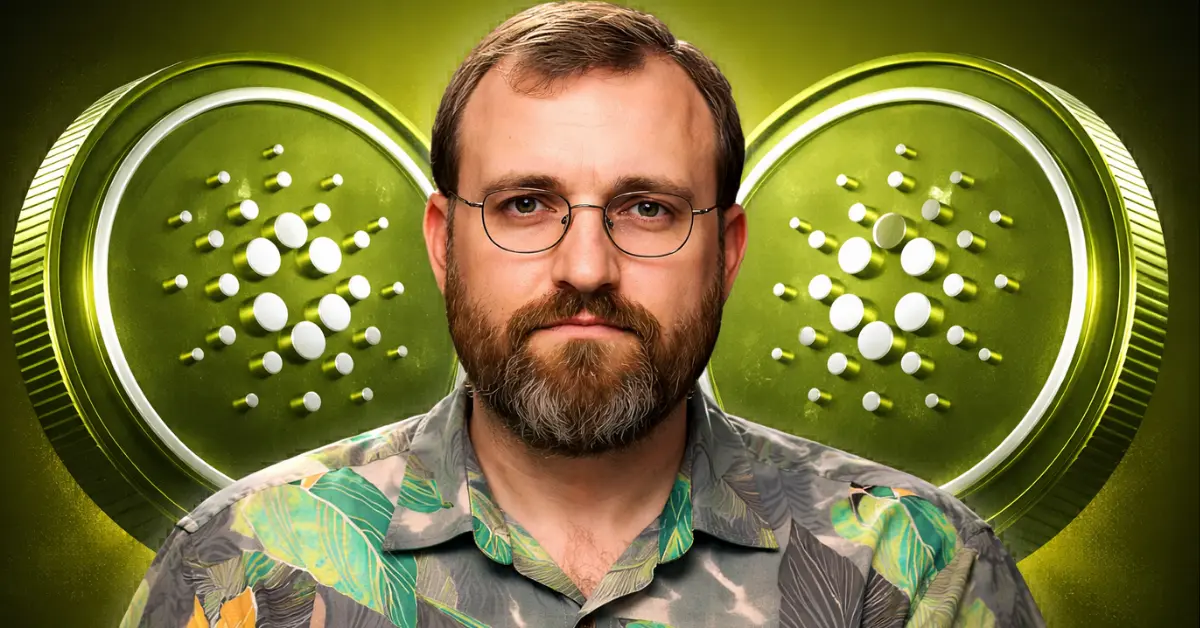
Cardano founder Charles Hoskinson has proposed a new treasury strategy that could create consistent buy pressure for ADA.
The plan focuses on funding ecosystem projects that would generate revenue and regularly buy ADA.
Technically, ADA is sitting near a key support zone, making the coming weeks critical for its price direction.
How Hoskinson Plans to Bring Capital Into ADA
Cardano founder Charles Hoskinson recently outlined a major funding strategy for 2026 aimed at strengthening the Cardano ecosystem. Under the proposal, the Cardano treasury could invest ADA into selected projects within the network.
In return, those projects would share a portion of their revenue with the treasury and regularly purchase ADA from the market. The goal is to create steady demand for the token while supporting ecosystem growth.
The treasury could also build a weighted index of ecosystem tokens, potentially buying 10–30% of each project’s supply. As these projects grow and generate revenue, part of that income, around 10% in some cases, would be used to buy ADA and return it to the treasury.
Hoskinson believes this system could allow the treasury investments to pay for themselves within one to three years while increasing activity across the network.
Fixing the Loopholes
During the discussion, Hoskinson said Cardano’s funding has traditionally focused on three areas: infrastructure, utility, and user experience. Most resources so far have gone into infrastructure projects like Ouroboros, Plutus, and Aiken, while user activity and decentralized applications remain relatively limited.
To change that, the 2026 roadmap aims to shift funding toward utility and user experience. This includes supporting DeFi projects, improving wallets and onboarding tools, and organizing 20–30 developer hackathons each year to encourage new applications.
The broader goal is to bring more developers, capital, and users into the Cardano ecosystem and strengthen real activity on the network.
- Also Read :
- Millions Are Tracking XRP’s Price Daily: Ripple CTO Says They Are Looking at the Wrong Thing
- ,
Is This a Good Time to Buy ADA?
From a technical perspective, ADA is currently trading near a crucial support zone around $0.25–$0.26. In a bull scenario, if buyers manage to defend this area, the token could attempt a recovery toward $0.30 and $0.33, with stronger resistance sitting between $0.33 and $0.40.
However, the broader trend still reflects a long downward channel, meaning the market has not fully shifted bullish yet. Crypto analyst Ali Martinez noted that Cardano’s key level to watch is $0.245 support. If ADA breaks decisively below this level, it could trigger a sharp decline toward $0.112 or even $0.051, potentially marking a 50%–80% drop from the current support zone.
For now, ADA sitting at a safe zone, as selling pressure appears to be less, while derivatives activity suggests speculative leverage is cooling.
If support holds and the ecosystem funding strategy begins to gain traction, ADA could see a gradual recovery. But until the token reclaims the $0.33–$0.40 resistance zone, the broader market structure remains cautious rather than fully bullish.
Never Miss a Beat in the Crypto World!
Stay ahead with breaking news, expert analysis, and real-time updates on the latest trends in Bitcoin, altcoins, DeFi, NFTs, and more.
FAQs
Experts expect ADA could gradually rise to $0.35–$0.50 in 2026 if ecosystem growth and treasury-backed projects drive adoption and demand.
Funding DeFi projects, wallets, and developer hackathons may boost usage, creating demand that could support ADA price growth over the year.
ADA sits near a key support zone. If the ecosystem strategy succeeds, gradual recovery is possible, but caution is advised until resistance at $0.33–$0.40 is broken.
Trust with CoinPedia:
CoinPedia has been delivering accurate and timely cryptocurrency and blockchain updates since 2017. All content is created by our expert panel of analysts and journalists, following strict Editorial Guidelines based on E-E-A-T (Experience, Expertise, Authoritativeness, Trustworthiness). Every article is fact-checked against reputable sources to ensure accuracy, transparency, and reliability. Our review policy guarantees unbiased evaluations when recommending exchanges, platforms, or tools. We strive to provide timely updates about everything crypto & blockchain, right from startups to industry majors.
Investment Disclaimer:
All opinions and insights shared represent the author's own views on current market conditions. Please do your own research before making investment decisions. Neither the writer nor the publication assumes responsibility for your financial choices.
Sponsored and Advertisements:
Sponsored content and affiliate links may appear on our site. Advertisements are marked clearly, and our editorial content remains entirely independent from our ad partners.

 Yes
Yes  No
No