


 Advertise



Bitcoin Completes First Quantum-Resistant Transaction, says StarkWare



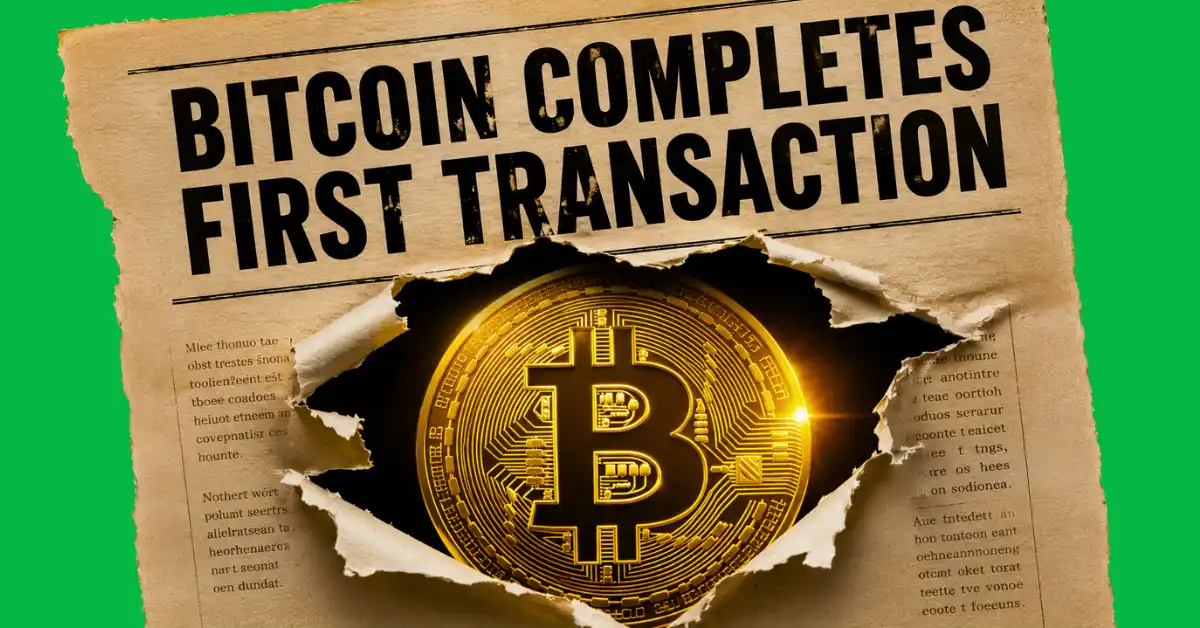
StarkWare completed Bitcoin’s first quantum-safe transaction on the mainnet on August 26.
The transaction was confirmed in Bitcoin block 964,199 using StarkWare’s QSB method.
Meanwhile, creating one quantum-safe transaction can cost roughly $150–$200 using current methods.
A StarkWare researcher has completed the first quantum resistant transaction on the Bitcoin mainnet, in block 964,199. The test shows BTC can be moved with quantum-resistant protection without changing Bitcoin’s current rules.
However, the breakthrough comes with a major drawback, as the process can cost around $150 to $200 per transaction, making it far too expensive for everyday Bitcoin users.
StarkWare Moves Quantum-Safe Bitcoin on Mainnet
On 26 August, StarkWare researcher Avihu Levy developed the Quantum Safe Bitcoin (QSB) method and successfully tested it on the live Bitcoin network.
The transaction was confirmed in Bitcoin block 964,199 and involved a 10,000-satoshi output

Levy first published the QSB research in April 2026. The main idea is to protect Bitcoin from a future quantum computer that could break the cryptography used by normal BTC transactions.
StarkWare CEO Eli Ben-Sasson said the test gives Bitcoin holders a safety option before a permanent network upgrade is made.
“What today’s successful transaction offers Bitcoin is a reassurance that holdings can be protected before that happens.”
How The Transaction Was Done Under Bitcoin’s Current Rules
Bitcoin currently relies on elliptic curve cryptography that could eventually be broken by powerful quantum computers. StarkWare’s QSB method uses hash based security instead.
Instead of using the usual ECDSA signatures, it uses one time Lamport signatures and hash functions, which are harder for future quantum computers to break.
The main risk starts when a Bitcoin transaction is sent. At that point, the sender’s public key becomes visible before the transaction is added to a block. A powerful quantum computer could potentially use this short window to find the private key and steal the funds.
Perhaps QSB uses one-time Lamport signatures and hash functions to protect against this risk.
Getting the transaction onto the Bitcoin network was another challenge. Normal Bitcoin software rejected it because of its unusual data. StarkWare sent it directly to MARA, which used its private MARA Slipstream service to add the transaction to a Bitcoin block.
The test shows Bitcoin can use quantum-safe transactions without changing its main rules.
Meanwhile, StarkWare CEO Eli Ben-Sasson said,
“Avihu took this on after hours, as a passion project, and has now shown that Bitcoin has no expiration date. I still want Bitcoin to choose to do a soft fork, and I expect we will get one.”
Drawbacks: Costly, Heavy, and Limited
While the test went successfully, StarkWare says the process to make one QSB transaction can take a lot of computing power, with proof generation taking hours across several high end graphics cards.
The cost is another major issue. The process can cost around $150 to $200 per transaction, making it far too expensive for regular Bitcoin users.
Its larger transaction size also makes the method unsuitable for normal Bitcoin payments at scale.
If this method were used widely, it could put extra pressure on the network and make transactions more expensive.
Was this writing helpful?

Trust with CoinPedia:
CoinPedia has been delivering accurate and timely cryptocurrency and blockchain updates since 2017. All content is created by our expert panel of analysts and journalists, following strict Editorial Guidelines based on E-E-A-T (Experience, Expertise, Authoritativeness, Trustworthiness). Every article is fact-checked against reputable sources to ensure accuracy, transparency, and reliability. Our review policy guarantees unbiased evaluations when recommending exchanges, platforms, or tools. We strive to provide timely updates about everything crypto & blockchain, right from startups to industry majors.
Investment Disclaimer:
All opinions and insights shared represent the author's own views on current market conditions. Please do your own research before making investment decisions. Neither the writer nor the publication assumes responsibility for your financial choices.
Sponsored and Advertisements:
Sponsored content and affiliate links may appear on our site. Advertisements are marked clearly, and our editorial content remains entirely independent from our ad partners.