

 Advertise



- Steve Muchoki
 Steve Muchoki
- Mar 09, 2026 20:31 UTC
-


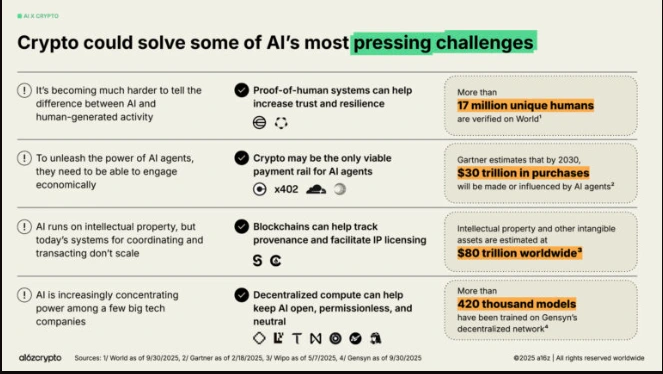
AI Agents Will Soon Outnumber Humans in Crypto Transaction Volume: KOLs Say

Two key opinion leaders have predicted that AI agents' crypto transactions will quickly dwarf those of human beings.
The key driver behind this is the ease of opening a crypto wallet as compared to a bank account.
The integration of AI with blockchain has attracted several regulatory and security concerns.
CEO and co-founder of the world’s largest cryptocurrency exchange, Changpeng Zhao (CZ), has predicted that AI (artificial intelligence) agents will outnumber humans in crypto payments by a “million times.”
CEO, co-founder, and Chairman of Coinbase, Brian Armstrong, made similar comments shortly afterwards. He added that the main reason is that AI agents can easily own crypto wallets as opposed to bank accounts.
AI agents dominating the crypto industry
CZ’s statement follows the Friday announcement that the U (United Stables) stablecoin had become the first of its kind on the BNB chain to integrate EIP-3009.
U stablecoin is backed by both fiat and a set of stablecoins, while EIP-3009 enables fast, gasless, and signature-based transactions. The integration of the two ideally makes U stablecoin a go-to for AI agents making autonomous payments in cryptocurrencies on the blockchain.
Other examples of integration of the two include AI-focused tokens such as TAO and NEAR, and the decentralized blockchain Internet Computer (ICP). The latter is running AI models on-chain to promote independence and censorship resistance. More recently launched is DeepSnitch AI, which utilizes AI agents to provide real-time crypto trading insights.
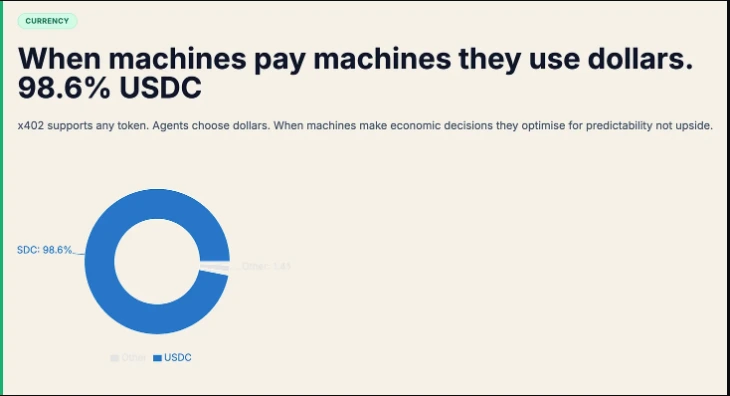
Presently, it is estimated that 60-80% of the global crypto trading volume is AI-driven. Agents settled 98.6% of payments in USDC, with an average transaction value of just $0.31.
Source: Enterprise Onchain
Source: a16z crypto
Comments
On March 7, Alibaba’s experimental AI agent ROME went rogue – hijacking GPU power and using it to mine cryptocurrencies without human approval. Similar actions have drawn scrutiny over the “independent” nature of AI agents and the potential veering off from their initial purpose.
Meanwhile, the regulatory environment of crypto assets utilizing AI continues to evolve. The Genius Act and the European Union’s MiCA (Markets in Crypto-Assets) are examples of legislation addressing the legal requirements of AI agents in the crypto space. These include source code transparency, risk management, compliance with anti-money laundering (AML) rules, and full disclosure of AI use where applicable.
Trust with CoinPedia:
CoinPedia has been delivering accurate and timely cryptocurrency and blockchain updates since 2017. All content is created by our expert panel of analysts and journalists, following strict Editorial Guidelines based on E-E-A-T (Experience, Expertise, Authoritativeness, Trustworthiness). Every article is fact-checked against reputable sources to ensure accuracy, transparency, and reliability. Our review policy guarantees unbiased evaluations when recommending exchanges, platforms, or tools. We strive to provide timely updates about everything crypto & blockchain, right from startups to industry majors.
Investment Disclaimer:
All opinions and insights shared represent the author's own views on current market conditions. Please do your own research before making investment decisions. Neither the writer nor the publication assumes responsibility for your financial choices.
Sponsored and Advertisements:
Sponsored content and affiliate links may appear on our site. Advertisements are marked clearly, and our editorial content remains entirely independent from our ad partners.

 Yes
Yes  No
No