 Advertise



How to Swap Dogecoin, Litecoin and Bitcoin Cash Without a Centralized Exchange



Sara is steadily working on cryptocurrency evaluations, news, and fluctuations in digital currency prices. She is guest author associated with many cryptocurrencies admin and contributes as an active guide to readers about recent updates on virtual currencies.


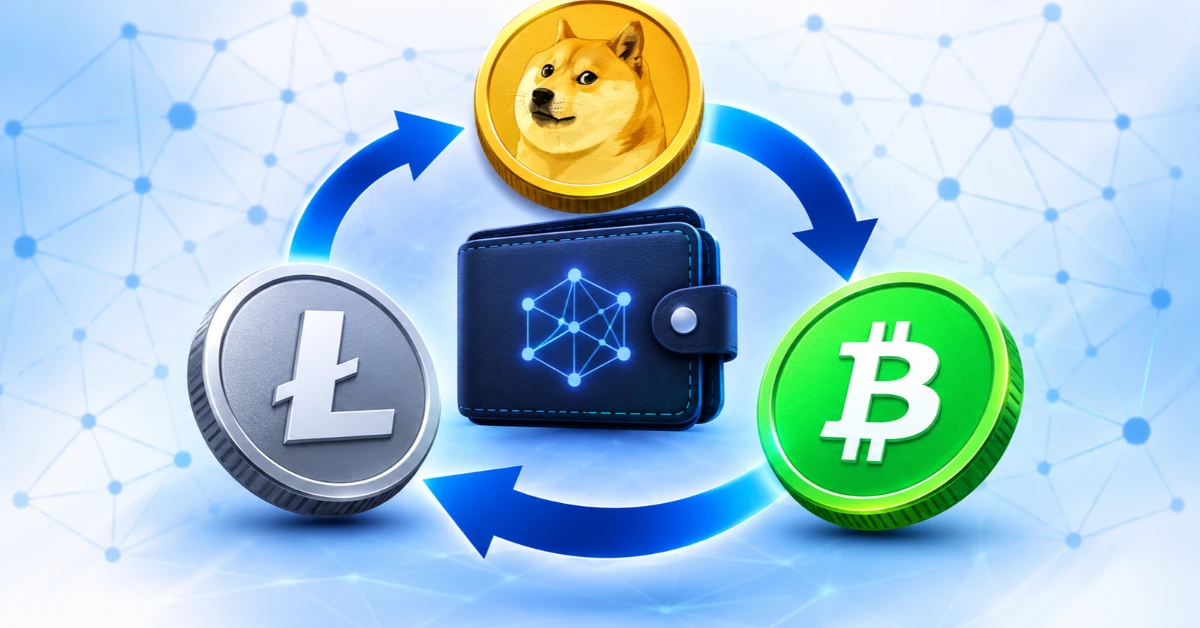
You can swap Dogecoin (DOGE), Litecoin (LTC) and Bitcoin Cash (BCH) without a centralized exchange by using a decentralized cross-chain exchange that supports them natively. THORChain is one of the few decentralized exchanges that does: it swaps native DOGE, LTC and BCH directly against assets such as BTC, ETH and stablecoins, from your own wallet and without wrapped tokens. Most other DEXs cannot touch these coins, because their blockchains do not support smart contracts.
Why are DOGE, LTC and BCH hard to swap on DEXs?
Dogecoin, Litecoin and Bitcoin Cash are UTXO blockchains built on the same basic design as Bitcoin. They are made for simple payments and do not run smart contracts, so no DEX can be deployed directly on them.
That leaves two common workarounds, both with drawbacks. A centralized exchange can trade them, but you have to deposit your coins with the exchange first. A DEX on another chain can trade a wrapped or bridged version of the coin, but then you need to convert your real DOGE, LTC or BCH into that token through a custodian or bridge before you can trade.
A cross-chain DEX avoids both. It holds liquidity on each coin’s own blockchain and pays out native assets, so you send real DOGE and receive, for example, real BTC.

What are the options?
| Option | Native DOGE, LTC and BCH? | Trade-offs |
| Centralized exchange | Yes, after deposit | Account and identity checks; the exchange holds your coins until you withdraw |
| THORChain | Yes, directly from your wallet | You rely on the exchange’s vaults while a swap is processed; price impact grows with trade size |
| Intent-based networks such as NEAR Intents | Supported through bridge infrastructure | The trust model depends on the bridge carrying the asset |
| DEXs on Ethereum and other smart-contract chains | No, wrapped versions only | You must wrap or bridge the coin first |
Some cross-chain swap services that handle native BTC, such as Chainflip, do not currently list Dogecoin, Litecoin or Bitcoin Cash, which is why THORChain is usually the first place to check for these coins.
How does a native DOGE, LTC or BCH swap work?
THORChain holds each supported coin in a liquidity pool paired with RUNE, the network’s settlement asset. A DOGE to BTC swap, for example, passes through the DOGE pool and the BTC pool in one transaction from the user’s point of view. You never need to hold RUNE.
The exchange’s vaults on each chain are controlled jointly by its validators, called THORNodes, using threshold signatures, and each node bonds RUNE as collateral that can be slashed for malicious behavior. The validators watch for your deposit on the Dogecoin, Litecoin or Bitcoin Cash network, process the swap and send the native output asset to your address.
How to swap DOGE, LTC or BCH step by step
- Open a THORChain interface. Use the official THORChain Swap site or a wallet that integrates it. Type the address yourself or use a bookmark to avoid phishing copies.
- Connect your wallet or choose the walletless option. Connect a wallet that holds your DOGE, LTC or BCH, or send funds to a deposit address the interface generates for your swap.
- Pick the pair and paste your destination address. For example, LTC to BTC with a Bitcoin address you control.
- Review the quote. Check the expected output after all fees and the estimated time.
- Send and wait for the payout. The swap is processed once your deposit has enough confirmations on its network.
What should you watch out for with these coins?
- Address formats. Each coin has its own address format, and they are easy to confuse. Bitcoin Cash in particular has both a modern CashAddr format and a legacy format that looks like a Bitcoin address. Always check that the destination address matches the asset you are receiving.
- Confirmation times differ. Dogecoin produces a block about every minute, Litecoin about every 2.5 minutes and Bitcoin Cash about every 10 minutes, so total swap time varies by coin and deposit size.
- Network fees on both sides. You pay the source chain’s fee to send, and the destination chain’s fee is deducted from your output. On small swaps into BTC or ETH, this outbound fee can be a noticeable share of the amount.
- Large trades. Price impact grows with trade size relative to pool depth. For larger amounts, use streaming swaps if the interface offers them, which split the order into smaller sub-swaps over time.
What are the risks?
Swapping on a DEX removes the risk of an exchange freezing or losing your balance, but while a swap is being processed, your coins pass through the exchange’s vaults, so you rely on its code and validators during that window. Trading on a chain can also be paused during upgrades or incidents, which can delay a swap or trigger a refund. If a swap cannot complete, for example because the price moved past your limit, the coins are refunded to your sending address minus network fees. Start with a small test swap if you are new to the process.
Frequently asked questions
Can I swap Dogecoin on a decentralized exchange?
Yes, on a cross-chain DEX that supports it natively. THORChain swaps native DOGE against assets such as BTC, ETH and stablecoins. DEXs on Ethereum can only trade wrapped versions of Dogecoin.
How do I swap Litecoin for Bitcoin without an exchange account?
Use a decentralized cross-chain exchange such as THORChain. You send LTC from your own wallet and receive native BTC at a Bitcoin address you control, with no account needed.
Can I swap Bitcoin Cash for Ethereum without wrapping it?
Yes. THORChain swaps native BCH for native ETH directly, without creating a wrapped token.
Do I need RUNE to swap DOGE, LTC or BCH?
No. RUNE works in the background as the settlement asset, and you swap directly between the coins you choose.
How long does a DOGE, LTC or BCH swap take?
It depends on the source chain’s confirmation time and the size of the deposit. Dogecoin and Litecoin deposits usually confirm faster than Bitcoin Cash deposits.
Was this writing helpful?

Trust with CoinPedia:
CoinPedia has been delivering accurate and timely cryptocurrency and blockchain updates since 2017. All content is created by our expert panel of analysts and journalists, following strict Editorial Guidelines based on E-E-A-T (Experience, Expertise, Authoritativeness, Trustworthiness). Every article is fact-checked against reputable sources to ensure accuracy, transparency, and reliability. Our review policy guarantees unbiased evaluations when recommending exchanges, platforms, or tools. We strive to provide timely updates about everything crypto & blockchain, right from startups to industry majors.
Investment Disclaimer:
All opinions and insights shared represent the author's own views on current market conditions. Please do your own research before making investment decisions. Neither the writer nor the publication assumes responsibility for your financial choices.
Sponsored and Advertisements:
Sponsored content and affiliate links may appear on our site. Advertisements are marked clearly, and our editorial content remains entirely independent from our ad partners.