

 Advertise



Crypto Regulations in Uzbekistan 2026



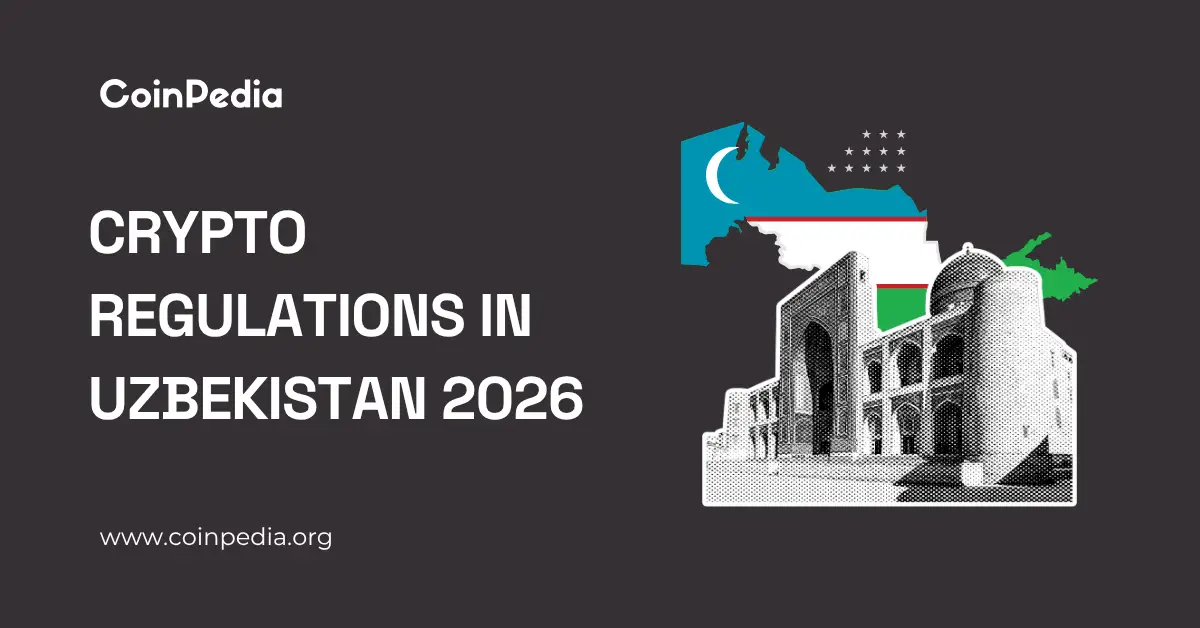
Uzbekistan expanded its crypto regulations in 2026, making it one of the most regulated digital asset markets in Central Asia. Instead of splitting responsibilities across multiple agencies, almost the entire crypto sector is supervised by a single regulator, the National Agency for Perspective Projects (NAPP).
Established under Presidential Decree No. DP-5120 (July 24, 2017) and reporting directly to the President, NAPP introduced stablecoin rules, opened the door for tokenized securities, tightened mining regulations, created a massive tax-free mining zone covering nearly 40% of the country’s land, and revoked the license of Uzbekistan’s first crypto exchange.
What Changed in 2026?
The biggest change came on January 1, 2026, when Uzbekistan officially recognized stablecoins as legal payment instruments through a joint regulatory sandbox managed by NAPP and the Central Bank of Uzbekistan (CBU).
The same presidential fintech decree also introduced a framework allowing resident companies to issue tokenized shares and bonds, while aiming to expand Uzbekistan’s fintech industry to around 200 companies. To support this goal, the Central Bank established a $50 million venture fund.

The country’s broader crypto licensing system continues to operate under:
- Regulation No. 3380 (August 15, 2022) for Virtual Asset Service Provider (VASP) licensing.
- Regulation No. 3379 governing crypto exchange trading rules.
- Resolution No. 3397 (November 28, 2022) covering cryptocurrency issuance and circulation.
In April 2026, President Shavkat Mirziyoyev signed Resolution No. PQ-143, creating the Besqala Mining Valley, while in May, NAPP issued Order No. 45, revoking the license of UzNEX, Uzbekistan’s first licensed crypto exchange. Uzbekistan still does not offer a single crypto license, exchanges, crypto stores, depositories, and mining pools each require separate licenses.
Regulatory Bodies
| Body | What Gives Them Power | What They Actually Do | Big 2026 Move |
| NAPP | Presidential Decree No. DP-5120 (2017) | Licenses exchanges, crypto shops, depositories; handles mining registration, capital markets, e-commerce, and the sandbox | Order No. 45 — pulling UzNEX’s license (May 25) |
| Central Bank of Uzbekistan (CBU) | Central bank law | Runs the stablecoin sandbox jointly with NAPP; also poking around at a CBDC for bank-to-bank settlement | Joint stablecoin sandbox, live since Jan 1 |
| Ministry of Justice | Administrative law | Publishes and confirms presidential decrees; signs off on rules for special zones | Approved Besqala Mining Valley’s operating rules (Jul 8–9) |
| Prosecutor’s Office, Interior Ministry, State Security, Customs | 2021 interagency deal | Freezes, seizes, investigates dirty crypto money | Ongoing seizure cooperation |
| Karakalpakstan Council of Ministers | Resolution No. PQ-143 | Manages the day-to-day of Besqala Mining Valley | New dedicated mining directorate |
Crypto Regulations
Q1 2026: Stablecoins and Tokenized Securities
During the first quarter, the NAPP-CBU stablecoin sandbox officially became operational.
Under the new framework:
- Stablecoins backed 1:1 by fiat or approved stable assets became legal payment instruments inside the sandbox.
- Resident legal entities gained permission to issue tokenized shares and bonds.
- Sandbox rules and operating periods are jointly determined by NAPP and the Central Bank.
- The presidential decree also targets growing Uzbekistan’s fintech ecosystem to nearly 200 companies through the CBU-backed venture fund.
- Separately, the Central Bank continues researching a CBDC, which is different from retail stablecoins.
Q2 2026: Mining Valley and Exchange License Revocation
On April 17, President Mirziyoyev established the Besqala Mining Valley across Karakalpakstan, covering approximately 40% of Uzbekistan’s territory.
The mining zone offers:
- No corporate income tax.
- No property tax.
- No land tax.
- No VAT until January 1, 2035.
- Instead, companies pay only a 1% administrative fee based on monthly revenue.
Only locally registered companies can become mining valley residents.
On May 25, NAPP revoked the license of UzNEX (KOBEA GROUP LLC) at the company’s own request. UzNEX had originally received Uzbekistan’s first crypto exchange license in December 2019. Customers were directed to refund channels, while other licensed exchanges continued operating through NAPP’s VASP registry.
Q3 2026: New Mining Rules
During July, the Ministry of Justice approved detailed operational rules for Besqala Mining Valley.
The regulations require:
- Mining to use either the national power grid, renewable energy, or hydrogen.
- Every mining operation connects to the ASKUE monitoring system, allowing authorities to track electricity usage in real time.
- Mining revenue to pass through local banks.
- No maximum grid capacity limit currently exists, despite national electricity losses reaching 17.2% (4.8 billion kWh) during the first half of 2026.
What Does the Government Say?
Officials say the new crypto policies are designed primarily to support economic development, especially in Karakalpakstan, a region heavily affected by the Aral Sea crisis.
Mining is viewed as one tool to attract investment and improve regional development rather than simply expanding crypto trading.
NAPP also continues reminding citizens that, under Resolution No. RP-3832, crypto transactions must be conducted only through licensed domestic providers.
Latest Crypto Crackdown
- In March, NAPP continued tightening oversight of Uzbekistan’s crypto sector. In May, the regulator revoked the license of crypto exchange UzNEX, reinforcing its strict stance on compliance and licensing requirements.
- In July 2026, Uzbek authorities intensified enforcement against illegal crypto activity, including investigations into illicit trading and crypto laundering operations.
- Earlier, in 2024, NAPP took enforcement action against Binance, finding that the exchange operated without an Uzbekistan license, processed anonymous and illicit crypto assets, lacked a locally registered entity, failed AML/CFT requirements, did not store user data locally, lacked transparency over its ownership, and did not maintain the required charter fund with a commercial bank in Uzbekistan.
- Binance was fined 300 basic calculated amounts, and the case was referred to its home regulator. NAPP also maintains a public registry of licensed Virtual Asset Service Providers (VASPs) and continues enforcing the country’s licensed-provider rule.
Crypto Tax
Uzbekistan remains one of the most tax-friendly crypto jurisdictions.
Currently:
- Individuals and licensed VASPs pay 0% tax on qualifying crypto trades.
- Registered VASPs are exempt from corporate profit tax and VAT until January 1, 2028.
- Licensed mining pools and renewable-powered miners also receive tax exemptions.
- Grid-powered miners pay higher electricity tariffs.
However, strict compliance remains mandatory. Missing required crypto disclosures can trigger penalties, using unlicensed foreign exchanges is an administrative offense, and serious crypto-related money laundering may result in criminal prosecution, imprisonment, and asset confiscation.
Authorities have already indicated that a phased crypto tax framework is being developed, although no new legislation has been passed yet.
Crypto Adoption
Uzbekistan continues expanding institutional crypto adoption through licensed providers.
NAPP’s public registry now includes licensed exchanges, crypto stores, depositories, and mining pools. The regulatory sandbox has also expanded to commercial banks testing crypto-related banking services and technology firms piloting blockchain-based digital certificates.
Rather than allowing unrestricted retail crypto activity, Uzbekistan is building adoption through regulated and supervised channels.
Conclusion
Uzbekistan’s 2026 crypto framework shows a country moving quickly through presidential decrees and a centralized regulator. Stablecoins, tokenized securities, mining incentives, and stricter enforcement have all been introduced within a single year.
While Besqala Mining Valley has only recently become operational and a future tax framework is still under discussion, NAPP continues strengthening its licensing system and enforcing the rule that crypto activity must take place through approved domestic providers. The country’s regulatory framework is still evolving, but many of its biggest 2026 reforms are already in effect.
Was this writing helpful?

Trust with CoinPedia:
CoinPedia has been delivering accurate and timely cryptocurrency and blockchain updates since 2017. All content is created by our expert panel of analysts and journalists, following strict Editorial Guidelines based on E-E-A-T (Experience, Expertise, Authoritativeness, Trustworthiness). Every article is fact-checked against reputable sources to ensure accuracy, transparency, and reliability. Our review policy guarantees unbiased evaluations when recommending exchanges, platforms, or tools. We strive to provide timely updates about everything crypto & blockchain, right from startups to industry majors.
Investment Disclaimer:
All opinions and insights shared represent the author's own views on current market conditions. Please do your own research before making investment decisions. Neither the writer nor the publication assumes responsibility for your financial choices.
Sponsored and Advertisements:
Sponsored content and affiliate links may appear on our site. Advertisements are marked clearly, and our editorial content remains entirely independent from our ad partners.