


 Advertise



Clarity Act All New Updates: Moreno Says Bill Could Be Signed Before July 4 as Odds Hit 67%



A bipartisan compromise on stablecoin yield has cleared the biggest obstacle standing between the Clarity Act and a Senate vote, injecting fresh momentum into legislation that has spent months stalled over a single unresolved dispute.
Senators Thom Tillis and Angela Alsobrooks struck the deal this week, agreeing on language that allows crypto firms to offer stablecoin rewards while stopping those products from functioning as direct substitutes for traditional bank deposits. The agreement, modest in its technical scope, was significant in its political effect. It moved a bill that had been frozen.
“This finalised, bipartisan text is the culmination of months of hard work to deliver a compromise on yield we can all live with,” Senator Cynthia Lummis said. “We are closer than ever to getting the Clarity Act across the finish line.”
This finalized, bipartisan text is the culmination of months of hard work to deliver a compromise on yield we can all live with. We are closer than ever to getting the Clarity Act across the finish line. https://t.co/8vF7tzpxpy
— Senator Cynthia Lummis (@SenLummis) May 4, 2026

A Timeline Comes Into View
With the yield dispute resolved, the legislative calendar is moving. House Financial Services Chair Bryan Steil confirmed the markup is scheduled and Senate planning is underway.
Senator Bernie Moreno went further, telling reporters the bill could reach President Trump’s desk by the end of June and be signed into law before July 4.
The pressure to move is not just political. Brad Garlinghouse, Ripple’s chief executive, told the Consensus 2026 conference in Miami that the window is closing. “The next two weeks are pivotal,” Garlinghouse said. “Clarity is better than chaos.”
He warned that delays running into election season would sharply reduce the bill’s chances of passage, giving both parties a concrete reason to act now.
Markets React Before the Vote
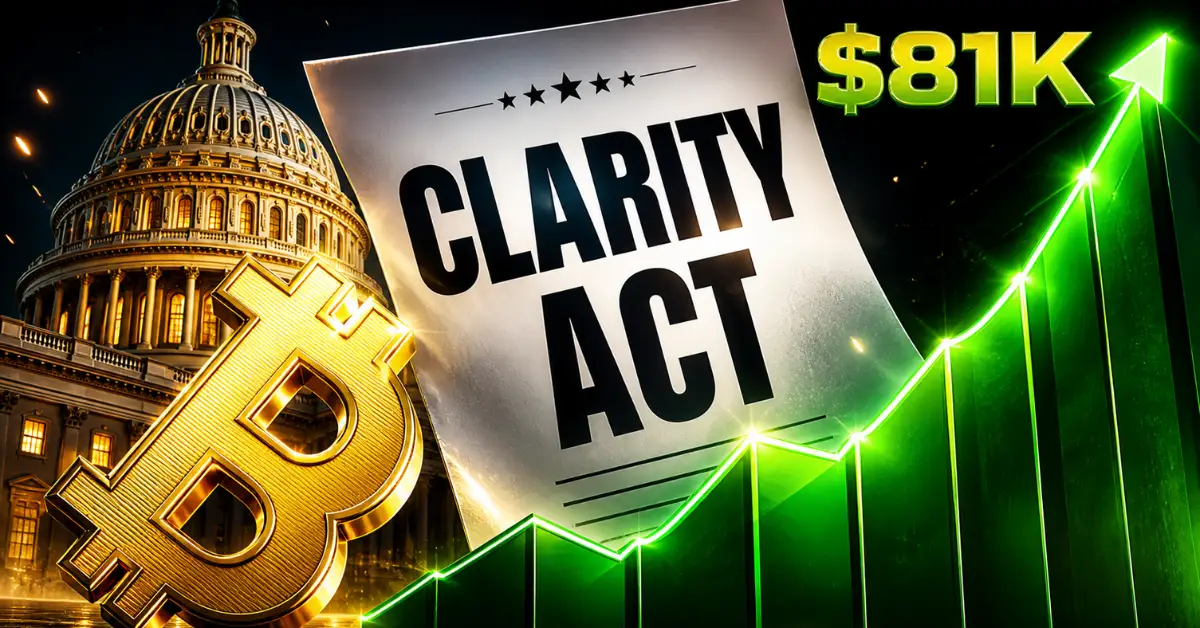
Circle rallied sharply. Coinbase gained. Bitcoin briefly crossed $80,000 as optimism about regulatory clarity fed into a broader market recovery already underway. Prediction markets moved the bill’s odds of passage to approximately 67%.
Coinbase CEO Brian Armstrong reduced his public position to two words: “Mark it up.”
The Dissent
Not every voice was bullish. Arthur Hayes argued that the bill, as written, advantages large centralised firms with established lobbying relationships while creating structural barriers for smaller and more decentralised projects.
Charles Hoskinson raised similar concerns earlier, warning that the legislation’s mature blockchain standard protects incumbents while making it harder for new projects to avoid securities classification.
What Comes Next
Markup is the immediate milestone. After that, a Senate floor vote, House approval, and a presidential signature before July 4 is the timeline on record. The crypto industry has seen promising legislation arrive at the finish line before without crossing it. This time, the bipartisan deal, the market pressure, the political calendar, and the industry’s unified push are converging in the same direction at the same moment.
Was this writing helpful?

Trust with CoinPedia:
CoinPedia has been delivering accurate and timely cryptocurrency and blockchain updates since 2017. All content is created by our expert panel of analysts and journalists, following strict Editorial Guidelines based on E-E-A-T (Experience, Expertise, Authoritativeness, Trustworthiness). Every article is fact-checked against reputable sources to ensure accuracy, transparency, and reliability. Our review policy guarantees unbiased evaluations when recommending exchanges, platforms, or tools. We strive to provide timely updates about everything crypto & blockchain, right from startups to industry majors.
Investment Disclaimer:
All opinions and insights shared represent the author's own views on current market conditions. Please do your own research before making investment decisions. Neither the writer nor the publication assumes responsibility for your financial choices.
Sponsored and Advertisements:
Sponsored content and affiliate links may appear on our site. Advertisements are marked clearly, and our editorial content remains entirely independent from our ad partners.