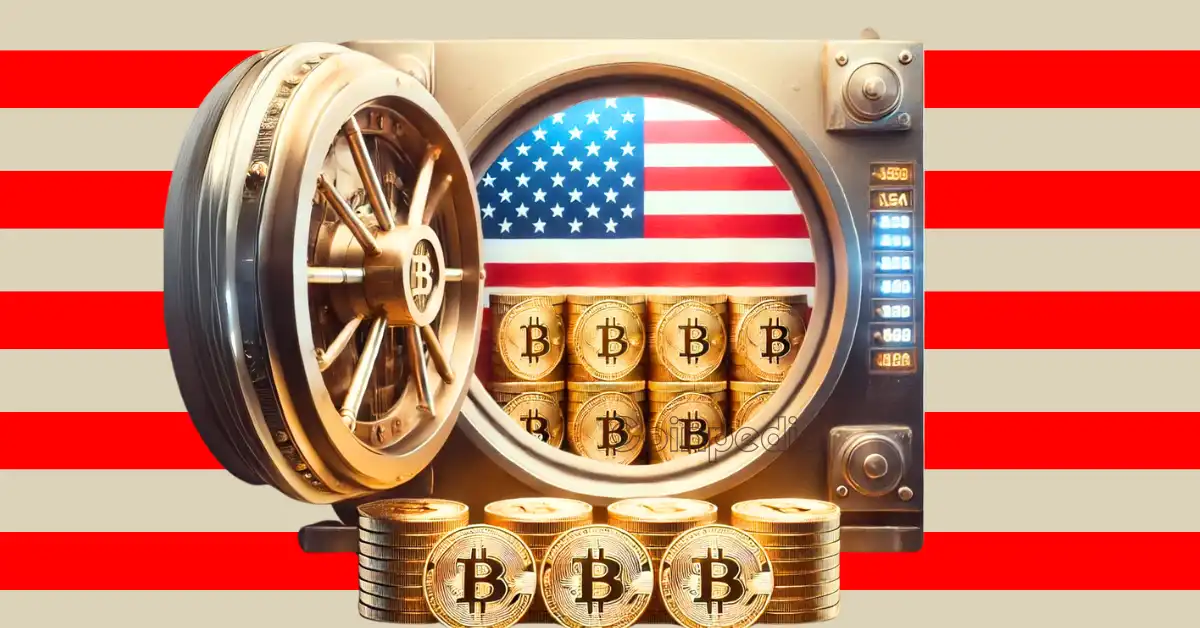
The U.S. government just moved over 2 BTC to a Coinbase Prime wallet, but the transfer itself isn’t the real story. It’s what it reveals about how seized crypto is now being handled.
The funds, flagged by Arkham Intelligence, are linked to Glenn Olivio, who was indicted in 2025 in an alleged steroid distribution and money laundering case, with the Bitcoin likely seized during that investigation and moved in two transactions worth around $177,000.
At first glance, this looks routine. Governments often move seized assets for custody or consolidation. But zoom out, and a pattern starts forming.
Similar movements have been seen recently with funds tied to cases involving Ross Ulbricht and other financial crimes. These repeated transfers suggest the government is actively organizing and managing its crypto holdings rather than leaving them idle.
Here’s where things get interesting. This shift comes after the U.S. introduced its strategic bitcoin reserve following an executive order under Donald Trump.
Treasury Secretary Scott Bessent later confirmed that the government has stopped selling seized bitcoin and is now holding onto it instead.
That changes how these transfers should be viewed. Instead of preparing assets for liquidation, the government may now be repositioning them for long-term storage within its reserve.
The U.S. already holds around 328,000 BTC, worth over $22 billion. Moves like this suggest a quiet transition from treating crypto as confiscated property to managing it as a strategic asset.
Even small transfers like this one could be part of a larger system being built in the background, one where seized crypto feeds directly into national reserves.
In short, this isn’t just about a criminal case. It’s another signal that bitcoin is becoming part of government-level financial strategy, not just law enforcement cleanup.
Crypto analysts are watching closely but not panicking. One X user said the move was “interesting,” noting it’s the first transfer in over a month and highlighting that such assets are rarely sold immediately.
Meanwhile, another user framed it as routine custody management with minimal market impact due to the small size.
CoinPedia has been delivering accurate and timely cryptocurrency and blockchain updates since 2017. All content is created by our expert panel of analysts and journalists, following strict Editorial Guidelines based on E-E-A-T (Experience, Expertise, Authoritativeness, Trustworthiness). Every article is fact-checked against reputable sources to ensure accuracy, transparency, and reliability. Our review policy guarantees unbiased evaluations when recommending exchanges, platforms, or tools. We strive to provide timely updates about everything crypto & blockchain, right from startups to industry majors.
All opinions and insights shared represent the author's own views on current market conditions. Please do your own research before making investment decisions. Neither the writer nor the publication assumes responsibility for your financial choices.
Sponsored content and affiliate links may appear on our site. Advertisements are marked clearly, and our editorial content remains entirely independent from our ad partners.
A federal judge in Arizona temporarily blocked the state from enforcing gambling laws against Kalshi,…
Bitcoin just had its best week in a while. The ceasefire rally, the CPI relief,…
Bhutan has sold about 70% of its Bitcoin holdings over the past 18 months, with…
An extremely consequential diplomatic meeting is hours away. Iran's 71-person team, led by Parliament Speaker…
Grayscale Investments has released its Q2 2026 “Assets Under Consideration” list, highlighting a clear shift…
Dogecoin (DOGE) is flashing a high-stakes setup as price compresses at a key macro support,…

