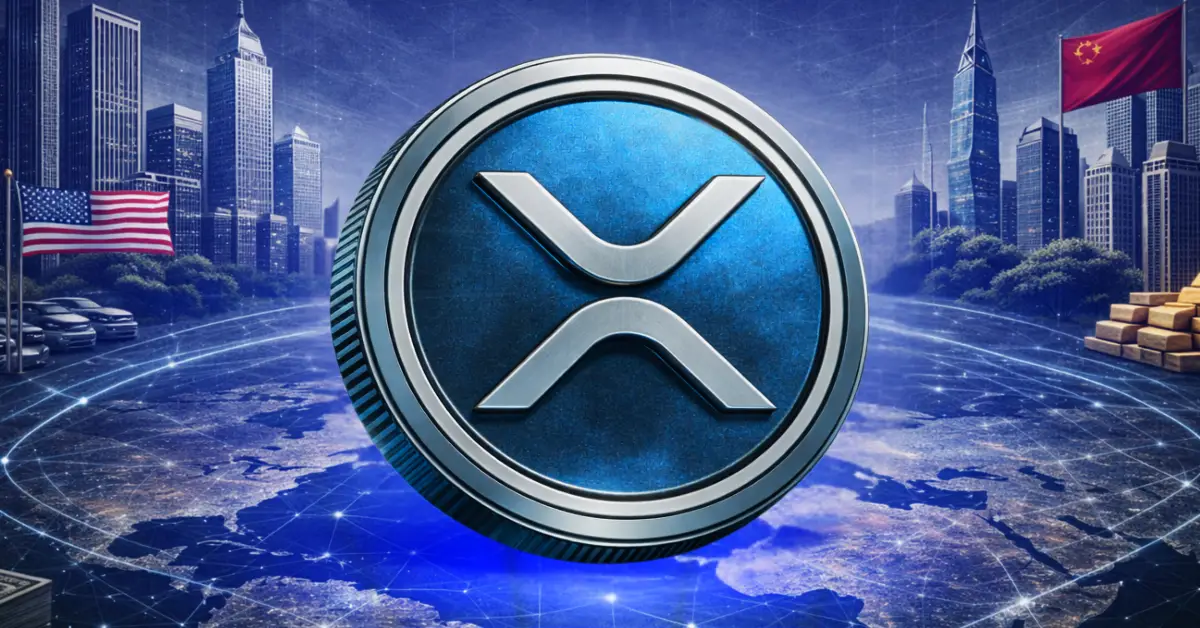
Rising concerns around America’s $35 trillion national debt have sparked intense debate about the future of the global financial system. While policymakers continue relying on traditional tools like rate adjustments and monetary expansion, some crypto analysts argue that bigger structural changes may already be underway.
Among them, Edo Farina has floated a bold theory: that XRP could eventually play a role in a broader financial reset, not as a speculative coin, but as infrastructure within a new settlement framework.
From the beginning, XRP has faced skepticism. Critics have questioned its role, its ties to institutions, and whether it can truly differentiate itself from thousands of other digital assets. Yet, supporters argue that its long-term positioning has always centered on cross-border settlement and financial plumbing rather than retail hype cycles.
Farina frames the discussion around macro reality. The U.S., he argues, cannot sustainably manage its debt through endless money printing or higher taxation. Inflation erodes purchasing power, and confidence in fiat systems is gradually weakening.
“A new financial system is emerging where debt is being tokenized onto blockchain rails,” Farina says. In that environment, he believes XRP could serve as a neutral bridge asset, facilitating value transfer between institutions and even sovereign entities.
He emphasizes that governments may eventually need to participate directly in digital asset ecosystems to maintain influence. “If you want control, you have to participate,” he argues, suggesting that ignoring blockchain infrastructure may no longer be an option for major economies.
Farina ties his thesis to accelerating de-dollarization trends and record central bank gold accumulation. Around the world, nations are diversifying reserves and reducing reliance on the U.S. dollar for trade settlement.
“There will be an intersection between precious metals and blockchain technology,” he claims. He outlines two possibilities. Tokenized gold operating on blockchain networks like the XRP Ledger, or digital assets indirectly linked to commodity-backed systems.
In his view, a split global financial order, with competing currency blocs, could increase demand for neutral settlement layers that are not directly controlled by any single nation.
However, going deep inside, Farina’s argument is not about short-term price targets. It is about positioning. If global finance shifts toward tokenized assets, real-time settlement, and commodity-linked digital rails, assets designed for liquidity bridging could become strategically important.
Whether XRP ultimately plays that role remains speculative. But as debt levels climb and monetary systems evolve, discussions about blockchain-based settlement are no longer fringe; they are increasingly part of mainstream macro conversations.
Supporters believe tokenized debt and cross-border payments may require fast settlement layers, where XRP could provide liquidity.
Some analysts suggest blockchain networks like XRP Ledger could host tokenized gold or assets tied to commodities.
No. The theory is speculative. While XRP targets cross-border settlement, adoption depends on regulation and institutions.
CoinPedia has been delivering accurate and timely cryptocurrency and blockchain updates since 2017. All content is created by our expert panel of analysts and journalists, following strict Editorial Guidelines based on E-E-A-T (Experience, Expertise, Authoritativeness, Trustworthiness). Every article is fact-checked against reputable sources to ensure accuracy, transparency, and reliability. Our review policy guarantees unbiased evaluations when recommending exchanges, platforms, or tools. We strive to provide timely updates about everything crypto & blockchain, right from startups to industry majors.
All opinions and insights shared represent the author's own views on current market conditions. Please do your own research before making investment decisions. Neither the writer nor the publication assumes responsibility for your financial choices.
Sponsored content and affiliate links may appear on our site. Advertisements are marked clearly, and our editorial content remains entirely independent from our ad partners.
Crypto news this week confirms the next leg up is closer than most wallets think,…
The US Consumer Price Index (CPI) data is set to be released today at 8:30…
Japan’s cabinet approved a bill to classify cryptocurrencies as financial products, moving Bitcoin and Ethereum…
Dash has surged nearly 9–10% in the latest session, pushing the price toward the $39–$40…
Monero (XMR) is approaching a critical breakout moment as months of tight consolidation begin to…
XRP continues to trade near $1.34, moving within a tight range as buyers defend key…