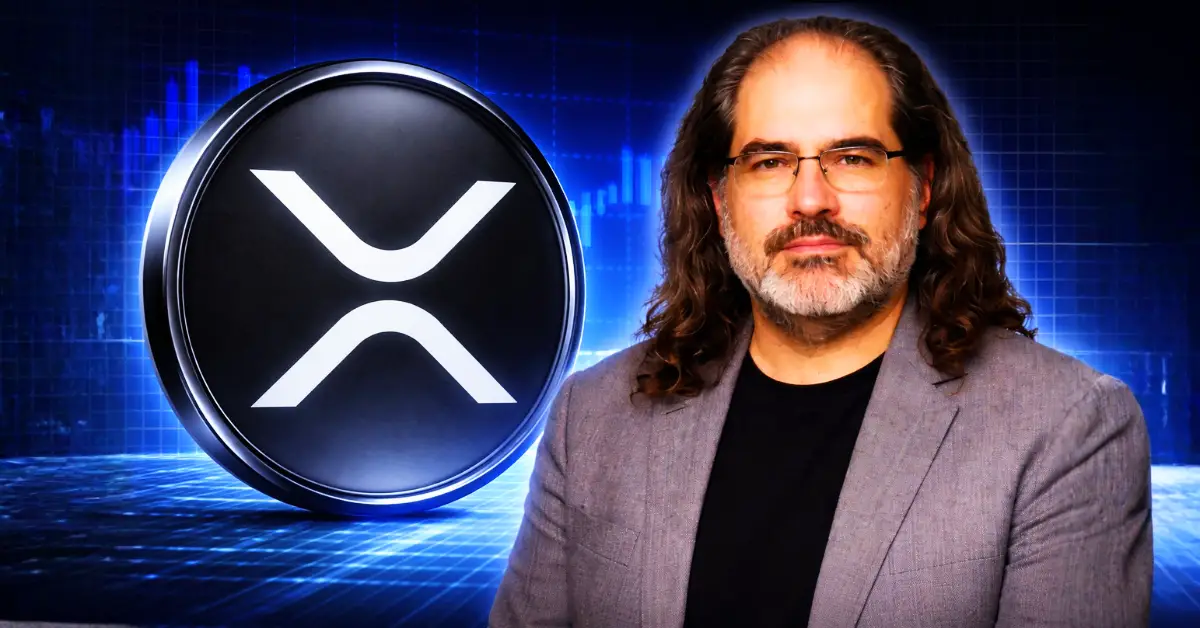
A new debate is taking place in the crypto world after Ripple’s Chief Technology Officer, David Schwartz, made a series of statements about XRP and control over the XRP Ledger.
And this time, he didn’t dodge the hard questions.
Schwartz took to X to explain how the XRP Ledger prevents double-spending the core problem every blockchain must solve. But what caught the community’s attention was not the technical breakdown. It was his clear statement that Ripple intentionally designed the XRPL so the company could not control it.
Schwartz said the XRPL was carefully built so that Ripple cannot censor transactions, reverse payments, or double spend even if it wanted to.
He admitted Ripple could face pressure from U.S. courts or regulators. As a U.S.-based company with investors, Ripple must comply with legal orders. But that is exactly why, according to Schwartz, the company did not want control over the network in the first place.
If Ripple had the power to alter transactions or freeze the ledger, it could be forced to use that power.
So instead, the system was structured so that no single entity, including Ripple, can own or control it. His message was clear: the best way to say “no” to outside pressure is to make it technically impossible to say “yes.”
The conversation quickly turned toward Bitcoin. Critics argued that XRP’s Unique Node List system creates coordination problems and relies on what they described as a centralized authority.
Schwartz pushed back. When someone claimed, “Your own BTC node will not double-spend if you disagree, but the network will,” Schwartz agreed — and said this proves most decentralization arguments miss the point.
He compared XRP’s coordination model to Bitcoin’s history. Satoshi chose Bitcoin’s mining algorithm. If the community wanted to change it, that would be a massive coordination challenge. Yet when Bitcoin and Bitcoin Cash split, there was no central authority solving the dispute. Each side proposed its own rules and users chose.
Schwartz argues the same would happen on XRPL. If two groups disagree, each would publish its own software and preferred validator list. Node operators would choose which version to run.
In his view, that is no different from how Bitcoin or Ethereum handle forks.
Not everyone agreed. One crypto commentator pushed back, arguing that choosing a Unique Node List (UNL), the validator structure used by XRP, creates coordination challenges that, in his view, lean toward centralization.
Schwartz responded that many decentralization debates are disconnected from reality. He pointed out that even Bitcoin nodes can reject invalid transactions locally, but consensus still depends on the broader network.
In other words, no blockchain is as simple as critics often claim.
From his perspective, decentralization was not just a philosophical choice. It was a practical, even selfish, decision to protect the network’s credibility.
CoinPedia has been delivering accurate and timely cryptocurrency and blockchain updates since 2017. All content is created by our expert panel of analysts and journalists, following strict Editorial Guidelines based on E-E-A-T (Experience, Expertise, Authoritativeness, Trustworthiness). Every article is fact-checked against reputable sources to ensure accuracy, transparency, and reliability. Our review policy guarantees unbiased evaluations when recommending exchanges, platforms, or tools. We strive to provide timely updates about everything crypto & blockchain, right from startups to industry majors.
All opinions and insights shared represent the author's own views on current market conditions. Please do your own research before making investment decisions. Neither the writer nor the publication assumes responsibility for your financial choices.
Sponsored content and affiliate links may appear on our site. Advertisements are marked clearly, and our editorial content remains entirely independent from our ad partners.
XRP just posted its sixth consecutive monthly loss at $1.29 despite Ripple launching enterprise treasury…
Shiba Inu is still struggling, down nearly 93% from its all-time high of $0.00008616 as…
Five of the most powerful people in finance have publicly predicted Bitcoin to hit $1…
Story Highlights The live price of the OFFICIAL TRUMP TRUMP Coin price forecast for 2026…
Story Highlights Pi Coin Live Price is Price prediction for 2026 targets $0.85, with potential…
Dogecoin is back at a level that has historically preceded its biggest moves. After weeks…