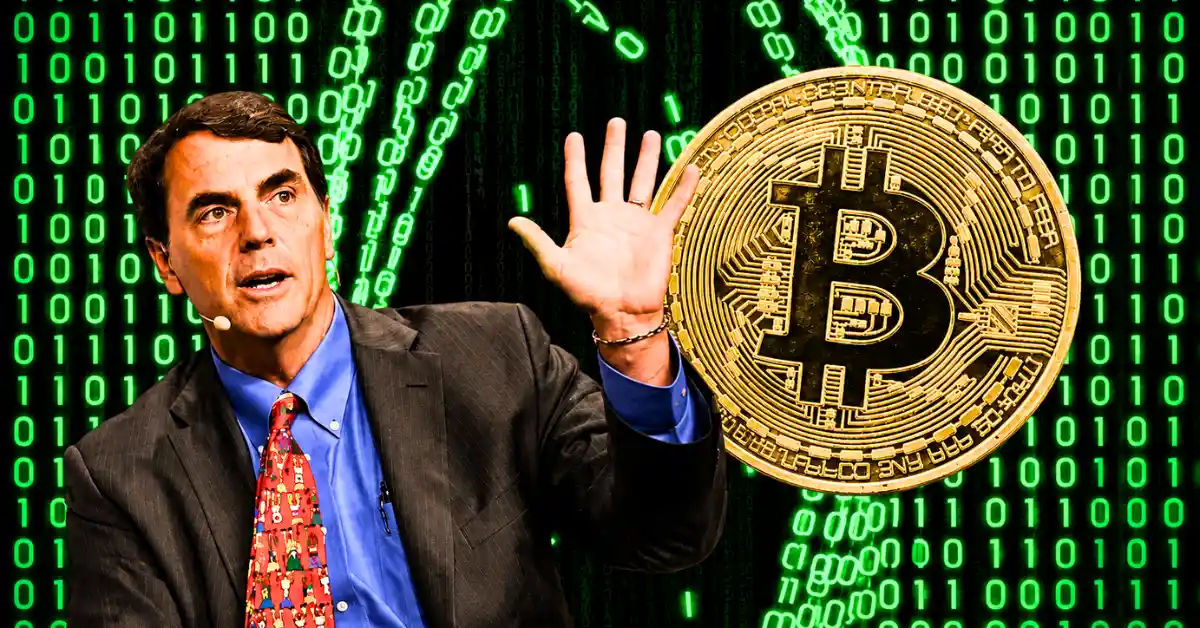
Billionaire investor Tim Draper believes Bitcoin has less to fear than traditional banks. In a recent interview, Draper said that quantum computers will “crack banks faster than blockchains.”
He said that his Bitcoin holdings are currently safer than cash sitting in a bank account. Let’s see why he believes so.
The Discussion around quantum computing has completely focused on whether future machines could break Bitcoin’s cryptography.
But Draper believes investors are looking in the wrong direction.
“Quantum computing threat etc., will hack the banks long before it can touch the blockchain.”
His argument centers on the complexity of the global banking system. Banks rely on encryption across payments, customer accounts, trading systems, settlement networks, messaging platforms, and internal operations.
Many of these systems also run on decades old infrastructure spread across thousands of institutions and third-party providers. Making it vulnerable to a quantum attack.
One of the biggest concerns security researchers highlight is a strategy known as “harvest now, decrypt later.”
Under this approach, attackers collect and store encrypted banking data today, even if they cannot read it yet. Once powerful enough, quantum computers become available, those stored records could potentially be decrypted, exposing years of sensitive financial information.
Bitcoin faces a different situation because all its transactions are already public on the blockchain. There is no hidden payment data that could be unlocked later.
Because of this, Draper believes traditional financial systems may face bigger risks than Bitcoin in the future
Draper also argued that even if Bitcoin eventually faced a successful quantum attack, the network could respond through a software upgrade or chain rollback.
That view remains controversial.
Casa Chief Security Officer Jameson Lopp previously warned that moving Bitcoin to quantum-resistant cryptography could take close to a decade.
Unlike banks, which can mandate upgrades through regulators and centralized management, Bitcoin requires broad agreement across developers, miners, and node operators.
Meanwhile, the U.S. National Security Agency has directed national security systems to become quantum-resistant by January 2027, indicating how seriously governments view the threat.
Amazon (AMZN) stock climbed 3.29% on Friday, putting its next major resistance level at $280…
US Crude oil is at risk of falling below $90 as President Donald Trump’s proposed…
The XRP Ledger (XRPL) disclosed two software vulnerabilities on October 9, 2026, including a critical…
Ethereum is taking a beating, but investors aren’t necessarily heading for the exits. Ethereum exchange…
When the Bitcoin realized profit data tells a different story from the market panic, it’s…
U.S. Treasury Secretary Scott Bessent says the government will “probably” seize another $1 billion in…