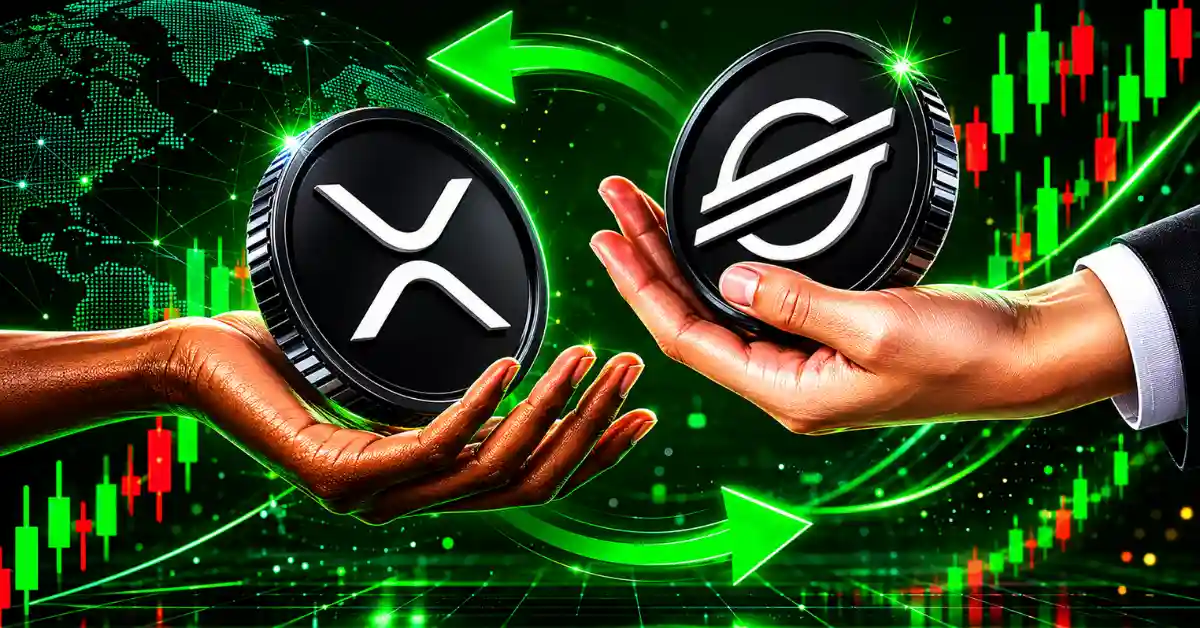
As discussions around DTCC’s recent blockchain moves continue, one analyst highlighted an important distinction between Stellar’s latest partnership and Ripple Prime’s involvement with DTCC.
The analyst argued that many investors are treating Stellar’s DTCC announcement and Ripple Prime’s DTCC participation as the same development. However, he believes they represent two very different opportunities.
The biggest catalyst came from DTCC’s decision to connect its tokenization platform directly to the Stellar blockchain. Through this integration, financial institutions could issue, settle, and manage tokenized assets such as stocks, ETFs, and Treasuries on Stellar’s network.
The development stands out because DTCC handles roughly $3.7 quadrillion in securities transactions each year. More importantly, it marks one of the first major steps toward bringing DTCC-backed tokenized assets onto a public blockchain. That announcement quickly attracted attention across the crypto market and helped fuel optimism around XLM.
Ripple Prime’s DTCC connection serves a different purpose. The company joined DTCC’s National Securities Clearing Corporation participant directory as a clearing and executing broker.
This gives Ripple Prime access to DTCC’s existing clearing and settlement network for institutional trades. The company can now operate alongside other broker-dealers that already use the system. Ripple Prime also participates in DTCC’s tokenization working group, which includes more than 50 firms exploring the future of tokenized assets.
However, DTCC has not selected the XRP Ledger as the blockchain infrastructure for its tokenization initiative.
The analyst views both announcements as positive for their respective ecosystems. Stellar secured a direct role in DTCC’s tokenization strategy, giving its blockchain a potential role in future tokenized asset activity. Ripple Prime, meanwhile, strengthened its position within traditional financial markets through access to DTCC’s institutional infrastructure.
In short, Stellar’s announcement focuses on blockchain integration and tokenized assets, while Ripple Prime’s participation centers on institutional market access. That key difference explains why the two developments should not be viewed as equivalent.
CoinPedia has been delivering accurate and timely cryptocurrency and blockchain updates since 2017. All content is created by our expert panel of analysts and journalists, following strict Editorial Guidelines based on E-E-A-T (Experience, Expertise, Authoritativeness, Trustworthiness). Every article is fact-checked against reputable sources to ensure accuracy, transparency, and reliability. Our review policy guarantees unbiased evaluations when recommending exchanges, platforms, or tools. We strive to provide timely updates about everything crypto & blockchain, right from startups to industry majors.
All opinions and insights shared represent the author's own views on current market conditions. Please do your own research before making investment decisions. Neither the writer nor the publication assumes responsibility for your financial choices.
Sponsored content and affiliate links may appear on our site. Advertisements are marked clearly, and our editorial content remains entirely independent from our ad partners.
After a significant upswing, the Hedera (HBAR) price has been facing strong upward pressure. While…
“Black Monday” is trending on social media ahead of Wall Street’s open on October 19,…
According to David Schwartz, the chief architect of the XRP Ledger and Ripple’s CTO Emeritus,…
There is more money in the world than ever before, yet Bitcoin is not rising…
The Sandbox price has gained significant attention in the past few weeks, with a surge…
VeChain (VET) is approaching a critical technical test as investors look for blockchain projects that…
