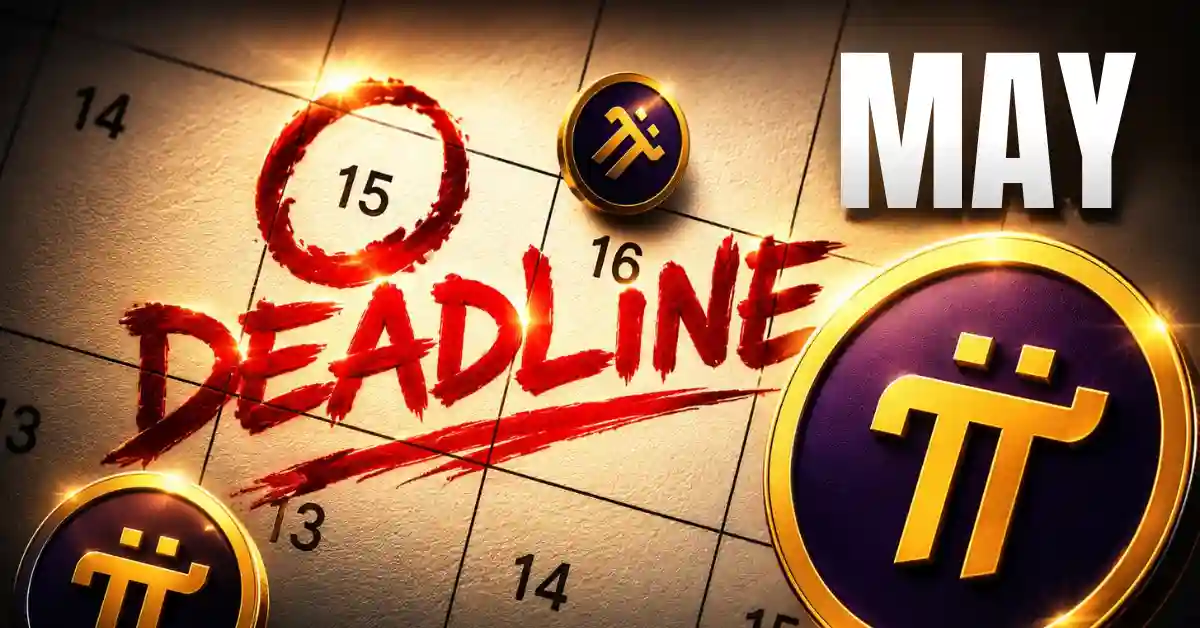
Pi Network is pushing ahead with its decentralization plans as the team issued an important reminder for all Mainnet node operators. According to the latest update, every Mainnet node must complete the Protocol 23 upgrade before May 15, 2026, or risk losing connection to the network.
The team also warned that the upgrade process may take longer than usual, urging users to plan and complete the update early.
The move is part of Pi Network’s broader effort to strengthen its infrastructure during the ongoing Enclosed Mainnet phase. Pi said node operators running the latest Node version 0.5.4 on Windows, Mac, or Linux systems will continue helping secure the blockchain and validate transactions.
Unlike Bitcoin’s proof-of-work model, Pi uses the Stellar Consensus Protocol (SCP), where trusted groups of nodes work together to confirm transactions. The system is designed to reduce energy usage while making node participation easier for everyday users.
Pi also reiterated its long-term focus on “user-centric decentralization,” allowing users to run nodes directly from standard laptops and desktops without needing expensive mining hardware.
The network currently supports three levels of participation: desktop app users, Nodes, and SuperNodes.
Regular Nodes help validate blockchain activity and submit transactions, while SuperNodes play a larger role in maintaining consensus and synchronizing the blockchain across the network 24/7.
Pi explained that users interested in becoming Nodes or SuperNodes must install the Pi Node software, complete technical setup requirements, maintain strong uptime and internet stability, and eventually pass KYC verification.
The project also confirmed that the blockchain component of Pi Node will eventually become open source.
The reminder comes shortly after pressure increased around the project following a recent third-party security incident.
Pi Network previously disclosed that unauthorized access to a server exposed some user-related data, including emails and certain phone numbers linked to two-factor authentication. However, the team clarified that no wallets, private keys, or user funds were compromised.
Following the incident, Pi said it began migrating infrastructure and pursuing legal action against former partners connected to the breach.
For now, the latest Protocol 23 push shows Pi Network is continuing to focus heavily on infrastructure upgrades, decentralization, and long-term network stability as it moves closer toward its Open Network phase.
CoinPedia has been delivering accurate and timely cryptocurrency and blockchain updates since 2017. All content is created by our expert panel of analysts and journalists, following strict Editorial Guidelines based on E-E-A-T (Experience, Expertise, Authoritativeness, Trustworthiness). Every article is fact-checked against reputable sources to ensure accuracy, transparency, and reliability. Our review policy guarantees unbiased evaluations when recommending exchanges, platforms, or tools. We strive to provide timely updates about everything crypto & blockchain, right from startups to industry majors.
All opinions and insights shared represent the author's own views on current market conditions. Please do your own research before making investment decisions. Neither the writer nor the publication assumes responsibility for your financial choices.
Sponsored content and affiliate links may appear on our site. Advertisements are marked clearly, and our editorial content remains entirely independent from our ad partners.
After a significant upswing, the Hedera (HBAR) price has been facing strong upward pressure. While…
“Black Monday” is trending on social media ahead of Wall Street’s open on October 19,…
According to David Schwartz, the chief architect of the XRP Ledger and Ripple’s CTO Emeritus,…
There is more money in the world than ever before, yet Bitcoin is not rising…
The Sandbox price has gained significant attention in the past few weeks, with a surge…
VeChain (VET) is approaching a critical technical test as investors look for blockchain projects that…
