N0igeria’s crypto industry is facing a hard reality check.
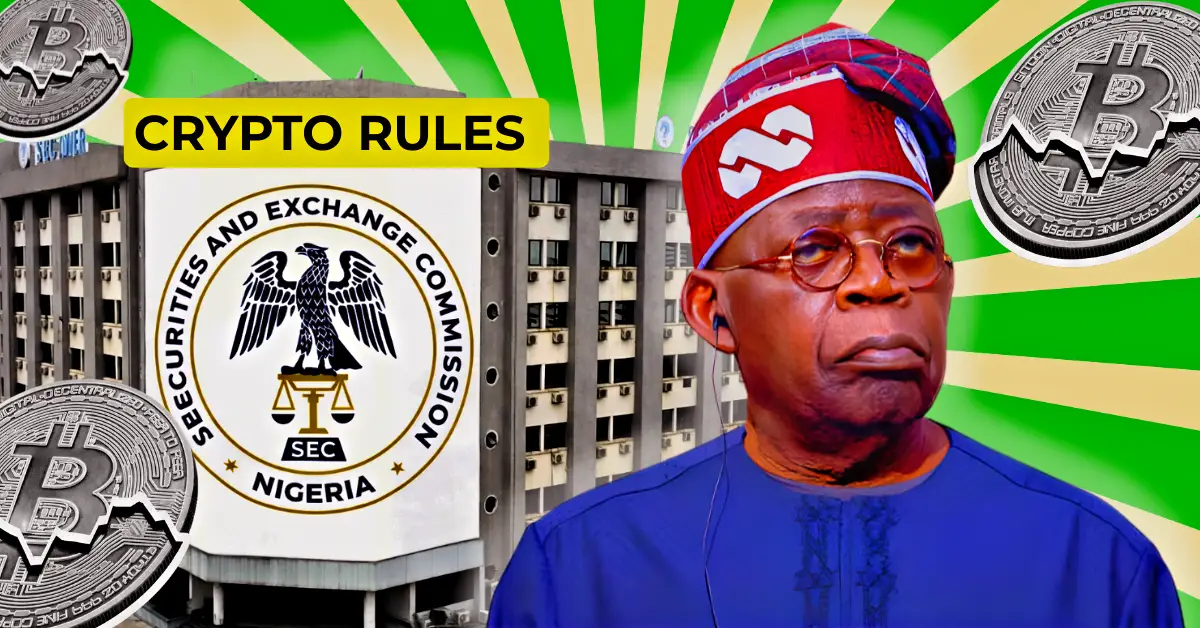
As crypto markets trend lower, insights shared in a recent Channels Television video highlight a new rule from Nigeria’s Securities and Exchange Commission (SEC) that could change who gets to operate in the country’s digital asset space. Under the new framework, crypto exchanges must now hold about ₦2 billion in capital to legally operate.
For many local players, that number is a roadblock.
The SEC says the new capital requirement is meant to protect investors in a high-risk market. But within the crypto community, the reaction has been immediate and uneasy.
Industry advocates described the move as “very very shocking,” arguing that regulators failed to fully consider Nigeria’s economic conditions and the structure of its crypto ecosystem.
Rume Ophi, financial market analyst, put it as: “This in its purest form is stifling innovation.”
Nigeria’s crypto growth is driven by young founders, local startups, and developers solving real problems often with limited resources.
Crypto in Nigeria is widely seen as an industry still being built, not a finished business model ready to be squeezed for capital. Critics argue the ₦2 billion threshold risks shutting out early-stage innovators and pushing talent to other African markets.
There’s also political tension around the move. The rule appears to clash with earlier promises to use blockchain and crypto to strengthen Nigeria’s financial system.
Another key concern is that the SEC may be applying traditional finance logic to a very different industry. As emphasized in the discussion, “in this industry, code is law.”
Ophi argues that strong technology, transparency, and proper oversight matter more than large capital reserves – especially in crypto, where even well-funded institutions have failed in the past.
Comparisons are already being made. South Africa has approved more than 300 digital asset licenses, while countries like Ghana and Kenya are moving with fewer barriers to entry.
Still, the door isn’t fully closed. Observers believe the SEC could review or adjust the rules as discussions continue.
For now, Nigeria’s crypto community is watching closely because this decision could shape not just regulation, but where the next generation of African crypto innovation chooses to grow.
Crypto exchanges will need to assess whether they can meet the new ₦2 billion capital requirement or exit the regulated market. Smaller firms may pause operations while awaiting regulatory clarification.
Some startups may relocate to more flexible jurisdictions or shift toward decentralized products that fall outside exchange licensing rules. Others may seek partnerships or consolidation to survive.
If unchanged, the rule could slow local innovation while favoring large, well-funded players. A revised approach could still balance investor protection with startup growth.
CoinPedia has been delivering accurate and timely cryptocurrency and blockchain updates since 2017. All content is created by our expert panel of analysts and journalists, following strict Editorial Guidelines based on E-E-A-T (Experience, Expertise, Authoritativeness, Trustworthiness). Every article is fact-checked against reputable sources to ensure accuracy, transparency, and reliability. Our review policy guarantees unbiased evaluations when recommending exchanges, platforms, or tools. We strive to provide timely updates about everything crypto & blockchain, right from startups to industry majors.
All opinions and insights shared represent the author's own views on current market conditions. Please do your own research before making investment decisions. Neither the writer nor the publication assumes responsibility for your financial choices.
Sponsored content and affiliate links may appear on our site. Advertisements are marked clearly, and our editorial content remains entirely independent from our ad partners.
Artificial intelligence is entering a new phase where systems are evolving from answering questions to…
Japan's House of Councillors passed an amendment to the Financial Instruments and Exchange Act, which…
XRP has gained the spotlight yet again as the sentiments are slowly turning bullish despite…
Blockchain security firm PeckShield said Specter has reported that LayerZero Executor wallets appear to have…
Bitcoin has spent nearly six months holding above the $58,000 level despite one negative headline…
South Korea, one of the world's biggest crypto markets with nearly 15% to 20% of…
