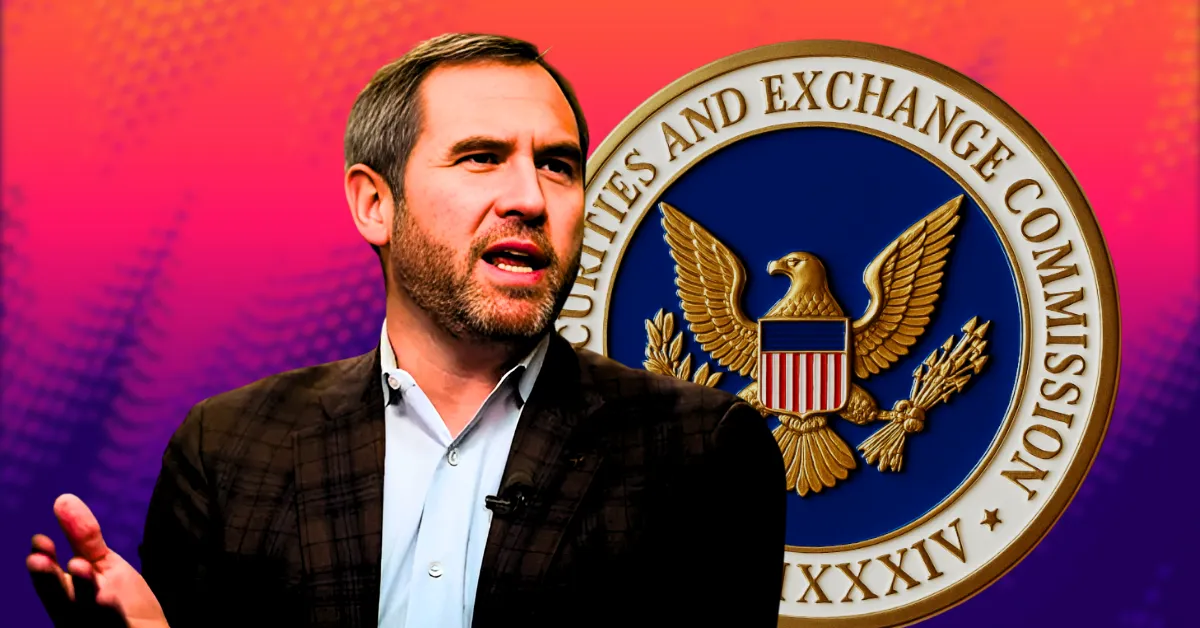
Former U.S. Commodity Futures Trading Commission chair Chris Giancarlo said XRP became the “poster child” of Washington’s tough stance on cryptocurrency, but noted that the project has survived and is now moving forward.
Speaking in a recent discussion on crypto regulation and innovation, Giancarlo said regulatory clarity is critical for the future of digital finance in the United States. Without clear rules, he warned, American banks could fall behind their global peers.
Giancarlo pointed to Ripple as an example of how clear rules can unlock innovation. Ripple has recently secured regulatory approvals in Europe, allowing its stablecoin and XRP to be used more widely within the region’s financial infrastructure.
Under Europe’s MiCA framework, banks across the region can now hold and use these digital assets in a regulated manner. Giancarlo said this gives European banks a major advantage, while U.S. banks remain cautious due to regulatory uncertainty.
“Something clear is better than nothing,” he said, adding that while Europe’s rules may not be perfect, they at least allow institutions to move forward.
Giancarlo also touched on XRP’s long-running legal battle with the U.S. Securities and Exchange Commission, calling it a defining moment for the crypto industry.
He said XRP became a key target during what he described as the crackdown led by regulators under former SEC leadership. Despite years of legal pressure, he noted that XRP “stood up to it, withstood it, and is still standing.”
The legal fight between Ripple and the SEC, which centered on whether XRP should be classified as a security, has been closely watched across the crypto market and is seen as a test case for how digital assets are regulated in the U.S.
Giancarlo argued that U.S. banks tend to innovate only when regulation leaves them no choice. Once clear crypto rules are in place, he said banks will no longer be able to use regulatory risk as an excuse and will be pushed to adopt digital network technologies.
He added that the future of digital finance will not be dominated by a single blockchain. Instead, multiple networks will likely coexist, much like Visa, Mastercard, and American Express operate side by side today.
“The digital future will be just as complex as the financial system we already have,” Giancarlo said.
CoinPedia has been delivering accurate and timely cryptocurrency and blockchain updates since 2017. All content is created by our expert panel of analysts and journalists, following strict Editorial Guidelines based on E-E-A-T (Experience, Expertise, Authoritativeness, Trustworthiness). Every article is fact-checked against reputable sources to ensure accuracy, transparency, and reliability. Our review policy guarantees unbiased evaluations when recommending exchanges, platforms, or tools. We strive to provide timely updates about everything crypto & blockchain, right from startups to industry majors.
All opinions and insights shared represent the author's own views on current market conditions. Please do your own research before making investment decisions. Neither the writer nor the publication assumes responsibility for your financial choices.
Sponsored content and affiliate links may appear on our site. Advertisements are marked clearly, and our editorial content remains entirely independent from our ad partners.
Researchers at the Center for Cryptocurrency Research and Engineering (IC3E) from Imperial College London have…
Bitcoin (BTC) treasury company Strive has announced its proposed initial public offering (IPO) of a…
Story Highlights The live price of the Kaspa token is Kaspa could reach a maximum…
Story Highlights The live price of Filecoin crypto is Price predictions for 2026 range from…
Story Highlights The live price of Optimism is . OP could attempt a recovery toward…
Story Highlights The Live Price of BAT Token BAT price could hit $0.3524 by 2026…
