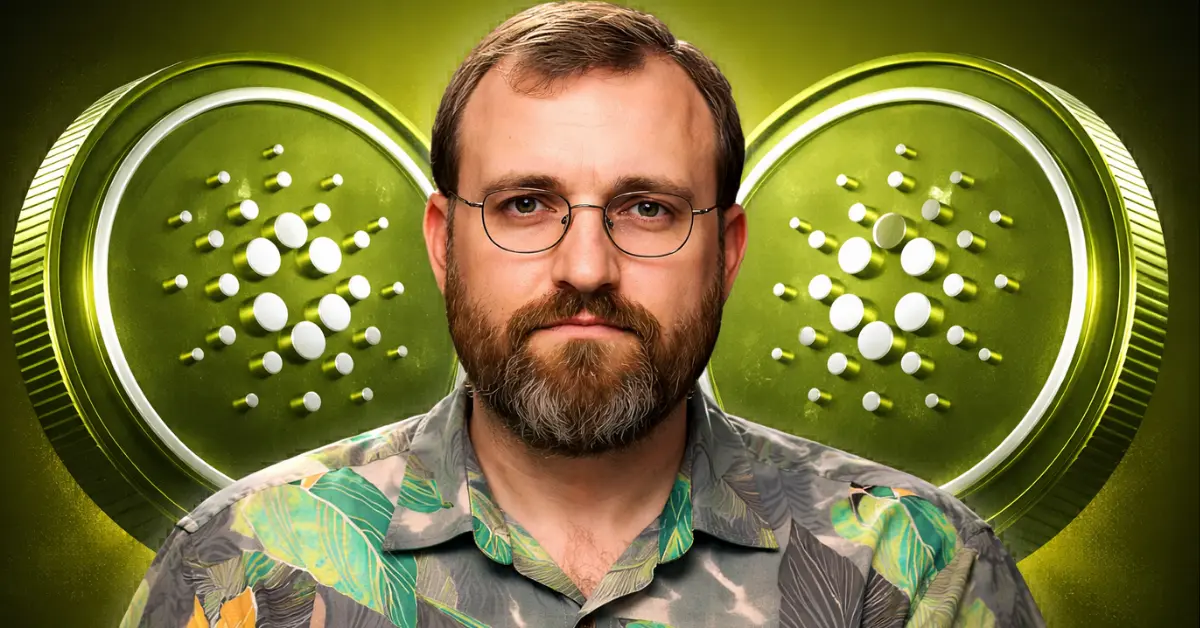
Cardano founder Charles Hoskinson has shared a detailed and balanced take on Zcash, acknowledging its legacy while pointing out the challenges it faces today.
Speaking in a recent discussion highlighted by The Rollup, Hoskinson described Zcash as one of the “OGs of OGs” in crypto, crediting it for pioneering privacy-focused cryptography that is now being used in newer systems like Midnight. He also noted the strong principles behind the project, calling its team “cypherpunks at their core” and emphasizing mutual respect between builders in the space.
“The biggest issue right now, Zcash is not programmable, and so it’s a fixed-function ledger. And so they do have a path to it. They created a framework called ZEXE for that, and they’ve been doing amazing things, but we’re the first to market right now with programmable Zcash, you know?”
However, he pointed out a valid limitation—Zcash is still largely a fixed-function ledger, meaning it lacks programmability compared to modern blockchain platforms. While frameworks like ZEXE aim to address this, newer projects are already moving faster in that direction.
The bigger concern? Liquidity.
“The big thing that Zcash has to contend with is liquidity, because if you look at where regulation is going, protocol-level privacy, where the asset is shielded by default, that is having a harder and harder time getting listed on exchanges, you know?”
As regulations tighten globally, privacy coins with shielded-by-default features are finding it harder to get listed on exchanges. This has led to declining liquidity rather than growth, making long-term adoption more difficult.
Hoskinson explained that this is not about the quality of the technology, but rather how regulation is shaping market access. Each cycle, the pressure increases, and fully private assets face more resistance.
Here’s how it works in simple terms:
To work around this, he pointed to the dual-token model as a practical solution. In this approach, one public token behaves like Bitcoin or Cardano for exchange listings, while a separate private token handles confidential transactions and computation.
According to him, this structure offers a middle ground, preserving privacy while staying compliant enough for broader adoption.
CoinPedia has been delivering accurate and timely cryptocurrency and blockchain updates since 2017. All content is created by our expert panel of analysts and journalists, following strict Editorial Guidelines based on E-E-A-T (Experience, Expertise, Authoritativeness, Trustworthiness). Every article is fact-checked against reputable sources to ensure accuracy, transparency, and reliability. Our review policy guarantees unbiased evaluations when recommending exchanges, platforms, or tools. We strive to provide timely updates about everything crypto & blockchain, right from startups to industry majors.
All opinions and insights shared represent the author's own views on current market conditions. Please do your own research before making investment decisions. Neither the writer nor the publication assumes responsibility for your financial choices.
Sponsored content and affiliate links may appear on our site. Advertisements are marked clearly, and our editorial content remains entirely independent from our ad partners.
The global space economy is entering a new era and Space Exploration Technologies Corp. (NASDAQ:…
James Thorne has seen this trade before, and he believes it is about to happen…
The top 10 XRP wallets hold around 11% of the cryptocurrency’s total supply, while the…
Chromia is quietly becoming one of the most promising blockchain platforms. Built as a Layer-1…
Bank of America strategist Michael Hartnett expects investors to reduce risk over the next three…
Story Highlights The live price of the AKT token is $0.76495599 The AKT price could…
