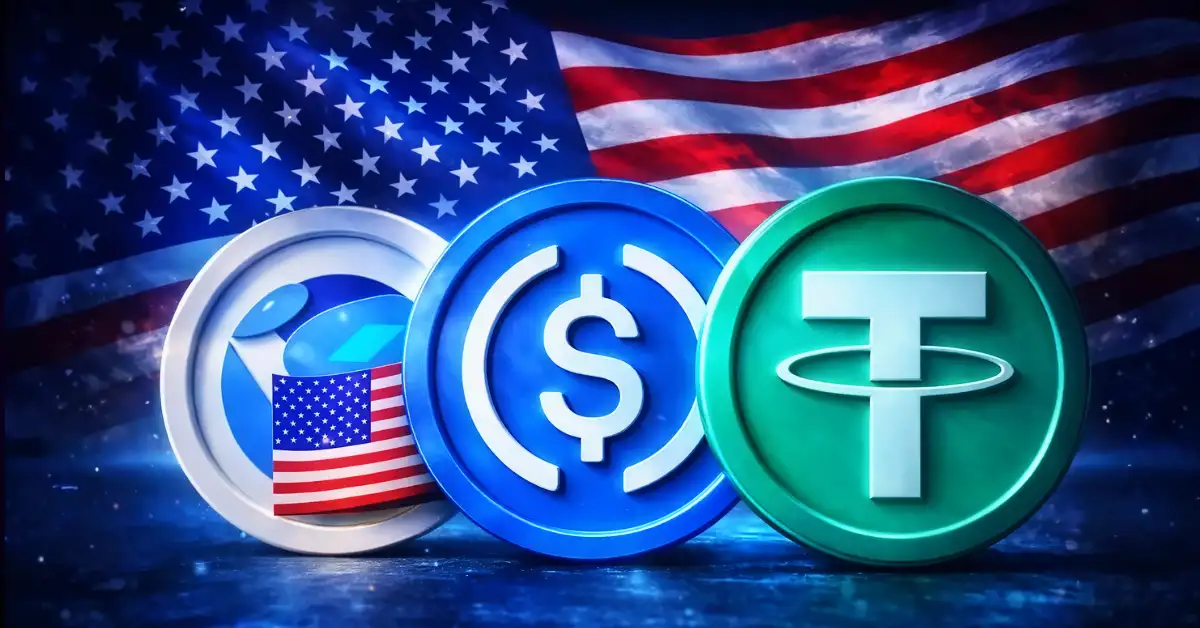
The Bank for International Settlements (BIS) has warned over the rapid growth of US dollar-backed stablecoins, raising concerns about liquidity stress and systemic risk. Stablecoins like USDT and USDC remain near $1, but their rapid growth and structural risks are driving policy concern.
This indicates rising pressure for stricter global regulation as stablecoins move closer to mainstream finance.
Speaking in April 2026 in Tokyo, BIS General Manager Pablo Hernández de Cos said these digital tokens could have “material consequences” for financial stability if they grow large enough to compete with traditional money.
Stablecoins like USDT and USDC have become widely used for payments, trading, and cross-border transfers. Their appeal lies in speed and ease of use.
He noted that while stablecoins offer innovation, they still fall short as a true form of money. Instead, he said they behave more like financial products.
“In this respect, they currently operate more like exchange-traded funds than like money.”
This means their value can sometimes move away from $1, especially during market stress, raising concerns for users.
One of the biggest warnings from BIS is about sudden withdrawals.
Stablecoin issuers hold reserves in short-term government bonds and bank deposits. If users rush to withdraw funds during a crisis, issuers may be forced to sell these assets quickly. This could create pressure across financial markets and even affect banks.
De Cos warned that such “runs” could spread risk across the system.
“Runs on stablecoins could trigger market stress,” he said, adding that proper safeguards are still missing.
Another major issue is regulation.
Because many stablecoins operate on public blockchains and use private wallets, a large part of activity happens outside traditional monitoring systems. This creates challenges for anti-money laundering controls.
The BIS is now urging stronger global coordination to manage these risks and prevent misuse.
Governments are already responding. In Europe, officials are pushing for tighter rules on non-euro stablecoins. The European Central Bank has also raised concerns about liquidity risks.
In the UK, lawmakers have questioned whether stablecoins could drain bank deposits or trigger bank-like crises.
Meanwhile, Switzerland has started testing regulated stablecoins within controlled environments.
The next phase will likely bring tighter control. De Cos suggested that risks could be reduced if stablecoin issuers had access to systems like deposit insurance or central bank support.
He also pointed out that limiting interest payments on stablecoins could reduce their appeal compared to bank deposits.
The WLD price is approaching a make-or-break zone. The weekly chart shows resistance between $0.56…
The NEAR price is pushing higher again after bouncing from $4.34 support, and bulls are…
NEAR Protocol (NEAR) & Worldcoin (WLD) prices have turned out to be among the top…
How can beginners participate in computing infrastructure and earn rewards without buying mining equipment or…
China could become a major driver of the next crypto market cycle if it finds…
Amazon (AMZN) stock climbed 3.29% on Friday, putting its next major resistance level at $280…
