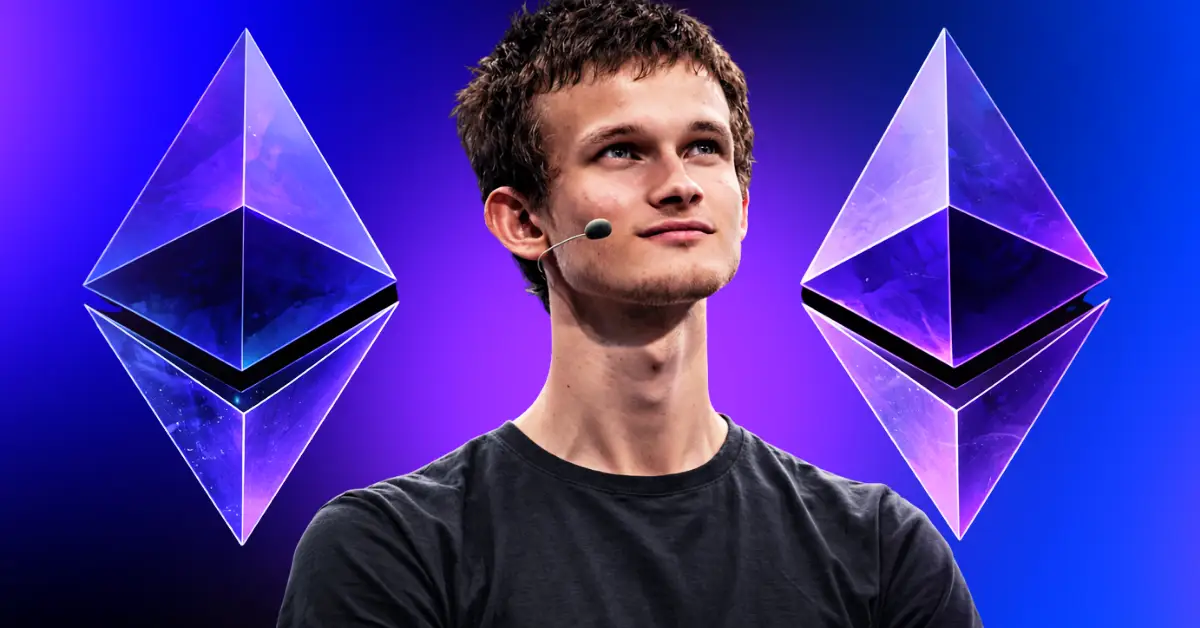
Vitalik Buterin walked into a cryptography conference expecting to find use cases for Ethereum. He walked out having questioned whether that was even the right way to think about it.
In a post on X today, the Ethereum co-founder described attending Real World Crypto, a conference focused on cryptography rather than cryptocurrency, as a clarifying experience. The people in the room shared values around privacy, open-source software, and censorship resistance. But they carried none of the assumptions that typically come with being inside the crypto bubble.
So Buterin tried an experiment. He asked himself: if you strip away all loyalty to Ethereum, all community identity, all existing narratives, and simply ask what this technology is genuinely useful for, what answer do you get?
The answer surprised even him.
The most fundamental use case for Ethereum, Buterin now argues, is something cryptographers have needed for decades: a public bulletin board.
The concept is simple but critical. Many secure systems, including online voting protocols, software version control, and certificate revocation, all need somewhere to post data publicly that anyone can read and no one can quietly delete or alter. They do not need complex computation. They do not strictly need money changing hands. What they need, at the most basic level, is reliable data availability with no single point of control.
That is exactly what a blockchain provides. And it is a need that predates crypto entirely.
The timing of this realisation matters. Ethereum recently completed an upgrade called PeerDAS, which increased the network’s data availability capacity by 2.3x, with a roadmap to scale it another 10 to 100 times higher. The infrastructure Buterin is describing is actively being built, at a time when fees on the network are at historic lows.
Buterin did not abandon the rest of Ethereum’s value stack. He reordered it.
Payments come second in his framework, and again the framing is practical rather than financial. If you are running a permissionless service, whether it is an API, a messaging app, or a data protocol, you face a spam problem the moment you make it free. ETH-denominated micropayments, particularly through zero-knowledge payment channels, solve this without requiring users to hand over a phone number or submit to identity verification. Payment as infrastructure, not payment as a product.
Smart contracts come third. And here Buterin made his most provocative admission: technically, for almost every application that does not directly involve ETH itself, smart contracts are just a convenience. You could build the same things using the chain purely as a bulletin board, handling computation off-chain through cryptographic proofs. But standardisation is hard, and the smart contract model solves the interoperability problem elegantly enough that it remains the right practical choice.
Buterin’s final framing is the one likely to travel furthest. Stripped of all the financial complexity and ecosystem politics, Ethereum is, in his words, global shared memory.
A place where anything can be written, everything can be read, and nothing can be unilaterally erased. Not by a company. Not by a government. Not by Buterin himself.
Most of the internet does not work that way. It runs on servers owned by someone who can change their mind. Ethereum is the rare exception, and Buterin is now arguing that the world’s developers and builders have not fully grasped how useful that exception actually is.
The bulletin board has been there the whole time. The question is whether enough people will start using it for what it was always capable of.
Aptos, Sui & Filecoin: all the prices are trading within the lower bands and are…
The Bitcoin price continues to trade within a defined $60,000–$70,000 range, but this lack of…
Cardano just confirmed its Protocol 11 hard fork for April 2026, a governance overhaul that…
The MORPHO price today popped 15% intraday, and yeah it didn’t come out of nowhere.…
The ALGO price just pulled off a flashy 30% intraday move but zoom out for…
Story Highlights The live price of the UniSwap crypto token is . Price predictions for…