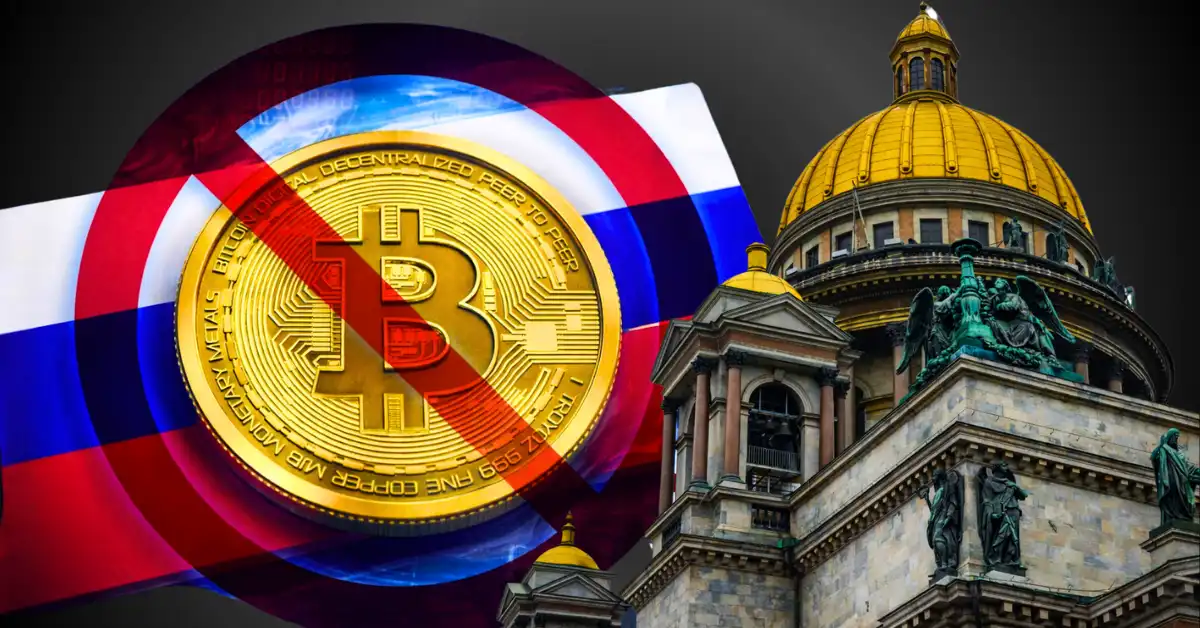
Russia could begin blocking foreign cryptocurrency exchange websites as early as summer 2026, according to experts cited by RBC. The move may align with the government’s plan to introduce new crypto regulations by July 1, bringing digital asset trading under formal state supervision.
At present, cryptocurrency trading in Russia operates mostly outside direct government control. Daily trading volume is estimated at around 50 billion rubles, highlighting the scale of crypto activity in the country.
Russian officials appear focused on keeping crypto-related revenue inside the country. Sergey Shvetsov, Chairman of the Supervisory Board of Moscow Exchange, stated that Russian traders pay roughly $15 billion every year in fees to overseas crypto exchanges.
With new digital asset laws expected soon, authorities are likely aiming to redirect crypto trading, Bitcoin transactions, and altcoin investments toward regulated domestic platforms. This could strengthen oversight of crypto wallets, exchanges, and blockchain transactions within Russia’s financial system.
Nikita Zuborev, a senior analyst at Bestchange.ru, said large-scale website blocking is a “likely scenario.” He suggested that Roskomnadzor could restrict access to unregistered crypto exchanges using tools such as DNS blocking and tighter monitoring of internet traffic.
However, experts warn that strict restrictions may not stop foreign crypto trading completely. If international platforms are not allowed to obtain local licenses or partner with Russian brokers, users may turn to peer-to-peer trading, VPN services, and decentralized exchanges.
Zuborev noted that such steps could increase crypto fraud, raise transaction costs, and push parts of the digital currency market into the shadow economy. Instead of reducing crypto activity, tough enforcement could simply make it harder to track.
Given the size of Russia’s crypto market and the popularity of platforms like Binance, analysts believe a full ban would be difficult to enforce in practice.
Dmitry Machikhin, founder of BitOK, suggested Russia could adopt a model similar to Belarus, where cryptocurrency trading is limited to approved domestic exchanges operating under special legal rules.
Legal experts also point out that foreign crypto platforms could be blocked for failing to comply with Russian data storage and localization requirements. At the same time, Roskomnadzor is reportedly developing AI-based systems to better monitor and filter online traffic, which could improve enforcement.
While tighter crypto regulation appears likely, the long-term outcome will depend on how Russia balances control and innovation. Authorities may choose a controlled legalization approach, allowing regulated crypto exchanges to operate domestically. Alternatively, stricter isolation from global cryptocurrency markets could reshape how Russians buy Bitcoin, trade altcoins, and use digital assets.
For now, the focus is clear: bring crypto trading, exchange activity, and blockchain transactions under national oversight — and keep more of the revenue within Russia’s financial system.
According to experts, Russia could begin blocking foreign cryptocurrency exchange websites as early as summer 2026, likely aligning with new regulations planned for July 1.
Authorities aim to redirect the estimated $15 billion in annual trader fees from overseas platforms to regulated domestic exchanges, bringing digital asset trading under formal state supervision.
Experts suggest Roskomnadzor may restrict unregistered platforms using DNS blocking, tighter internet traffic monitoring, and new AI-based systems to filter online activity.
A full ban would be difficult to enforce due to the market’s size. However, access will likely be restricted unless foreign platforms obtain local licenses or partner with Russian brokers.
America's top financial regulator has made a bold statement about traditional money. CFTC Chair Michael…
Before examining the BDAG outlook, the 20 millionth Bitcoin was mined earlier this year, leaving…
Iran is tightening control over the Strait of Hormuz, asking some ships to pay transit…
Bittensor (TAO) price just went through a classic high-volatility shakeout after a sharp rejection at…
Story Highlights The live price of the LINK token is . LINK price prediction for…
Drift Protocol shared that about $280 million was drained in a highly organized attack, affecting…
