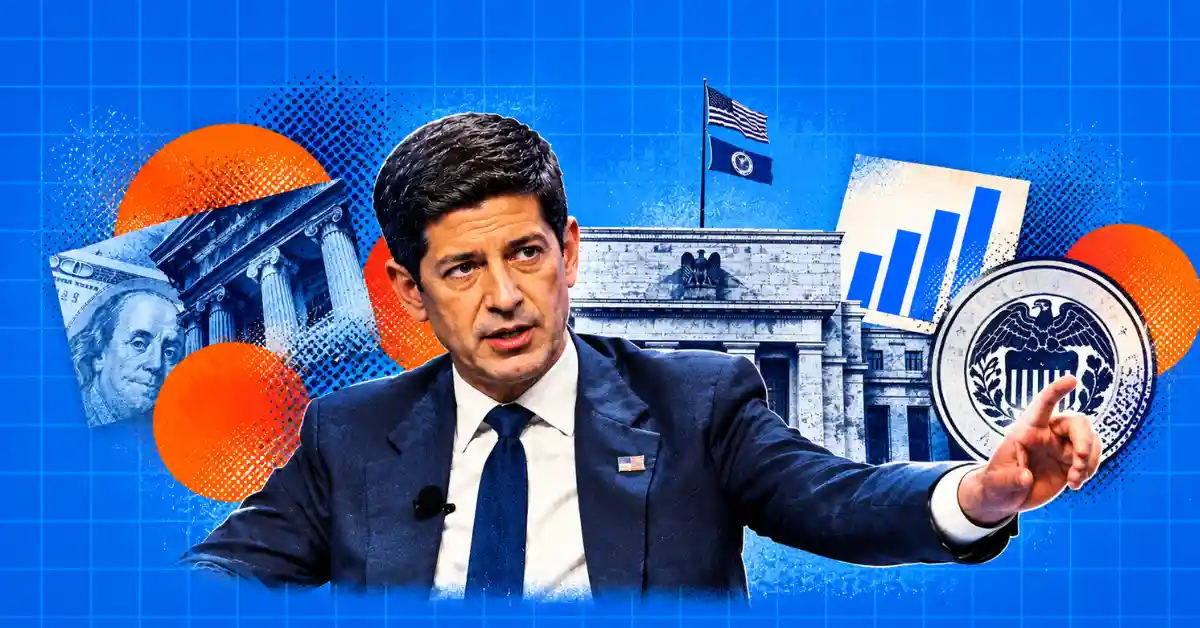
Speaking at the IMF-World Bank annual meetings in Bangkok on 16 October, Federal Reserve Chair Kevin Warsh refused to signal whether the Fed will raise interest rates again at its October 27–28 meeting, keeping markets uncertain after September’s rate hike.
Meanwhile, Warsh also warned that artificial intelligence could transform the global economy, but its short-term impact will be difficult to manage.
During a fireside chat with International Monetary Fund Managing Director Kristalina Georgieva, Warsh said the Fed would decide its next move based on the economic situation at each meeting.
“I don’t prejudge meetings. I don’t believe in saying now what I might do at the meetings that we have in the balance of this year.”
He also made clear that the Fed would not offer advance signals about its rate decisions.
“It’s a new chapter at the Fed [and] we’re not in that business anymore.”
Further commenting on the Fed’s 25-basis-point rate hike in September, which raised the target range to 3.75%–4%, Warsh said policymakers needed to reduce monetary support to bring inflation under control.
Despite Kevin Warsh offering no hints about the Fed’s next move, CME FedWatch data showed traders pricing in an 87.3% chance that the Fed will hold interest rates steady at its October meeting.
Beyond interest rates, Warsh described artificial intelligence as “probably the most consequential change to the U.S. and the global economy in my lifetime.”
He said the technology could make economies more productive and wealthier, but warned that the shift would not be smooth.
“I want you to hear from me optimism, but optimism leavened by the seriousness of purpose.”
He said AI could make economies more productive and wealthier, but warned that the transition would be “very bumpy.”
Its near-term effect on jobs remains uncertain, while rising investment in AI infrastructure could also create price pressures.
.
Bitcoin price could fall to $40,000 if its current correction continues, with no clear signs…
Binance Wallet has introduced a new collectible trading card experience that combines randomized digital pack…
Wells Fargo is one of the largest U.S. banks has emerged as the biggest reported…
Story Highlights The live price of the Avalanche is . Price predictions for 2027 highlight…
Cardano founder Charles Hoskinson has called rival crypto executives pathetic, accusing them of hiding behind…
Story Highlights The Live Price Of Bitcoin SV BSV has traded under the 200-day EMA…