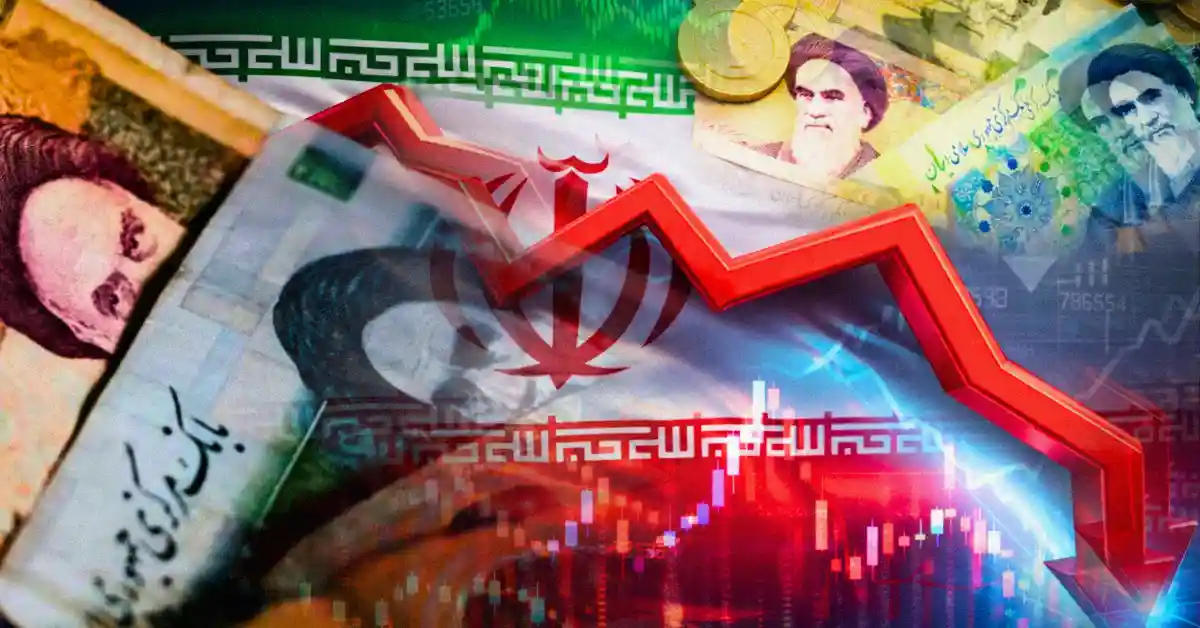
Crypto use in Iran is rising as the country faces ongoing U.S. sanctions and a sharp decline in the value of its currency, pushing more people to look for alternative ways for ROI. According to researchers, many users have been moving toward crypto away from local exchanges during recent periods of economic instability. At the same time, the U.S. Treasury is reviewing whether some crypto platforms may be helping users bypass sanctions, following analysis by TRM Labs.
U.S. authorities are looking into whether some cryptocurrency platforms have been used by Iranian officials to get around international sanctions. The review comes as the use of crypto has grown quickly in Iran.
Researchers estimate that crypto transactions in the country reached between $8 billion and $10 billion last year, driven by increased activity from both state-affiliated entities and everyday investors, based on data from TRM Labs and Chainalysis.
Tom Keatinge, director of the Centre for Finance and Security at UK think-tank the Royal United Services Institute, said, “The harder one squeezes the Iranian economy, the more one better be ready to deal with the consequences, one of which is the expanding use of crypto.”
Activity on cryptocurrency networks linked to Iran remained high last year, with TRM Labs estimating roughly $10 billion in transactions, slightly below the $11.4 billion recorded in 2024. Data from Chainalysis shows inflows to Iranian-linked wallets continued to rise, reaching a record $7.8 billion in 2025, compared with $7.4 billion in 2024 and $3.17 billion in 2023.
Also read: Why Iran’s Currency Collapse to ‘Zero’ Could Push Bitcoin Back Above $100K
As crypto use expands, the U.S. Treasury is assessing whether some digital-asset platforms may have helped state-connected actors evade sanctions. Ari Redbord, global head of policy at TRM Labs, said the review is focused on potential efforts to move funds overseas, gain access to hard currency or purchase goods despite restrictions.
Last week, two UK-based crypto exchanges were sanctioned by the U.S. after authorities said they processed funds linked to the Islamic Revolutionary Guard Corps, according to the Office of Foreign Assets Control. The U.S. also targeted Iranian financier Babak Morteza Zanjani over alleged support for IRGC-linked activities.
Read more: U.S. Treasury Sanctions UK Crypto Exchanges Over Alleged Iran Sanctions Evasion
Researchers say it is extremely difficult to measure how cryptocurrencies are used in Iran, and estimates differ widely on how much activity is linked to the state versus ordinary users. Data from Chainalysis suggests that about half of last year’s crypto transactions were connected to the Islamic Revolutionary Guard Corps, a group with major political and economic influence in the country and close ties to Supreme Leader Ayatollah Ali Khamenei.
Other researchers highlight a very different picture. TRM Labs estimates that most Iran-related crypto flows come from retail investors, although it has still identified thousands of wallet addresses linked to the IRGC and says those accounts have handled around $3 billion in digital assets since 2023.
CoinPedia has been delivering accurate and timely cryptocurrency and blockchain updates since 2017. All content is created by our expert panel of analysts and journalists, following strict Editorial Guidelines based on E-E-A-T (Experience, Expertise, Authoritativeness, Trustworthiness). Every article is fact-checked against reputable sources to ensure accuracy, transparency, and reliability. Our review policy guarantees unbiased evaluations when recommending exchanges, platforms, or tools. We strive to provide timely updates about everything crypto & blockchain, right from startups to industry majors.
All opinions and insights shared represent the author's own views on current market conditions. Please do your own research before making investment decisions. Neither the writer nor the publication assumes responsibility for your financial choices.
Sponsored content and affiliate links may appear on our site. Advertisements are marked clearly, and our editorial content remains entirely independent from our ad partners.
NEAR price has displayed an exceptionally strong rally since the last two months. Now it…
Evernorth Holdings, a digital asset treasury company, plans to use its 473 million XRP holdings…
The US 5-year Treasury yield surged to 5.15%, reaching its highest level in 19 years,…
DriveWealth has partnered with Ripple to integrate stablecoin settlement, cross-border payments and digital asset custody…
Bitcoin’s two biggest buyers both stepped back last week. US spot Bitcoin ETFs recorded their…
NEAR Protocol has staged a strong rally, surging nearly 285% from its earlier lows before…
