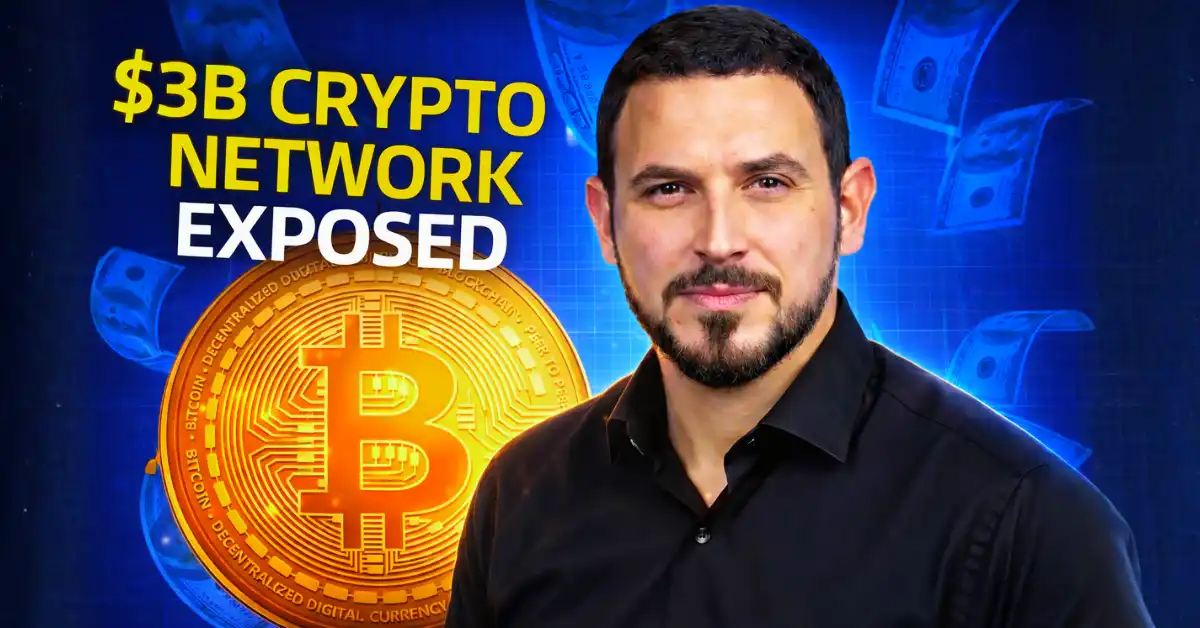
In an exclusive interview, Omri Raiter, CEO of RAKIA, has shed light on a massive cryptocurrency laundering ecosystem tied to state-backed actors — one that may be far larger than publicly reported.
Raiter challenges the widely cited figures, stating that “the real state-linked volume is materially higher,” suggesting the scale of activity extends well beyond the $3 billion benchmark often cited.
At the core of the discovery is RAKIA’s advanced intelligence platform, which uses AI-driven multisensory data fusion to analyze vast streams of information simultaneously.
Raiter explains, “where conventional blockchain tracing follows wallets, RAKIA connects those wallets back to real-world operators, devices, and infrastructure.”
This approach allows investigators to move beyond transactions and uncover the actual actors behind them — a critical breakthrough in identifying state-linked operations.
The interview also reveals a key operational trend: USDT’s dominance on Tron (TRC20) in these flows.
According to Raiter, “the operational state rail… runs overwhelmingly on USDT-TRC20,” highlighting how stablecoins have become the backbone of large-scale financial movement under sanctions.
While Bitcoin remains part of the ecosystem, particularly in mining and specific use cases, it is not the primary vehicle for day-to-day transactions.
Despite increasing scrutiny, Raiter points to structural weaknesses in global crypto regulation that continue to enable illicit activity.
“By the time an address is designated, the funds have moved,” he notes, underscoring how reactive compliance systems struggle to keep pace with rapidly shifting wallets.
Unregulated exchanges and gaps in cross-chain monitoring further complicate enforcement, creating blind spots across the ecosystem.
One of the most striking revelations involves activity during Iran’s prolonged internet blackout. Despite near-total civilian disconnection, RAKIA identified more than 1,100 active crypto nodes operating within the country.
Raiter states unequivocally, “this is direct state involvement. The infrastructure itself constitutes the evidence.”
The concentration of nodes in key strategic regions further reinforces the conclusion.
The interview also highlights a major shift in how cryptocurrency is being used at the national level. RAKIA confirms that crypto-based toll systems are now operational in critical trade routes.
“It is real, it is operational, and it has been codified into Iranian law,” Raiter said, pointing to what he describes as a landmark moment in state adoption of digital assets.
From laundering networks to sovereign revenue systems, Raiter’s insights suggest that cryptocurrency is rapidly becoming embedded in state-level strategy.
The implications are significant: as enforcement struggles to keep up, the role of digital assets in geopolitical and financial systems is entering a new, more complex phase.
CoinPedia has been delivering accurate and timely cryptocurrency and blockchain updates since 2017. All content is created by our expert panel of analysts and journalists, following strict Editorial Guidelines based on E-E-A-T (Experience, Expertise, Authoritativeness, Trustworthiness). Every article is fact-checked against reputable sources to ensure accuracy, transparency, and reliability. Our review policy guarantees unbiased evaluations when recommending exchanges, platforms, or tools. We strive to provide timely updates about everything crypto & blockchain, right from startups to industry majors.
All opinions and insights shared represent the author's own views on current market conditions. Please do your own research before making investment decisions. Neither the writer nor the publication assumes responsibility for your financial choices.
Sponsored content and affiliate links may appear on our site. Advertisements are marked clearly, and our editorial content remains entirely independent from our ad partners.
Tesla, Meta, SpaceX and Netflix are entering a crucial week as quarterly earnings put their…
Crypto-native traders are chasing Zcash and Hyperliquid. Grayscale’s head of research, Zach Pandl, says the…
Jio Platforms’ initial public offering is drawing strong unofficial demand, with grey market premium (GMP)…
Former Commodity Futures Trading Commission Chairman Chris Giancarlo and venture firm Draper Dragon have publicly…
Japan’s Nikkei 225 fell 2% at Monday’s open, erasing roughly ¥23.5 trillion, or about $150…
Strategy Executive Chairman Michael Saylor said Bitcoin is returning to a bull market, with global…
