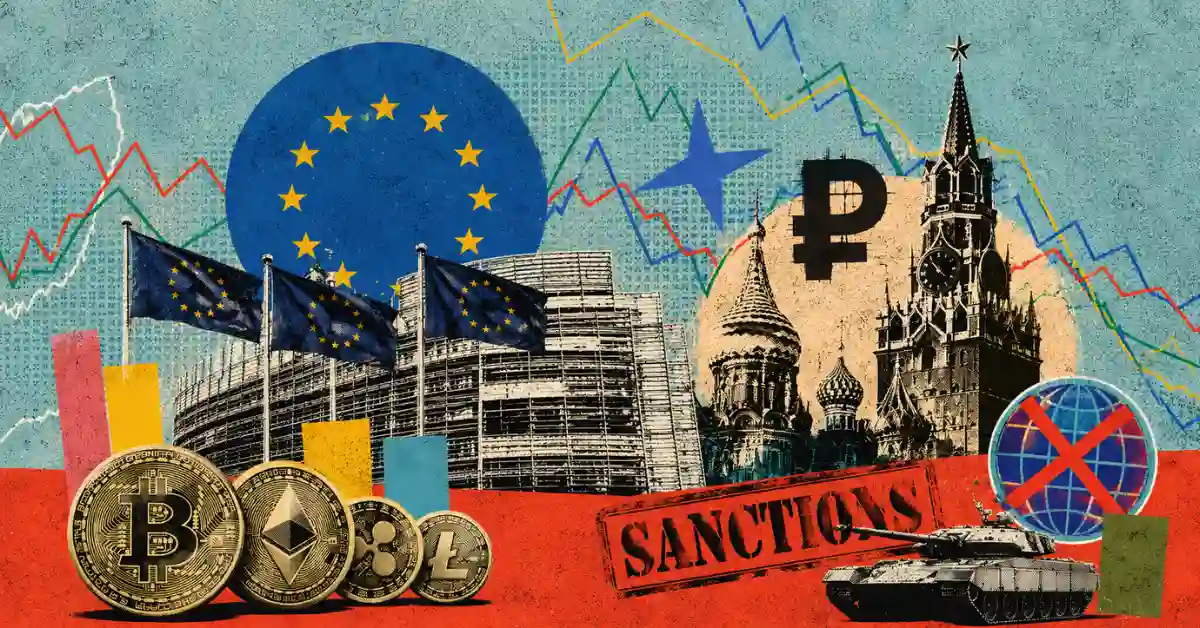
The European Union has approved its 21st sanctions package against Russia in four years, and crypto platforms are now directly in the spotlight. More than 100 banks and crypto operators have been hit with this news restrictions as the EU tightens its grip on Russia’s financial network and cuts off new ways to avoid sanctions.
The European Union has officially approved its 21st sanctions package against Russia, expanding restrictions across banks, crypto platforms, energy companies and military suppliers.
According to EU officials, the new package places 94 Russian financial institutions, including the Moscow Exchange, under full sanctions. It also bans transactions involving more than 100 banks and crypto operators that are accused of helping Russia avoid earlier sanctions.
EU Foreign Policy Chief Kaja Kallas called it the bloc’s largest sanctions package since the war in Ukraine began.
“We are hitting Putin where it hurts most: cutting off the financial lifelines he relies on to sustain his war.”
The package also freezes the assets of more than 50 military industrial companies, including businesses involved in producing Russia’s long range combat drones.
European individuals and companies are now completely banned from sending money or doing business with 11 major crypto platforms accused of helping Russia bypass sanctions. These exchanges will effectively lose access to European users and liquidity.
The EU has also created a new legal tool that allows it to block crypto services at the country level for the first time.
If a non-EU country allows crypto platforms to help Russian businesses avoid sanctions and refuses to stop them, the EU can restrict crypto services connected to that country’s entire crypto industry.
Along with the crypto restrictions, the EU has frozen the Russian oil price cap at $44.10 per barrel for the next 12 months.
Officials said this prevents the cap from automatically increasing to around $58 per barrel, which could have boosted Russia’s oil revenue during recent market volatility.
For the first time, the sanctions also target more than 40 vessels linked to Russia’s so called shadow fleet, which has been used to transport oil outside international restrictions.
European Commission President Ursula von der Leyen welcomed the agreement, saying the sanctions will continue weakening Russia’s ability to finance the war.
“At a time when Ukraine has built military momentum, our sanctions continue to weaken the economic foundations of Russia’s war effort.”
Kallas also confirmed that this will not be the final package, saying the EU is already working on additional sanctions if Russia further escalates the conflict.
CoinPedia has been delivering accurate and timely cryptocurrency and blockchain updates since 2017. All content is created by our expert panel of analysts and journalists, following strict Editorial Guidelines based on E-E-A-T (Experience, Expertise, Authoritativeness, Trustworthiness). Every article is fact-checked against reputable sources to ensure accuracy, transparency, and reliability. Our review policy guarantees unbiased evaluations when recommending exchanges, platforms, or tools. We strive to provide timely updates about everything crypto & blockchain, right from startups to industry majors.
All opinions and insights shared represent the author's own views on current market conditions. Please do your own research before making investment decisions. Neither the writer nor the publication assumes responsibility for your financial choices.
Sponsored content and affiliate links may appear on our site. Advertisements are marked clearly, and our editorial content remains entirely independent from our ad partners.
NEAR price has displayed an exceptionally strong rally since the last two months. Now it…
Evernorth Holdings, a digital asset treasury company, plans to use its 473 million XRP holdings…
The US 5-year Treasury yield surged to 5.15%, reaching its highest level in 19 years,…
DriveWealth has partnered with Ripple to integrate stablecoin settlement, cross-border payments and digital asset custody…
Bitcoin’s two biggest buyers both stepped back last week. US spot Bitcoin ETFs recorded their…
NEAR Protocol has staged a strong rally, surging nearly 285% from its earlier lows before…