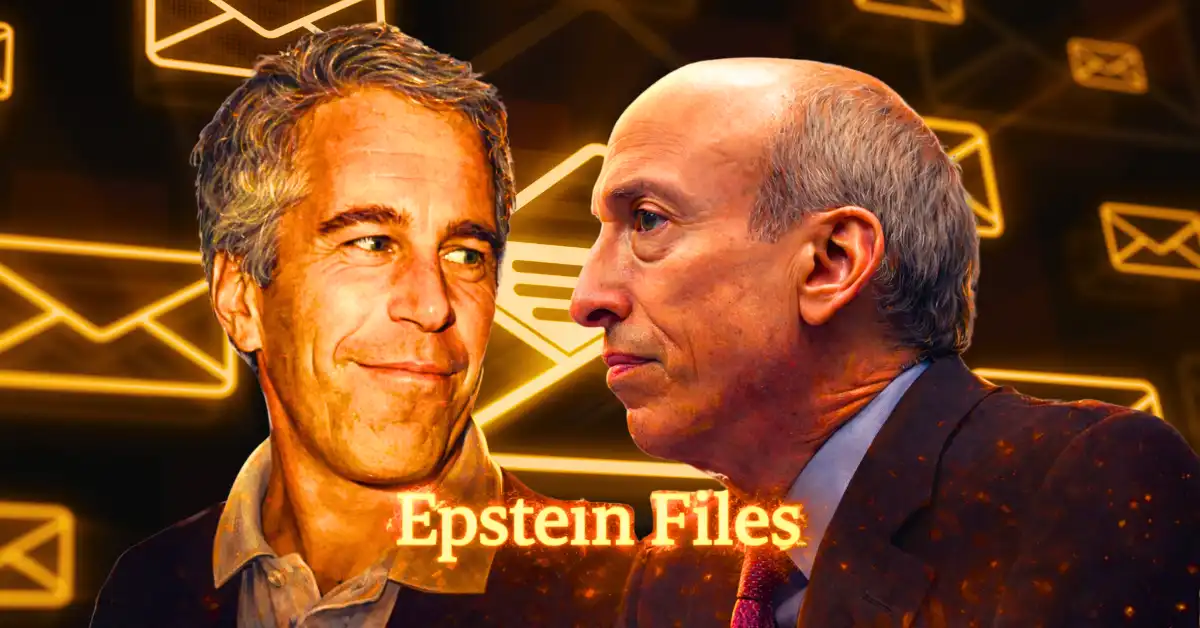
Newly surfaced 2018 emails from Jeffrey Epstein’s files have reignited controversy after referencing potential discussions about cryptocurrency with Gary Gensler, years before he became SEC Chair. The emails suggest Epstein mentioned plans to speak with Gensler about crypto and informed former U.S. Treasury Secretary Lawrence Summers that Gensler would arrive early for such discussions. Summers reportedly described Gensler as “pretty smart.”
However, there is no confirmed evidence that a meeting between Epstein and Gensler actually took place. At the time, Gensler was serving as a professor at MIT, teaching blockchain and digital currency courses, long before leading the SEC under the Biden administration.
Beyond policy references, the files also highlight Epstein’s reported financial exposure to early crypto ventures. Reports claim he invested around $3 million into Coinbase in 2014. In an X post crypto analyst highlighted that emails referencing projects like XRP and Stellar have fueled speculation that he may have held early positions in those networks as well.
Epstein was also reportedly linked to early stablecoin ventures, including Circle (issuer of USDC), possibly through Brock Pierce. There are suggestions he may have had indirect involvement in Tether’s early ecosystem, although concrete documentation remains limited.
While these investments do not prove wrongdoing, they show Epstein was actively monitoring and participating in crypto’s early growth phase.
One of the more sensitive revelations involves allegations that Epstein funded research connected to U.S. central bank digital currency (CBDC) pilot programs through MIT and certain Federal Reserve Banks. If accurate, this would place him near early academic and regulatory discussions around digital currency design.
Importantly, any potential conversations with Gensler would have occurred before Gensler held regulatory power at the SEC. Still, critics argue that these overlapping networks between academia, policy, and private investors may raise broader transparency questions.
At this stage, the revelations raise questions rather than confirm misconduct. There is no public evidence linking Epstein to regulatory decisions made during Gensler’s SEC tenure. However, the situation highlights how influential investors often operated within the same academic and policy ecosystems shaping early crypto regulation.
For markets, the impact remains largely reputational unless formal investigations emerge. For the industry, it underscores the need for transparency as crypto continues to mature under increasing regulatory scrutiny.
Gary Gensler is the current SEC Chair. Before that, he taught blockchain at MIT and previously led the CFTC, focusing on financial regulation.
As SEC Chair, Gensler has pushed for stricter crypto oversight, arguing many tokens may qualify as securities under U.S. law.
Gary Gensler, former SEC Chair (2021–Jan 2025), has returned to MIT as Professor of the Practice at the Sloan School of Management and CSAIL as of early 2026.
Crypto hacks dropped in February, but the methods got sneakier. Phishing campaigns and wallet authorization…
Dogecoin price is entering April 2026 at a decisive point, with the memecoin price holding…
Bitcoin crossed $69,000 USD, amid Trump's war easing statement. ETF inflow flips to green after…
Pi Network has announced a major technical update. The team confirmed that “Pi Testnet now…
In March 2026, the crypto sector faced 20 major hacks totaling $52 million, nearly double…
Australia has introduced its first cryptocurrency law, requiring crypto exchanges and custodians to obtain Australian…
