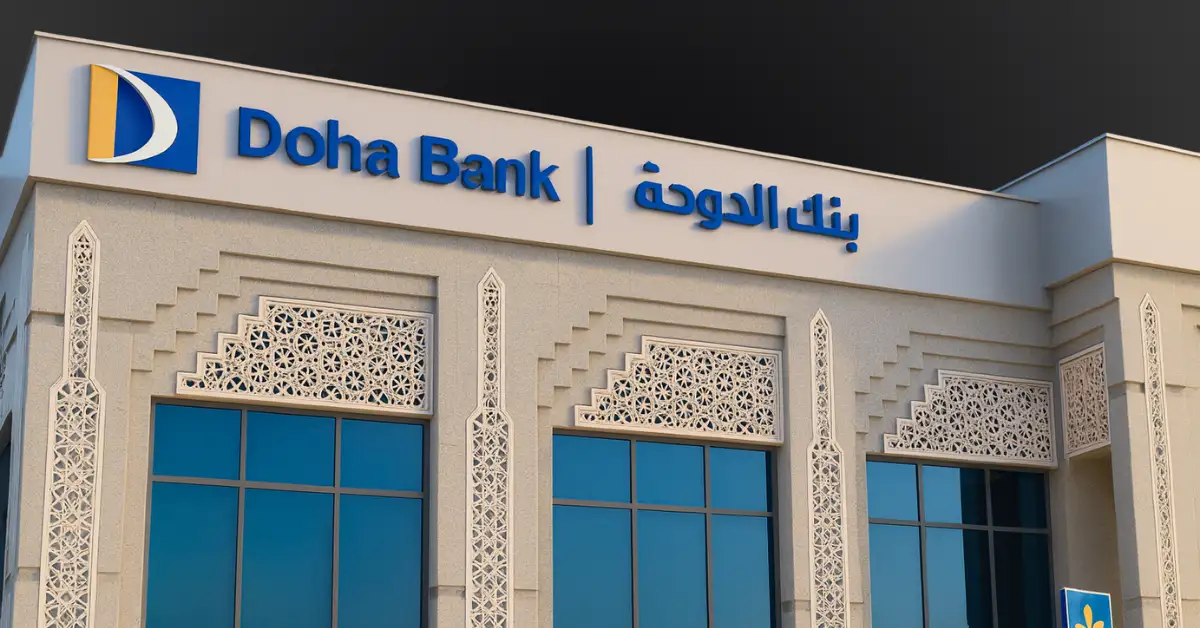
Across Doha and the wider Gulf region, market sentiment is steadily shifting toward digital finance. Banks, regulators, and investors are no longer just watching tokenization trends from the sidelines. There is growing confidence that digital tools can improve speed, efficiency, and transparency without disrupting trusted financial systems. This changing mood has now translated into real action, with Doha Bank stepping forward to execute a fully digital bond deal.
Doha Bank has issued a $150 million digital bond, marking an important moment for the region’s capital markets. Instead of running a pilot or test project, the bank went straight into live issuance. The bond was built and settled using Euroclear’s distributed ledger technology platform, signaling that digital infrastructure is ready for large, regulated transactions.
This move shows how traditional banks are adopting new technology while staying firmly within established financial frameworks. The focus is not on crypto speculation, but on improving how bonds are issued, settled, and managed.
One of the standout features of the deal was instant settlement. The bond was listed on the London Stock Exchange’s International Securities Market and settled on the same day, known as T+0 settlement. In normal bond markets, settlement can take several days, tying up capital and increasing operational risk.
By using DLT, Doha Bank removed much of this friction. Transactions were recorded instantly, ownership was clear, and settlement was completed without delay. Standard Chartered played a central role as the sole global coordinator and arranger, overseeing the structuring, execution, and distribution of the bond.
Rather than using a public blockchain, the bond was issued on a permissioned DLT system run by Euroclear. This choice reflects a clear industry preference. Regulated platforms offer controlled access, legal certainty, and seamless integration with existing custody and settlement systems.
For institutional investors, this matters. They get the efficiency benefits of digital assets while maintaining the safeguards they expect from traditional markets. Euroclear highlighted that this structure proves digital bonds can be fast, secure, and fully compliant at the same time.
The deal fits into a wider regional effort to modernize financial infrastructure. Across the Middle East and Asia, banks are embedding DLT into existing systems instead of building entirely new crypto-native markets. Platforms from major institutions like HSBC and JPMorgan are being used in a similar way, helping tokenized bonds connect smoothly with familiar post-trade processes.
According to Standard Chartered, client interest in digital issuance is rising quickly. Institutions are no longer just curious about tokenization. They are actively using it to improve how capital markets function. Doha Bank’s digital bond adds to a growing list of live issuances and signals that tokenization is becoming a practical tool, not just a concept. For regulated markets, permissioned DLT now looks like the preferred path forward.
A digital bond is a traditional bond issued using blockchain technology, improving settlement speed and transparency while operating within regulated financial systems, like Doha Bank’s recent issuance.
Digital bonds can settle instantly (T+0) on a distributed ledger, unlike traditional bonds which take days. This reduces capital lock-up and operational risk for banks and investors.
Tokenization makes bonds faster to settle, increases transparency of ownership, and improves operational efficiency, all while maintaining the safeguards of the traditional regulated market.
Yes, Qatar’s financial sector is actively adopting digital finance, as shown by Doha Bank’s live digital bond deal, part of a wider Gulf region shift to modernize capital markets with blockchain technology.
CoinPedia has been delivering accurate and timely cryptocurrency and blockchain updates since 2017. All content is created by our expert panel of analysts and journalists, following strict Editorial Guidelines based on E-E-A-T (Experience, Expertise, Authoritativeness, Trustworthiness). Every article is fact-checked against reputable sources to ensure accuracy, transparency, and reliability. Our review policy guarantees unbiased evaluations when recommending exchanges, platforms, or tools. We strive to provide timely updates about everything crypto & blockchain, right from startups to industry majors.
All opinions and insights shared represent the author's own views on current market conditions. Please do your own research before making investment decisions. Neither the writer nor the publication assumes responsibility for your financial choices.
Sponsored content and affiliate links may appear on our site. Advertisements are marked clearly, and our editorial content remains entirely independent from our ad partners.
Solana price is down by 1.5%, reaching $78.82, plunging below $80, and underperforming the broader…
The crypto market is entering a decisive week, with Bitcoin price holding above $67,000, Ethereum…
The crypto market is attempting to stabilise, with leading assets like Bitcoin and Ethereum holding…
Ever since its rejection from the 2025 highs above $740, the Zcash price has remained…
The SIREN price is back in the spotlight after a sharp bounce from recent lows.…
Good Friday shut down CME futures and all crypto ETF activity on April 3, removing…