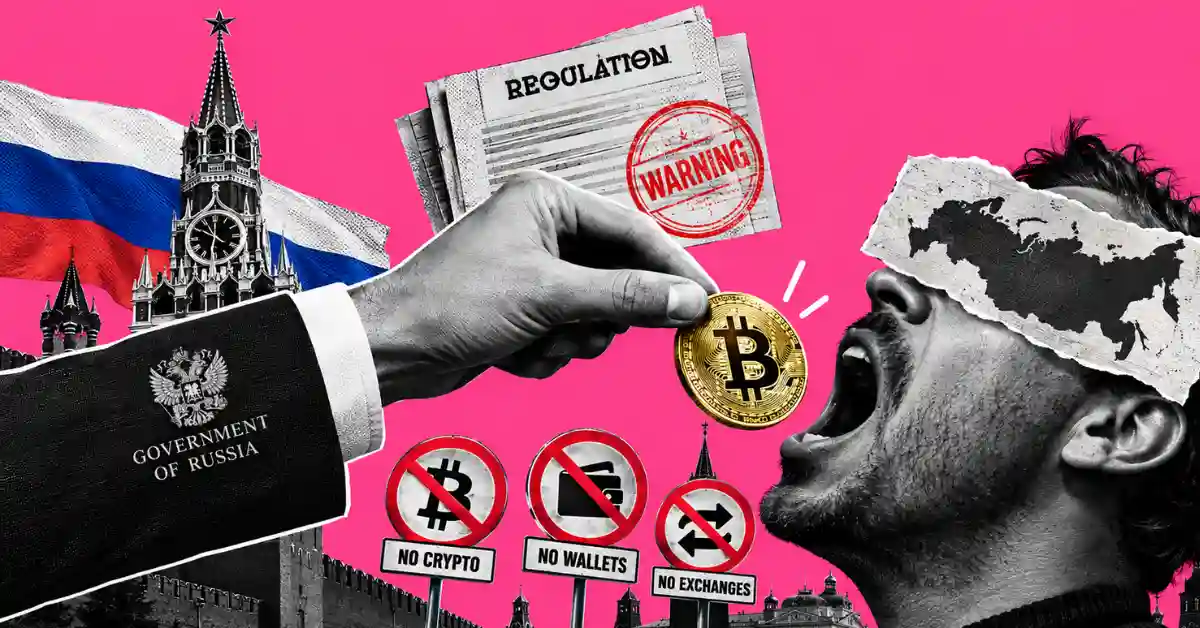
Russia’s Ministry of Finance has warned domestic crypto investors that the government will not compensate them if foreign stablecoin issuers such as USDT or USDC freeze their assets.
The warning comes as nearly 20 million Russians reportedly hold digital assets worth around 3.7 trillion rubles, or about $44 billion, according to Deputy Finance Minister Ivan Chebeskov.
In an interview, Chebeskov said Russian investors should not expect compensation if foreign crypto issuers freeze their assets.
The warning mainly concerns stablecoins such as USDT and USDC. Their issuers can freeze tokens in response to sanctions, court orders or other legal requirements.
Chebeskov said the government would not cover losses resulting from such freezes, including when investors hold the tokens in private wallets.
This means holding stablecoins in a private wallet does not necessarily prevent the issuer from freezing the tokens.
Russia has already seen this risk. In March 2025, Tether froze more than $28 million in USDT linked to Garantex after sanctions were imposed on the exchange.
Chebeskov said around 20 million Russians hold cryptocurrencies worth approximately 3.7 trillion rubles, or more than $44 billion.
He also reported daily crypto transaction volumes of around 50 billion rubles, equivalent to nearly $600 million.
The figures highlight the scale of crypto ownership and trading in Russia as authorities introduce a formal regulatory framework for the market.
The warning comes as Russia introduces a new framework for digital assets under Federal Law No. 282-FZ, signed on August 4 and effective from September 1, 2026.
The law establishes rules covering crypto trading, digital asset intermediaries, and investor access.
Under the new system, non-qualified investors face annual purchase limits and must pass a test before buying eligible cryptocurrencies. The Bank of Russia said the annual limit for non-qualified investors is 300,000 rubles through one intermediary.
The framework also includes rules covering foreign digital instruments, including foreign stablecoins. Some provisions related to licensed intermediaries are scheduled to take effect later, including in July 2027.
For Russian crypto investors, the Finance Ministry’s warning adds another risk to holding foreign-issued stablecoins: even when tokens are held in private wallets, issuers may still be able to freeze them under applicable legal or sanctions requirements.
A post claiming XRP is already valued at $1,000 outside public markets has drawn widespread…
Stocks and crypto head into a holiday-shortened week still reeling from one of their worst…
XRP sank to $0.86 on Saturday, its weakest level since November 2024, even as calls…
The Zcash (ZEC) price is attempting to bounce back after a sharp sell-off pushed the…
The Hyperliquid (HYPE) price is attempting to rebound after a prolonged decline, with the token…
Nvidia shares plunged 14.01% on Friday to close at $125.53, a fresh 52-week low and…