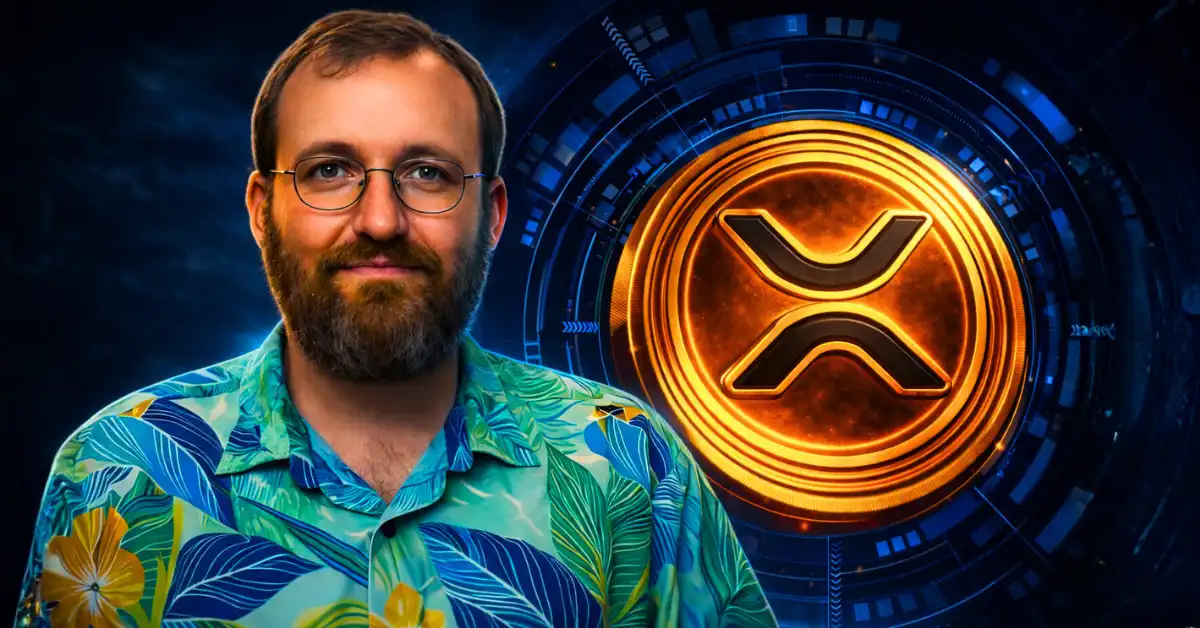
While many in the industry were waiting for the Crypto Clarity Act to pass, a new debate has started around it. Cardano founder Charles Hoskinson warned that the bill could have classified XRP as a security at launch. He also criticized Ripple CEO Brad Garlinghouse for supporting the bill.
Hoskinson believes the proposal could harm the future of crypto in the United States.
So, how could this happen?
Speaking in a recent broadcast, Hoskinson argued that the Crypto Clarity Act, also known as H.R. 3633, places the burden of proof on crypto projects to show they are no longer securities. According to him, this could trap projects in long-term regulatory uncertainty.
To explain his concern, Hoskinson used XRP as a key example. He asked, “Gemini, would XRP be a security at the time of launch?”
Explaining the Gemini answer, Hoskinson said that based on the bill’s framework, XRP would likely have been classified as an “investment contract asset,” meaning a security, when it first launched in 2012.
At that time, the XRP ledger was highly centralized and largely controlled by its founders, who later formed OpenCoin, renamed it Ripple Labs.
Because the network depended heavily on the founders’ efforts and lacked decentralization, Hoskinson argued XRP would not have met the standard of a mature, decentralized blockchain in its early stage.
“This bill makes everything a security at the start,” Hoskinson said, adding that XRP, Cardano, Ethereum and others would have initially fallen into that category under the proposed rules.
Hoskinson described the bill as dangerous if not revised. He said the current wording means “everything starts as a security,” including XRP.
“Read the bill,” he urged viewers. “If everything starts as a security, what stops it from staying a security forever?”
While older projects might eventually receive special treatment, he warned that new American crypto startups could face serious regulatory pressure.
He believes this structure could create loopholes for regulators, especially the SEC, to challenge or delay emerging blockchain innovations.
Ripple CEO Brad Garlinghouse has taken a different stance. He has publicly supported the Crypto Clarity Act, saying regulatory clarity is better than ongoing chaos. According to him, having clear rules would provide certainty for companies and investors.
Earlier, Coinpedia reported that Garlinghouse said there was an 80% chance the bill could pass in April.
Meanwhile, a JPMorgan analyst, Coinbase CEO Brian Armstrong, and even a U.S. senator have recently suggested that the bill is likely to pass by mid-year, showing growing confidence around its approval.
Yes, under the bill, all new crypto could start as securities, creating potential regulatory hurdles for startups.
XRP’s early centralized design could have made it a security at launch, limiting its legal flexibility in the U.S.
Clear rules provide certainty for investors and companies, but overly strict definitions could slow emerging U.S.-based projects.
Gate Exchange has become the first centralized crypto exchange to integrate Polymarket, enabling users to…
TRON price is back at a level that has historically marked the beginning of major…
The New York Stock Exchange is joining forces with Securitize to create a 24/7 platform…
Story Highlights The live price of the UniSwap crypto token is . Price predictions for…
Story Highlights The live price of the Ordi token is . ORDI price is consolidating…
Story Highlights The Ethereum price today is . Ethereum shows strong support at $1,200–$1,900, with…


