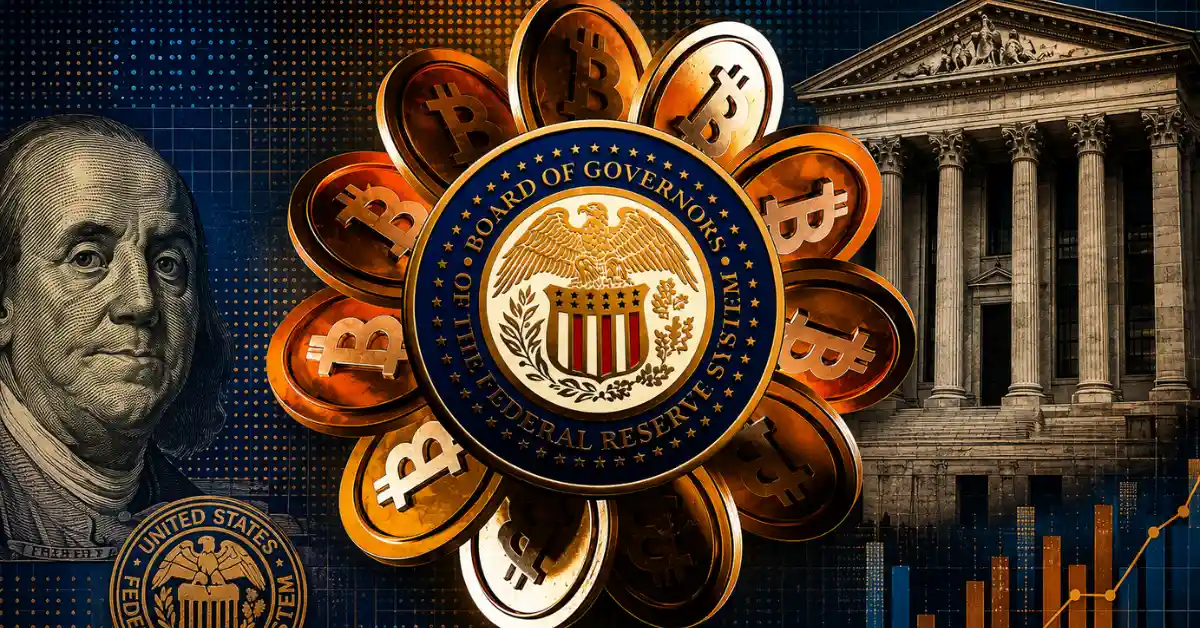
The House Financial Services Committee is scheduled for a momentous vote on the American Reserve Modernization Act (ARMA) of 2026 (H.R. 8957) on Wednesday, September 16 at 10:00 a.m.m ET.
The Bipartisan bill was introduced by the Republican Rep. Nick Begich and the Democrat co-sponsor Rep. Jared Golden in late May.
Among its key stipulations is a 20-year lockup, during which the government would be prohibited from trading or selling Bitcoin. The exception is only if the government intends to use the proceeds of liquidation to retire outstanding federal debt.
Secondly, the legislature mandates that all Bitcoin obtained from criminal seizures or penalties is surrendered to the national Bitcoin reserve, rather than being auctioned off.
The third provision has everything to do with the recoining of the legislation’s name to ARMA, as a way to encompass a variety of digital assets. Under this requirement, the nation would establish a “Digital Asset Stockpile” for holding altcoins classified as assets. The government would be allowed to sell or trade these assets for Bitcoin, or liquidate them to pay off national debt.
The fourth mandate is budget neutrality, meaning zero costs for acquiring Bitcoin for the national reserve. Here, the proposal tasks the Department of the Treasury and the Department of Commerce with determining ways in which to amass 1 million BTC over 5 years.
Notably, the bill specifically bans Bitcoin purchases using debt, new taxes, and deficit spending. In their place, the government would acquire Bitcoin using surplus dollars or a portion of the net earnings from Federal Reserve banks.
Finally, the bill features a decentralized network of secure physical storage facilities across the country. Third-party contractors would perform quarterly audits of the reserves to ensure full transparency.
Once the bill passes this initial filter, it would head to the House of Representatives for a vote. After that, it would go to the Senate, then to the President to sign into law.
CoinPedia has been delivering accurate and timely cryptocurrency and blockchain updates since 2017. All content is created by our expert panel of analysts and journalists, following strict Editorial Guidelines based on E-E-A-T (Experience, Expertise, Authoritativeness, Trustworthiness). Every article is fact-checked against reputable sources to ensure accuracy, transparency, and reliability. Our review policy guarantees unbiased evaluations when recommending exchanges, platforms, or tools. We strive to provide timely updates about everything crypto & blockchain, right from startups to industry majors.
All opinions and insights shared represent the author's own views on current market conditions. Please do your own research before making investment decisions. Neither the writer nor the publication assumes responsibility for your financial choices.
Sponsored content and affiliate links may appear on our site. Advertisements are marked clearly, and our editorial content remains entirely independent from our ad partners.
The Black Monday crash many traders feared this week never happened. Prices finished above Friday’s…
Bitcoin is trading near $80,620 after sweeping liquidity below recent lows and bouncing back higher.…
Russia is prepared to ship as much diesel to the United States as it wants…
XRP has dropped back to $1.29, nearly 65% below its all-time high. This is the…
XRP heads into a busy week with three major events lined up. The Federal Reserve…
Ethena has a fresh adoption catalyst, but can it finally deliver for ENA holders? USDe…